Holiday reads, sayonara 2021

The Trial: A New Translation Based on the Restored Text (The Schocken Kafka  Library) - Kindle edition by Kafka, Franz, Breon Mitchell. Literature &  Fiction Kindle eBooks @ Amazon.com.

The last month of 2021 saw another review piece for FULL STOP, this time on the latest novel from the great Rikki Ducornet. I made some spicy remarks in this one (at least they might be), and they don’t have to do with Steely Dan trivia.
(source)

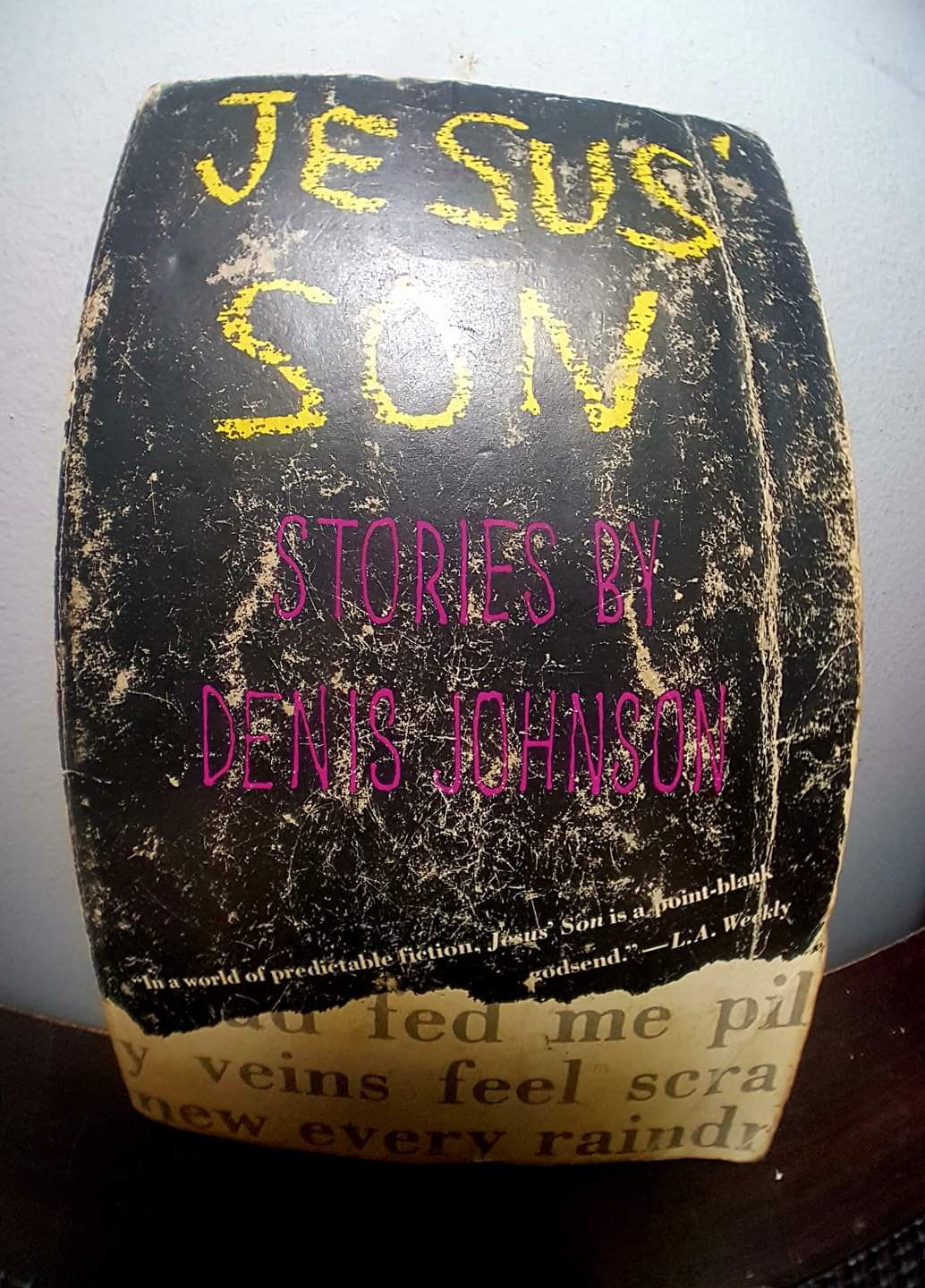
On my way back from one of the rallies for striking grad workers at Columbia, I picked up JESUS’ SON at a curbside book sale for four bucks. Denis Johnson was a great writer. TREE OF SMOKE was utterly engrossing (in a dark period), TRAIN DREAMS and SEAMAIDEN also excellent. But this collection from the 90s was an absolute knockout. The language is so clean and precise while still making all kinds of irregular choices in words and phrasing. When the speaker says he is a “whimpering dog inside” and nothing more, I felt it instantly. With Johnson there’s always this immediate connection so that you feel something for his cast of gentlemen losers. It brings to mind an image from Bruno Schulz of the writer and reader secretly holding hands under the table across which they face.

Every story in this cycle is a brief episode in the speaker’s drifting, dreg-filled life (the only name he goes by is Fuckhead). At the same time each story often breaks down into fragments that can read on their own like prose poems. Here’s one from “Emergency.”

Georgie and I had a terrific time driving around. For a while the day was clear and peaceful. It was one of the moments you stay in, to hell with all the troubles of before and after. The sky is blue and the dead are coming back. Later in the afternoon, with sad resignation, the county fair bares its breasts. A champion of the drug LSD, a very famous guru of the love generation, is being interviewed amid a TV crew off to the left of the poultry cages. His eyeballs look like he bought them in a joke shop. It doesn’t occur to me, as I pity this extraterrestrial, that in my life I’ve taken as much as he has.

#
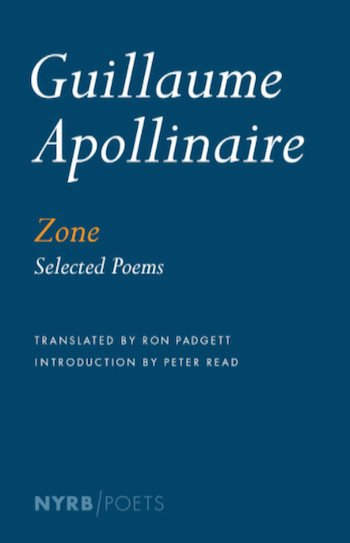
I couldn’t have asked for a better companion on a long plane ride than ZONE, a selection of Guillaume Apollinaire’s poetry translated by the great Ron Padgett. This book is the “fruit of [his] fifty-year engagement” with Apollinaire, and it’s hard to imagine a better fit between two poetic temperaments. Both are playful yet frank and unpretentious. Apollinaire’s lines are clear, even without punctuation, yet also have a capacity for avant-gardism that punches through every now and again, like in “Il pleut” and “The Little Car.” Padgett himself has a deadpan diction the majority of the time (BIG CABIN was a favorite read of last year) but he’s also written the most successful Oulipo text ever, in the form of a haiku that describes how a haiku works within the form of a haiku.

Many of Apollinaire’s poems are made of snatches of everyday conversation, and others are like stories or newspaper articles cut up into lines. And while they’re stuffed with references to mythology, religion, and ancient western literature, his poems are often funny. In “Annie,” the speaker sees a woman walking down a tree-lined road in Texas. This could be the easy occasion for some flaneur-like address to the eternal feminine, or to serendipitous encounters on the street; instead he finishes the poem like this:

Comme cette femme est mennoite
Ses rosiers et ses vêtements n’ont pas de bouttons
Il en manque deux à mon veston
La dame et moi suivons presque le même rite

(Since that woman is a mennonite
There are no buds or buttons on her clothes
Two of them are missing from my coat
The lady and I follow almost the same rite)

This project has become a new favorite book, and I speak as someone who thought he was over the romance of French bohemianism and all that early 20th century business. I was won over by how Apollinaire via Padgett can conjure that opium-addled atmosphere with such beautiful linguistic simplicity.

#
(source)

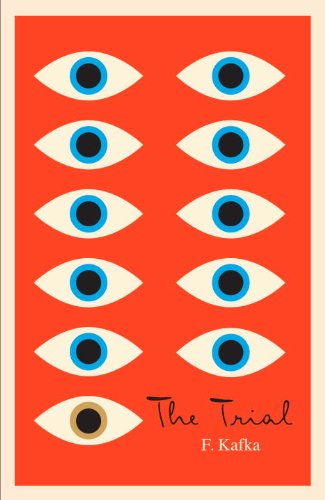
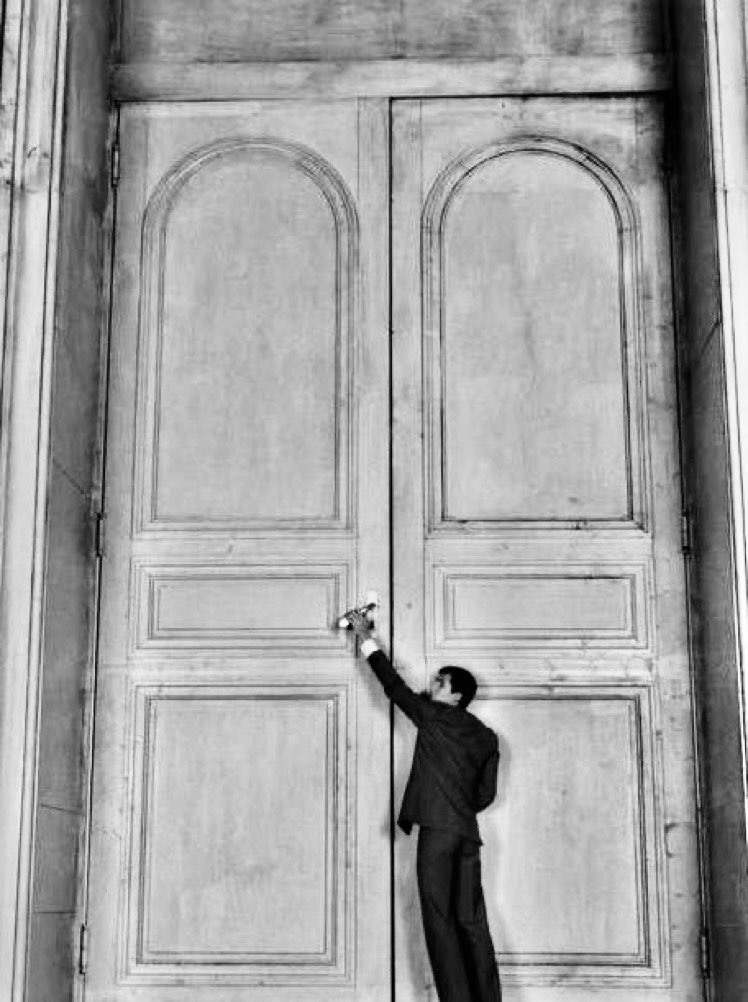
THE TRIAL by Kafka was ideal holiday reading. I may judge books by their covers after all. For a long time I avoided these new editions from Shocken Books because of their slick minimalist covers, whose bold colors and obvious eyeball iconography rubbed me the wrong way. I took them to be lazy and trendy reskins of facsimiles of older translations, similar to Vintage’s monochrome covers for Camus books. I was ignorant of Shocken’s publication history with Kafka in the 30s, in the context of a pro-Jewish cultural assertion against Nazism, and that in the case of THE TRIAL the new cover came with a new translation by Breon Mitchell, one that, according to his preface tries to preserve both the foregrounding of, one, legalese and other professional idioms that are woven in the text (for example, the opening line uses the word “slander” as opposed to the mundane “telling lies”); and two, the general rough character of Kafka’s prose, with its irregularly placed subordinate clauses and massive unbroken paragraphs. These aspects were eclipsed in the translation by the Miurs.

THE TRIAL opens with an absurd scene that from the beginning is presented in a theatrical way (and theatre jargon is used throughout the novel along with legal terms). Every dramatic beat is a comic reversal: K. rings for food, and his arresting officer enters the room, saying, “You rang?” When K., sitting in bed, explains that he wanted the landlady’s cook Anna to bring him breakfast, the stranger goes to the door, opens it a little, and calls into the next room, “He wants Anna to bring him breakfast,” and “a short burst of laughter” comes in response. Ever agitated, K. wonders if what’s happening to him is a joke by his coworkers for his 30th birthday, and worries he’ll come off bad for not taking a joke. He tries to cooperate by offering his papers, but the men in his home take this as an obnoxious play: “you’re behaving worse than a child. What is it you want? Do you think you can bring your whole damn trial to a quick conclusion by discussing your identity and arrest warrant with your guards? We’re lowly employees who can barely make our way through such documents, and whose only role in your affair is to stand guard over you ten hours a day and get paid for it.” But then when K. protests his innocence (to a charge that is never made explicit), they chide him for making a claim in ignorance of the Law. 

K. is in a game with no correct moves. Such is the atmosphere of dread and anxiety in Kafka’s fictive worlds. It is not a “totalitarian” or absolutist bureaucratic society that is the host of this arbitrary, inconsistent, pervasive and petty legal antagonist. It is in the Family structure where such oppression comes into play. The court of THE TRIAL uses the homes of its employees and defendants, in a series of running gags where furniture is being constantly shifted around the room, like stagehands preparing a scene for a play. But lest we get carried away with all this laying bare of the devices of fiction, the priest slash prison warden in the cathedral reminds us to respect the basic narrative integrity of the texts we consume. When K. imposes his reading of the parable of the Law and the door that climaxes this book, the priest critiques him with this remark: “You don’t have sufficient respect for the text and are changing the story.” This line could be addressed to all who say THE TRIAL is simply a dream, or an allegory, and not a story of an individual man, one who, for all intents and purposes, is real. And he really is guilty.

#
(source)

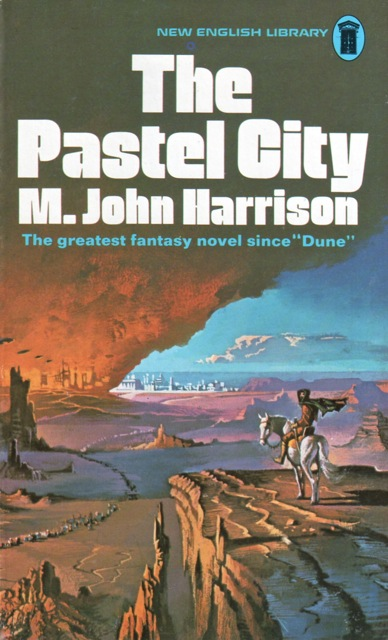
M. John Harrison wasn’t even on my map until 2020 when his latest novel, THE SUNKEN LAND BEGINS TO RISE AGAIN, took the Goldsmith Prize. It’s funny that I’d never heard his name in the same breath as Sturgeon or Le Guin, because he is another fantasy writer with excellent prose. Really, he is another great British master from the 70s I didn’t know about in my typical American ignorance.

PASTEL CITY is about and is another name for VIRICONIUM, a city/statelet in a world that has seen better days. This civilization sits atop layers of detritus from earlier, more advanced societies, so like pulp operas or like Wolfe’s BOOK OF THE NEW SUN, you get swords and sorcery in a landscape full of SF gadgetry.

We follow Lord Cromis, a warrior-poet who sets out to regroup the posse of knights called the Order of Methven, who defend the young Queen Jane, currently in a civil war for the throne of Viriconium with her half sister Canna Moidart. It’s like a western, only the landscape is one of rusted metal. And there are mechanical birds.

The “Lord of Birds” who created these cybernetic familiers resides in the tower of Cellur, an Orthanc-like obsidian structure in the marshes of Cladich. Harrison’s writing is like Le Guin’s in the sense that the quality of the prose isn’t flashy or ostentatious, but simply in the satisfying way in which the words “snap” together. The first book of the VIRICONIUM cycle is a straight ahead SF novel with all the proper western plot beats, but there’s still an extra layer of elegance in the phrasing and word choice. Here’s the description of Cellur in PASTEL CITY:

They reached the tower of Cellur in the evening of the second day. Cresting a ridge of pitted dolerite, they came upon the estuary of one of the unnamed rivers that ran from the mountains behind Cladich. Luminous in the fading light, the water spread itself before them like a sheet of metal. High black escarpments dropped sheer to its dark breaches; the cold wind made ephemeral, meaningless patterns on its surface.

Set in the shallows near the western bank was a small domed island, joined to the mainland by a causeway of crumbling stone blocks. It was barren but for a stand of white, dead pines.

Out of the pines, like a strong finger diminished by distance, rose the tower. It was five-faced, tapering: black. A tiny light shone near its summit, a glow that flickered, came and went. Birds wheeled about it, wailing mournfully, dipping to skim the water—fish eagles of a curious colour, with wings like cloaks in a gale. 

Now check out this romanticist, picturesque, more Tolkein-leaning description of the same locale 80 years later, that is also the opening paragraph of the sequel book A STORM OF WINGS:

In the dark tidal reaches of one of those unnamed rivers which spring from the mountains behind Cladich, a small domed island in the shallows before the sea, fallen masonry of a great age close faintly under the eye of an uncomfortable moon. A tower once stood here in the shadow of the estuarine cliffs, made too long ago for anyone to remember, in a way no one left can understand, from a single obsidian monolith fully two hundred feet in length. For ten thousand years wind and water scoured its southern face, finding no weakness; and at night a yellow light might be discerned in its topmost window, coming and going as if someone there passed before a flame.

Other reads from December: more Ashbery, early poetry by W.S. Merwin (some epic fantasy in its own right), and Tolkein’s THE FALL OF GONDOLIN for the LOTR Holidays of 2021.

Short stories are very good for you

I’m always drawn to a book of poems when I heard it has a great sestina. And Joyelle McSweeney’s experimental lament TOXICON AND ARACHNE delivers. The poems, including a cycle of sonnets, deal with bodily toxins as well as suffering and environmental destruction. Then the book finishes with poems about the death of the poet’s infant daughter.

Her work has a driving style that is driven by sound, similar to Michael Laly, while also engaging with the established lyrical forms and the proper literary field of allusions. The pieces are also topical.

The joystick’d boys sink arrows into the ozone.

If we can’t have bees we’ll have drones.

Sometimes a line is re-mixed by ear:

like fruit loops the beak of a toucan
or fish hooks the mutilated pelican

One of the two exceptional sestinas in this collection is about the disappeared Mexican students.

McSweeney’s poems also have an element of decay and decomposition, or a sense of leaving things to nature/chance/entropy, in the form of evocative pseudo-typos that almost approach flarf: “rainment,” “doggrowl,” “Like a dog returns to her thesis,” “urne-buriall.”

These poems go right into the muck at the same time as they evoke classical forms. The grief flows through, careful and multidimensional, and yet delivered in a jaunty rush of language. Achingly beautiful collection from this year.

I want to look so young it would be foolish to think about having kids after all, I have my whole life ahead of me! I could get an MFA!

I attend the MFA thesis reading as a faculty member (of course) and cheer on our small brigade. Afterwards I want to text my friend to come to the graveyard with me so she can watch my back while I press my face in the mud in front of my baby’s grave.

Stephen Dixon is a writer I’ve inexplicably delayed getting around to even though his work is right up my alley. The title story is outstanding: an attempted suicide on the 14th floor of a NY apartment building triggers 14 story lines, the paragraphs all running together whereas an author would typically use space breaks, with the characters ignorant of all the connections. And we delightfully note that this book holds 13 stories, and considering that sometimes a building will renumber the 13th floor to 14…

Ther other standout in the collection is the Pushcart-winning “Milk is Very Good For You,” a piece of erotica narrated by Richard Richardson, in which all the dirty words are systematically misspelled, and the hedonistic escapades of mom and dad and the babysitter are interrupted by the children’s wailing for more milk. Disturbingly pure.

His writing is clear and tight, transparent not only in terms of narrative but for all these underlying algorithms and chain stories–for situations that in some cases are truly horrible and morbid.

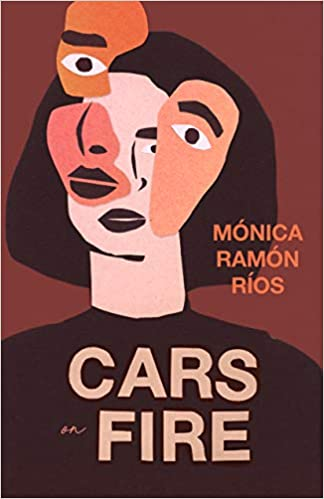
Another collection of urban stories, by a cosmopolitan author from Chile. Bolaño is too obvious a name to drop here, but I do think Ramón Ríos is interested in failed, disaffected people in similar ways. She is plugged into the political crises that are very specific to her generation of Chileans, after what Bolaño’s experienced. Both are masters of the story in which nothing happens yet everything culminates and vibrates with significance; you have to wonder how these pieces are holding themselves together. Most of them are very short, only the middle three stories are plied out. On the surface the action is simple, but the scenes are weighed down with memory.

As he descends the stairs, he’s met with the occupations his father used to threaten him with, like a line-up of ghosts: this-beggar reading tarot cards on a bench in the square. This-numbskull selling water bottles on the corner of Atlantic and Nostrand. This-busybody reading a book, sprawled out on the sidewalk, covered with that blanket that this-guy, this-animal, stepped on yesterday as he made his way home from work on East 11th. This-guy stumbling, feeling the city’s pavement under his back. Dirty streets scorching in the sun.

Ramón Ríos chooses amazing details that just plant you in a particular time and place, like upper Manhattan in the early 90s, in “The Object.” There’s a tension between realistic and fantastic modes of narrating the same content. That story moves from a tense and tirade-heavy event with Gordon Lish at Book Culture (the 80’s realism plus the cult of the sentence vibe) out of the bookstore to outside—”we can breathe.” Then we’re leaving Manhattan on a bus, the prose gets more fabulous and “magical realist”: 

Outside, space has twisted into folds, a spiral where our very breathing grants it those multiple universes. The city fades away with every block: the city of shortage, poverty, excess, the centripetal force of fantasy, the void where bombs and fish rain down.

“Invocation” is an ambitious and fascinating two-column story that runs like a libidinal interview between two artists with a past. (The only other two-channel prose piece I can think of is the one in DICTEE by Theresa Cha.) This long story has the best and worst elements of the book. There’s a generous quotation of and reference to critical theorists which I don’t like to come across in this way in fiction, though it is pretty seamless as far as that goes. At the same time there is amazing imagery and transformations in the narration—like if Djuna Barnes were in this trend of feminist theory-driven fiction. The entire “Obituaries” sequence is amazing, capped off by the punk rock lamentation “Dead Men Don’t Rape.” I also loved “Extermination,” which complements Sturgeon’s “It” and the swamp thing mythos, while also working as an allegory that happily and wonderfully marries politics and artmaking.

Confined escapism–pleasure reading in March

My immediate sense after finishing the Leonora Carrington collection produced by the Dorothy Project is that she has aged very well. Kelly Link, Angela Carter, Robert Aickman, and it seems the whole general tendency of fantastic or speculative or weird tales is toward this oneiric work that mixes the gothic with fairytales. The word for it now is fabulism. I still have this nagging feeling that SF as a whole has abandoned historical materialism in favor of thoroughly non-empirical imaginative writing. (Or what I’ve taken to be SF based to some extent on tendencies and contradictions among historical modes of production is no longer on the order of the day.) Fabulism as a concept may account for this. It also seems to create a continuity for fantastic fiction between canonical literature like Poe and Hawthorne to pulp magazines in the early and mid 20th century. The latter used to be an overhanging sin on fantasy that Jameson and Suvin used to speak of in the 70s and 80s.

And it’s not just the content Carrington established, but the style, which is plain and direct, completely transparent as it relates marvelous things. This is of course in line with the older gothic novels. Cesar Aira writes like this too. The writing is clear but it’s also loose, so that the events are hard to keep track of in your memory.

I’ve thought for a year now that Carrington is more ironical and darkly humorous than any of the above. I had that impression from her institutionalization memoir DOWN BELOW. The early pieces in this collection are terrific. Everyone loves to talk about “The Debutante,” with its face-ripping and then face-eating talking hyena, made more gruesome by the sultry narrator’s POV. But what really gets me this this moment, after the hyena has devoured the maid, leaving only her feet:

“I can’t eat any more. Her two feet are left over still, but if you have a little bag, I’ll eat them later in the day.”

“You’ll find a bag embroidered with fleurs-de-lis in the cupboard. Empty out the handkerchiefs you’ll find inside, and take it.” She did as I suggested. Then she said, “Turn round now and look how beautiful I am.”

The humor in these stories kills me, especially the ending of “The Happy Corpse.”

Many of the stories are translated from French and Spanish, and the prose there seems way more placid than the ones written in English, where a reflective tone and social observation come out. This is the opening of “White Rabbits”:

The time has come that I must tell the events which began in 40 Pest Street. The houses, which were reddish black, looked as if they had issued mysteriously from the fire of London. The house in front of my window, covered with an occasional wisp of creeper, was as black and empty looking as any plague-ridden residence subsequently licked by flames and smoke. This is not the way I had imagined New York.

The animals, the detailed designs of objects, the dark forests, the rotting meat, the rituals and magical correspondences, the tension between domestic comfort and wild freedom: all of these elements express unique insights about a woman’s position in Europe—”The Neutral Man” may well be a true anecdote, like Amy Hempel’s story about her motorcycle accident. I wouldn’t protest a re-centering of the Surrealism canon on Carrington’s writing and pictures.

#

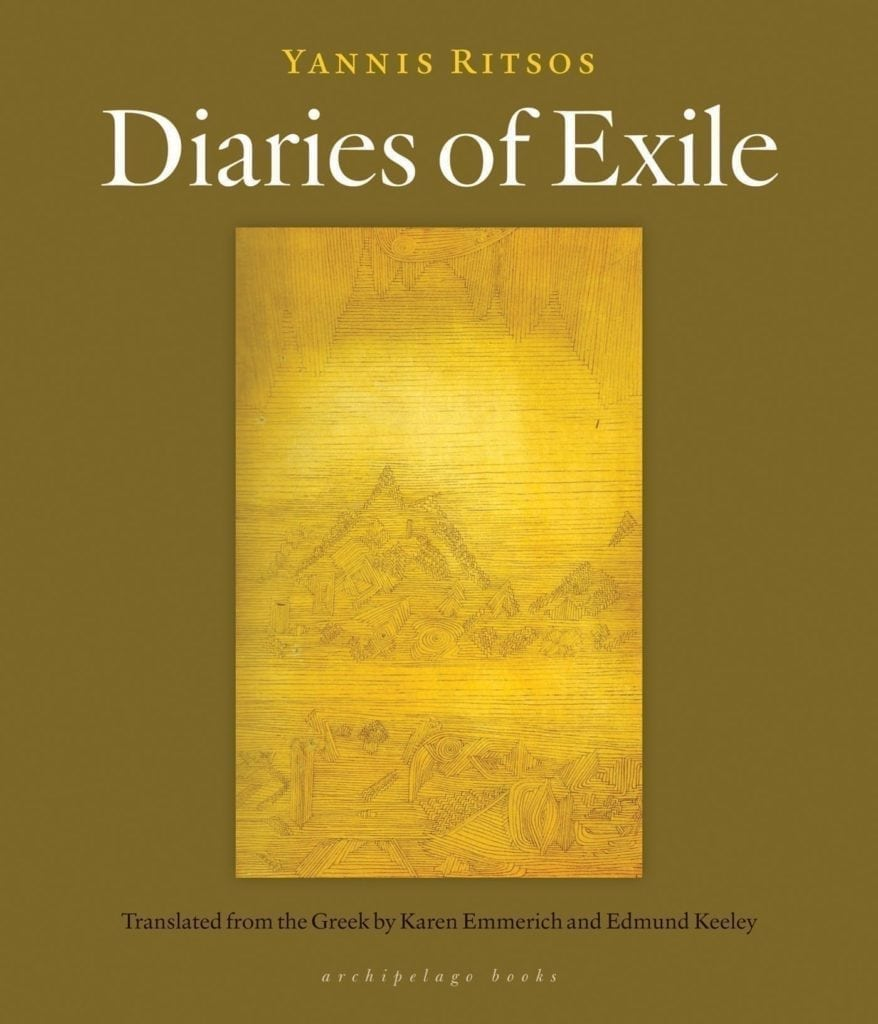
I’m struggling to talk about DIARIES OF EXILE by Yannis Ritsos. I picked it up because I wanted to read something about confinement, in light of the coronavirus situation. I was blown away by its simplicity and honesty. The poems, which comprise Ritsos’s prison diaries in verse, between 1948 and 1950, are blunt but never brutal. There is a pureness and sensitivity to the speaker, who finds a placid consolation in productive activity with other people, even if they never communicate.

I do mean simple, in its repetitive observations and images—cigarettes, cigarette packaging (a source of paper for writing) the change of the seasons in a barren place—and the sentence structures, sometimes laid out line by line. Yet they layer sophisticated ideas. The first two stanzas of “November 17” stand out to me both for this reason, the way it talks about the forms of wood, as an object of labor and as an entity of nature, and a rare bit of religious imagery.

The wind assumes its original position
the trees return to their old shape
no longer the wood of the bed-frame, the coat hanger, the wardrobe,
the wooden bowl on the villager’s round table
the wooden spoon that ladles out food
but now the tree with its branches and its shade
in the clouds and wind that strip the land of color
that dress with a certain nakedness free of forgetting and of memory
the houses, the bread, people and their works.

Things are simpler than we thought
so much so that we are sometimes startled; we stand
looking and smiling precisely there where we pressed our nails into our palm.

And then this stanza:

All this happened slowly, bit by bit. We didn’t notice.
Maybe tomorrow the old things will happen again. Nothing is certain.
But maybe out of all this will remain a tighter grasp of the hand
two eyes that gazed into two other eyes with no tilt of hesitation
a lighter that lit five cigarettes without preference;
and the number five wasn’t one, two, three, four, five,
but only a single number—five.

Of course all this doesn’t make a poem
and here I toss it onto the page like a useless stone on the stones
that will maybe someday help to build a house.

I will also remember the poem about the dog at the end of the first Diary.

The poems get sparser the further we go into Ritsos’s internment. On Christmas Day:

The window brings in the sky
in little squares.

Everything is tormented
like the old women gathering radishes.
Even the stones.

Was Christ really born in a season like this?

Plus, this passage from a letter to his sister, quoted in the translator’s introduction, may be the best writing advice I’ve ever heard:

the image is always a means and not an end in itself – we’ve said this before – you know it – you should avoid mere decoration – Don’t cover up your heart – when there’s no heart, there’s nothing at all – of course heart alone isn’t enough – but it shouldn’t be missing, either. Guard against the allure of the word, which always leads to verbosity – but don’t ever neglect that allure in the name of an emotion or of spontaneity.

#

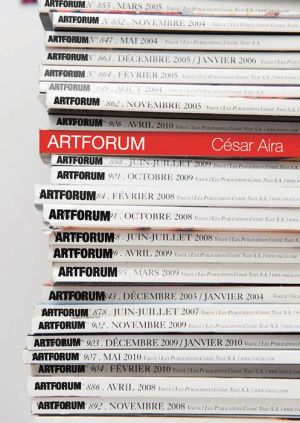
Nothing like one of Don Cesar’s short philosophical novels to clear your head. Like the last translation from New Directions, BIRTHDAY, ARTFORUM reads like a lightly fictionalized diary, about the author’s obsession with collecting back numbers of the magazine, scavenging at bookstores, trying to get an international subscription. He doesn’t seem that invested in the actual content beyond the reproductions of artistic dream states. What really attracts him are the magazine’s properties as an object, its square cut, its glossy pages etc.

Formally, the book is made of very short stories and sketches and ruminations. Some of them are dated; it’s possible Cesar wrote these pieces across 20 years and finally collected them into a very rich book, the funniest that I’ve read by him in a while.

A highlight is the first chapter, the only truly marvelous event in the plot, where an issue of Artforum sacrifices itself by getting wet to keep the other magazines on the table dry. “Can an object love a man? The entire history of animism was contained in that question.” All objects are carriers of information, and so books “fulfilled their condition as objects twice over by being specialized carriers of information; they were superobjects, because in their infinite variety and novelty they could supplant all other objects in imagination and desire.” I’d say my reading of Merce Rodoreda’s GARDEN BY THE SEA is supplanting my desire to be in a Spanish seaside villa rather than in self-quarantine in a Brooklyn apartment.

ARTFORUM is not directly about contemporary art but is about the experience of objects that aren’t useful but are enigmatic enough to appeal to us and call our attention—like broken clothespins. And then there’s the experience of waiting, its changing colors, its infinite plying.

I should write a story about what it was like to wait for it those many months, but it is impossible because the wait was made up of so many very tiny spiritual movements, so varied, that the story would never end.

Another small treat in this work is that Aira includes a moment of reflection on his mysterious writing process (I think the magazine articles are too credulous about this sometimes).

My work as a writer was a constant repetition of time’s surrender to waiting. I never could, and in fact never wanted to, write for more than one hour, and I spent the vast remainder of each day impatiently waiting for the next one. And within that hour the pattern of the day is repeated: I think of something and together with the thought comes its formulation. In a few seconds it’s written, and then I have to wait till I think of something else, something which doesn’t happen. I don’t want to dig more deeply into this, but I fear that within a few seconds that very thing is going to happen again.

This is quite theoretically oriented, similar to pages in THE LITERARY CONFERENCE, that business about “the velocity of thought and the thought itself,” which leads me to believe this is more “genuine.” Unless it’s another trick—that’s our Aira.