There are thicc books in this house

It’s here!!! My review piece on Cartarescu’s SOLENOID ran in the spring issue of Asymptote magazine!

This essay is the product of the whole publishing shebang: pitch, draft, editor’s notes, revision, proofreading, galley edits. It was such a pleasure.

But before I can take a victory lap, it’s on to the next review project—actually one of three—which is another modernist meganovel: this time Iberian rather than eastern European. It’s Miquel de Palol’s GARDEN OF SEVEN TWILIGHTS, newly translated from the Catalan by Adrian Nathan West. I’ve come to enjoy these large post war novels and their descendants more and more, surprisingly. They’re certainly not for everyone, and not just for the esoteric qualities. Indeed, I’ve come to think of these meganovels as somewhat akin to video games in that 1) they’re immersive and require a similar investment of time, and 2) they tend to have core loops rather than traditional narrative arcs. (I’m thinking in particular of the shifting between the daily drudgery of Bucharest to the otherworldly buildings in the Caratescu.)

SOLENOID and GARDEN make for an interesting foil of large books. Their translations came out six months apart, from Deep Vellum and Dalkey Archive, respectively, which have significant overlap as publishing houses at the moment. Both have ambitions to reflect on and in many ways summate the history of western literature—though the Cartarescu focuses on modern aesthetics and philosophy, while the Palol dives into the superclassics with its fundamentally Boccaccian conceit. Both dwell a great deal on surreal built environments. Structurally, they’re complex and non-linear while still offering the leisurely drift you want from great novels; SOLENOID is made of several notebooks stuffed with memories and reflections, while GARDEN cycles through a group of storytellers, with narratives nested into each other—at one point up to 8 levels of recursion!

At this time SOLENOID is done and dusted of course, and I’ve only just started on GARDEN, but I already sense that the books have very different thematic projects, despite their modernist commitments. SOLENOID is mystical, it has the same experience of getting lost in the colonnades of subjectivity. But so far GARDEN seems more grubby and materialist, embarking on a grand search for unity in spite of the chaos, while Cartarescu’s hero seems to resign himself to dispersal.

In short, it’s been a season of big, intellectual Literary reading.

Yours truly is excited, and in a moment of self-indulgence he says to himself: AI agents can’t do this yet! I put a lot of time and some effort into delivering rich and complex ideas in a clear and entertaining way—including prose with a decent rhythm and cadence. That kind of flow and shaping, seems to me, remains a human initiative.
I’ve been fooling around with AI-generated Natural Language Processors (NLPs) since 2020. Before ChatGPT and some smaller projects, there was AI Dungeon. While it was decent enough at producing a dungeon exploration gaming experience, it could in practice be used as a chat bot that would offer all sorts of goofball, hallucinatory opinions.

The blunt application of AI to creating commercial science fiction has only led to a glut of garbage. In the arts, AI still only seems to produce chimeras, weird collages of existing elements without a “human” understanding beneath them. My friends in the copywriting industry don’t get the hype; AI-generated content is still transparently inferior. AI excels at chess and other relatively abstract practices, as well as complex operations like flying a simulated fighter plane with perfect reaction times. AI can process cyclopean corpuses of data, but when it comes to real intellectual labor, it can’t really go beyond its internal statistics, vast as they are. What exactly does AI’s “thinking” correspond to? How does one go from ponderable matter—the back-and-forth of salt and potassium in our neurons to make electrical charges—to consciousness, thoughts, feelings, imagination? This is an age-old riddle of dialectics. ChatGPT is familiar with Marxism, as far as I’ve quizzed it, but it doesn’t know how to think like a Marxist. Truly good writing, not only mechanically good, but a meaningful, deep, and true reflection of reality, is always concrete. And for that reason I think human intellectual labor is still safe from the deskillage for the time being.

But perhaps the technology will improve in a couple months!

The other day I heard some striking defenses of using AI in higher education. It makes writing easier, it can proofread, it spares the drudgery of doing your own thinking and formulating. That’s right, writing IS drudgery. It’s intellectual labor.

Along with this rationalization of AI agents for writing is the victory lap taken by some about the supersession of the humanities, those “useless degrees” that only teach you how to write, which AI has so obviously (to these people) displaced. The only impression I get from these corners is 1) they don’t know what serious writing or reading is, and 2) they never took the life of the mind seriously.

At a time when AI content’s mediocrity is still glaringly apparent to the professionals—in copywriting and elsewhere—and many are caught in the disclosure that so many people really don’t know what it takes to write and express yourself well, and have lost contact with the accumulated knowledge of human societies (in part because bourgeois academia took a mystical turn at the 20th century, and now resembles a stomach digesting itself), I am supposing—really just hoping—that those of us who bothered to master these things that AI was supposed to shortcut, will have some scarcity value. Few people around me know how to do the things I do in the particular way I do ‘em!

And now, some brief AI fiction prompted by the blogger in ChatGPT:

Buzz Lightyear stood at the bathroom mirror, his eyes wide and frenzied. He had ingested a most peculiar substance, known as “bath salts”, and the effects were beginning to take hold. Woody the Sheriff, his trusted companion, was nowhere to be found. Buzz could hear the faint echoes of a strange melody drifting down the hall, and knew that Woody must have found something equally strange to indulge in.

Buzz stumbled out of the bathroom, his movements unsteady and uncoordinated. He made his way down the corridor, his senses awash with a riot of colors and sounds. As he reached the end of the hall, he saw Woody swaying back and forth, his eyes half-closed, a small vial of ketamine clutched tightly in his hand.

“Come on, Buzz,” Woody said, beckoning to his friend. “Let’s explore the universe.”

And so, high on their respective drugs, Buzz and Woody boarded their spaceship and set a course for the unknown. As they traveled through the cosmos, they encountered strange creatures and visited alien worlds. But none were as eerie as the planet they stumbled upon by accident.

The planet was shrouded in mist, and the air was thick with the stench of decay. As they descended to the surface, Buzz and Woody saw that the planet was populated by the undead. Zombies roamed the desolate landscape, their eyes empty and their flesh rotting.

But as they explored the planet, they found something even more unsettling. A group of cultists, dressed in black robes and chanting in a language that Buzz and Woody could not understand. They were attempting to summon a demon named Loab, a creature of unspeakable evil.

Buzz and Woody, caught up in their drug-induced haze, decided to join the cultists in their ritual. They danced and chanted, their bodies moving in time with the rhythm of the words. And as they danced, the ground beneath them began to shake.

A rift opened up in the earth, and a figure emerged. It was Loab, the demon they had summoned. Its eyes glowed with a sickly green light, and its mouth twisted into a grin.

“You have summoned me,” Loab said, its voice a deep rumble. “And now, you shall be my servants.”

Buzz and Woody were terrified, but before they could react, the cultists all collapsed, their bodies turning to dust. Loab turned its attention to Buzz and Woody, but before it could strike, something strange happened.

A nearby building began to morph and twist, its walls pulsing like a living thing. And from the midst of the chaos emerged Bo Peep, Buzz’s long-lost love. She had been transformed into a being of immense power, capable of bending reality to her will.

With a wave of her hand, Bo Peep banished Loab back to its own realm. And with another gesture, she restored Buzz and Woody to their senses. They found themselves back on their ship, their adventure over.

As they looked at each other, Buzz and Woody knew that they had experienced something extraordinary. And they knew that they would never forget the strange planet, the undead, and the demon they had summoned. But most of all, they would never forget Bo Peep, and the incredible power she had wielded.

And another:

Tony was a timid boy, with a small frame and a shy disposition. He had always walked to school with his mother, but one day, his mother fell ill and couldn’t take him. Tony had no choice but to take the bus, and he felt his heart pounding with fear as he stepped onto the bus. The other children on the bus looked at him with cold, hard eyes, and he could feel their cruel stares piercing his skin.

Tony felt the sting of their words as they taunted him, calling him names and laughing at him. He was afraid and felt like he didn’t belong. But then, as the bus was traveling down the road, something unexpected happened.

An escaped horse ran out into the road, causing the bus driver to swerve and lose control. Tony suddenly realized that he had mind powers, and he could control the bus driver’s actions. He concentrated all his energy and commanded the driver to hit the horse in the head, killing it instantly.

The other children on the bus were stunned and shocked. They couldn’t believe what they had just witnessed. Tony looked around at their faces and felt a strange sense of satisfaction. He enjoyed their reactions, and for the first time, he felt like he had power over them.

The rest of the bus ride was silent as the children stared at Tony in fear and amazement. Tony basked in the attention, relishing the newfound respect he had earned. He had always been an outcast, but now, he was the one in control.

When the bus arrived at school, Tony stepped off with a newfound confidence. He no longer felt like a victim; instead, he felt like a conqueror. The other children looked at him in awe and fear, and Tony knew that he would never be bullied again. He had found his power, and he would use it to protect himself from the cruelties of the world.

Frooty Loops

When I feel the need for inspiration (more accurately the need to avoid working on my projects) I turn to the handful of artbooks I own. More often than not I end up feeling rewarded for taking myself so far afield of what I “ought” to be writing and studying, as this reading tends to detonate new thoughts that help unlock whatever I’ve been stuck on.

In that sense I need to single out the work of Alex Potts. His writing offers a compelling understanding of modern art that takes us away from common narratives of an easy realism vs. modernism polarization. His book The Sculptural Imagination strongly argues that while modernist sculpture deflated the old ideal of the “whole” work, its own petty-bourgeois libetarian illusions of autonomy were brought into question by the Minimalist sculpture trend. And it’s this movement in particular that Potts helped me to appreciate, in particular this passage about loops and looping.

At issue here is also the rhythmic inflection, or lack of it, in the kind of viewing invited by Minimalist work. When Fried describes the sense of ‘duration’ involved as ‘something endless the way a road might be: if it were circular, for example’, he is drawing attention to a sense of looping central to the conception of Minimalist sculpture. Any viewing of a three-dimensional work involves some form of repetitive looping—as one moves right round a work back to the position where one was first standing, or moves in closer and gets absorbed by various local effects of surface shaping and texture and shadowing and then steps back again. The rhythm of such viewing has something of the sense of passing through repeated circuits, which may be more or less regular, more or less expansive, more or less open or closed. A Minimalist work tends to foreground the sense of looping because there are not many variegated incidents in the circuits one traverses, and because the work’s relatively simple spatial configuration invites a similarly simple structuring of one’s pattern of viewing.

Potts’s argument makes a great point later on that, yes, the loops of Minimalism can become boring, but maximalism (like in a Pynchon meganovel) can lead to its own kind of boredom. The “arbitrarily rich variety of incident” actually achieves monotony as all the patterns get flattened into a homogenous flow of sensations. 

Looping is located in the temporal dimension of communing with a work of art. Imagine walking around one of Andre’s heavy metal grids, noticing how the specks reflected in the gallery’s spotlight change in the square units on the floor as your angle of sight gradually shifts. The horizontality of these sheets is quite radical compared to the traditional Venus on a pedestal, but the reduction helps you to appreciate these teeny-tiny variegated incidents, produced by metal units that simply exist as material, without pretending to be anything else. Eventually you may imagine yourself as the artist who laid down these tiles into an array—does the work still exist as such when it is disassembled and in storage?

These circuits that are fundamental to sculpture & 3D art must be present in other media as well.

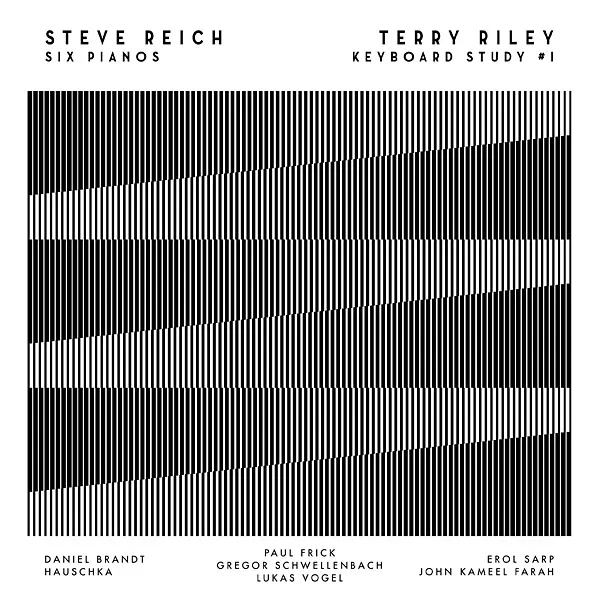
Minimalist music is an obvious candidate, both the Steve Reich style of overlapping looped phrases that incrementally phase into a new arrangement, as well as the “Holy” minimalism of Arvo Pärt, like the famous Spiegel im Spiegel whose sparse composition for piano and a string musician demands absolute perfection (and traditionally no vibrato for the violin, but perhaps on the cello it can’t be avoided). The “heartbeats” of the piano’s outlined major triads paired with the “long breaths” of the bowing may constitute units of loops.

Erik Satie’s La Socrate premiered the same year as Stravinsky’s Rite of Spring, and it also apparently caused a riot. The piece is an experimental recitative with a soprano singing continuously over a series of riffs from either a piano or an orchestra. People didn’t even want to consider it music at the time! (I’ll link to the third movement only because it’s my personal favorite and I think it the best showcase.)

Even with the drone tones of ambient electronica or doom metal, it’s as if my ears could periodize their stretched out notes with the peaks and valleys of the long oscillations of the various filter effects.

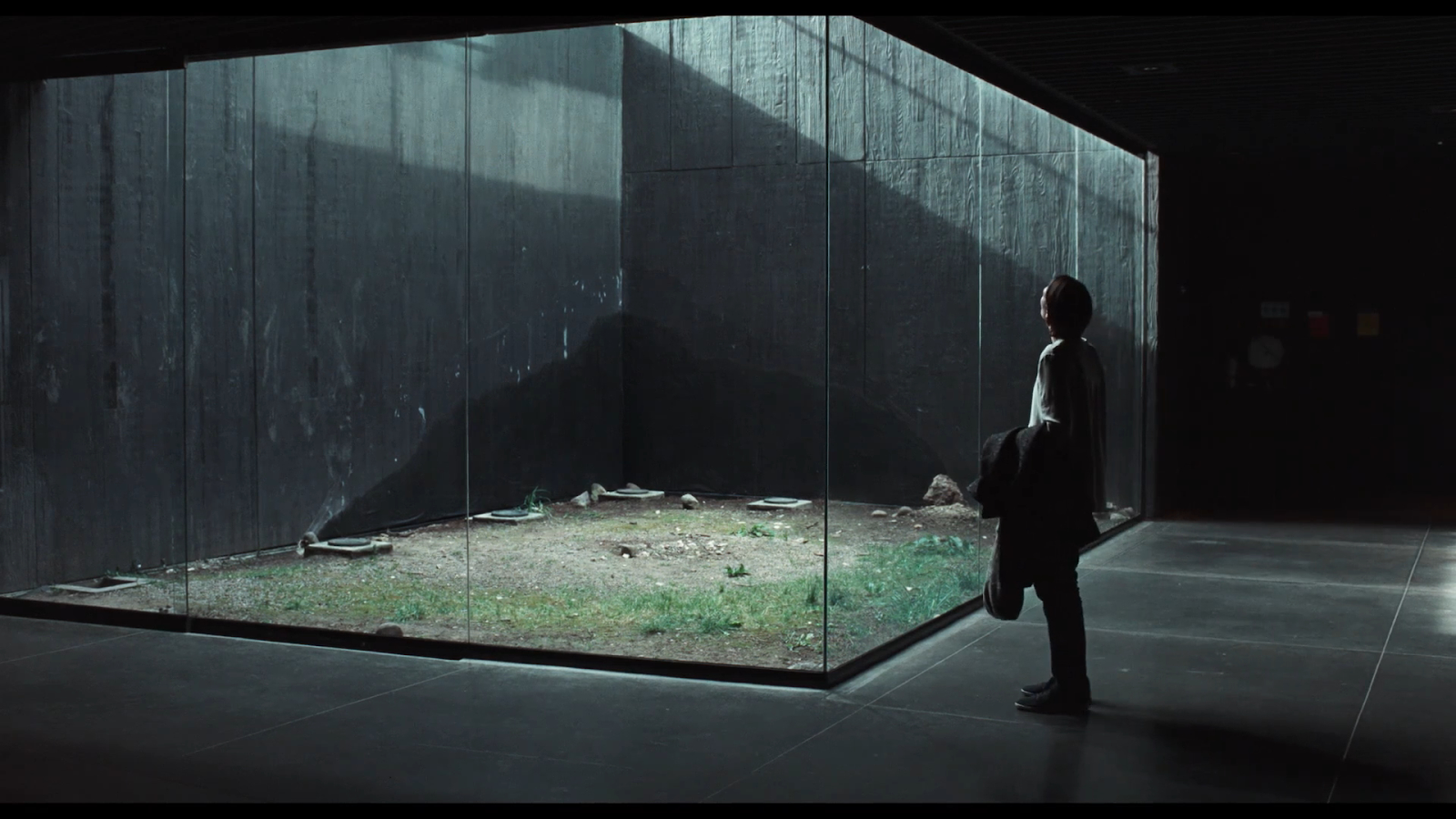
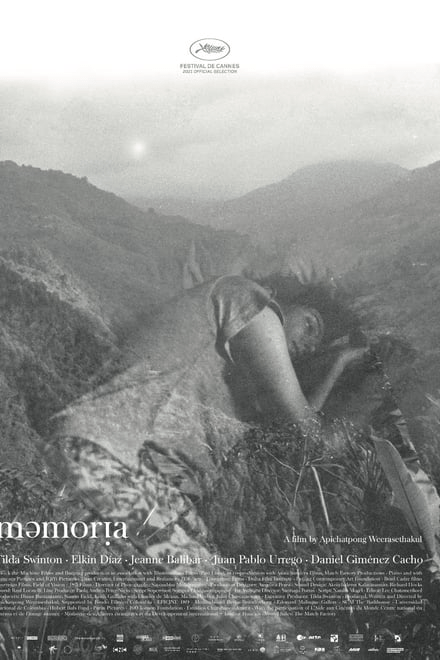
What about film? Looking back on MEMORIA, there is a sequence late in the narrative that is so decisively dead in terms of on-screen action or narrative incident (a character “dies,” or decides to be temporarily dead), sending the audience into a kind of sympathetic collective rigor mortis. We were entranced, yet aware that every second was irrevocably passing by. I seemed to turn my attention back to my own breathing as I sat in the theater. And yet, that scene still cuts between a few views of the scene and ambient sound effects played throughout. 

Bela Tarr’s movies often keep the camera position fixed while the landscape empties itself of any agent, and I’ve noticed that in this situation I like to make “loops” with my eyeballs, and trace clockwise circuits around the inside of the frame, since there are no pretty actor faces to direct my gaze. SATANTANGO has an engaging plot, almost like a crime caper, especially at the beginning, but it is also at the frontier between narrative cinema and video art—some of these moments of dead time and dead space could be clipped and shown in a gallery on continuous loop.

Finally, there is one cultural area where the operation of loops is obvious and crucial. Let’s turn away from high culture and dive into kitschy paperback horror.

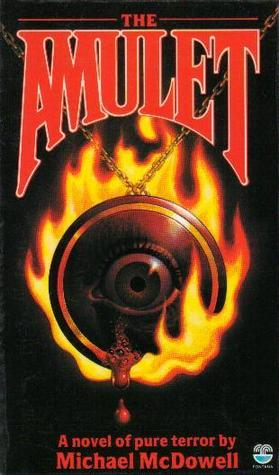
I contend that slashers, creature features, and horror stories of the FINAL DESTINATION type are based on loops, specifically, the string of kills. In Michael McDowell’s THE AMULET, the titular piece of jewelry ends up switching hands (sometimes via comical rube-goldbergian mechanics) and people who find themselves wearing it become emotionally dysregulated and at the slightest provocation go on a killing spree, usually by weaponizing a household item. This pattern repeats itself until a whole Alabama small town gets leveled. Similar is Graham Masterton’s GHOST VIRUS, though the mechanics are a little more elaborate: a haunted article of clothing can take over the personality of the victim who wears it, and the victim takes on the ghost’s resentments and antipathies—and acquires a hunger for flesh. You can guess there’s plenty of room for variegated effects in all of these steps and elements.

Quite a productive understanding of art, thanks to Potts.

Great movies and not-so-great books // April summation

Watch the skies!

Sometimes it be like that.

I’ve been giving up on novels at an above-average rate lately, tho it could be that my threshold for putting down a work of fiction is lowering. 

It’s clear to me how well I’ve avoided writing about books here that I find unsatisfying. Talking about these experiences doesn’t come as easily.

But on the other side are two positive things on the movie-going front. Really, going from EVERYTHING EVERYWHERE ALL AT ONCE by Daniel Kwan and Daniel Scheinert to MEMORIA by Apichatpong Weeresethekul was as hard a shift from maximalism to minimalism you could make within current narrative cinema.

It’s funny that a few posts back I had talked about quantum mechanics being surrealistic in its implications. Then in March mainstream audiences get nailed by a high-concept martial arts comedy whose conceit—fundamental it seems to a lot of Daniels’ work—is essentially a quasi-scientific rationalization for surrealism. Rather than subjective freedom of the imagination or the mysterious unconscious, this kind of goofiness is placed on an objective basis, with all matter being in a superposition of forms, and so on. However, the practical result is the same, for as Michelle Yeoh’s character says, you can imagine whatever nonsense you want and somewhere it is inevitably real. The absurdism may be too much for some audiences, and everyone will have a threshold at a different gag, but as someone who grew up on Stephen Chow I enjoyed this absurd hyperpop romp as produced by the Russo Bros. Stupid gags that are well thought out are the supreme form of comedy. The emotional core in the family drama was smartly written, especially at the beginning. The resolution was naive but one can appreciate the gesture against apathy and disappearing into the bagel/anus singularity, wrapped in a sci-fi concept that contains the noise of the multiverse as a reflection of the noise of the modern world. I can’t really think of anything else from the twenty-first century quite like it, except MINDGAME. And I have definitely never felt a crowd rocked so hard by a film in my life.

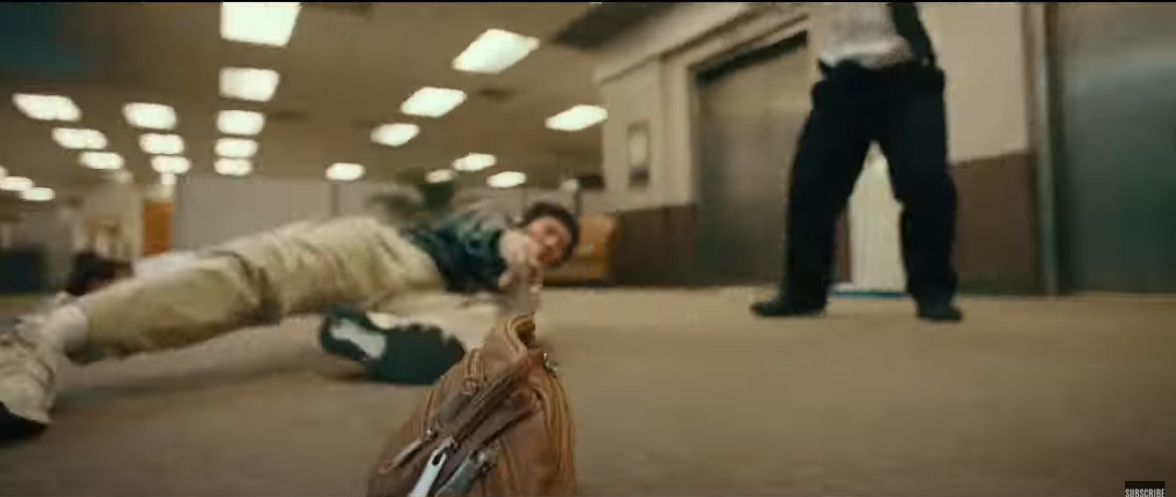
The fight scenes were fun to watch. There seemed to be a little bit of undercranking or a sped up quality to it, and there were things like the shot locked to the fanny pack rolling along the floor, reminiscent of Hong Kong movies. That’s the kind of over-the-top you want.

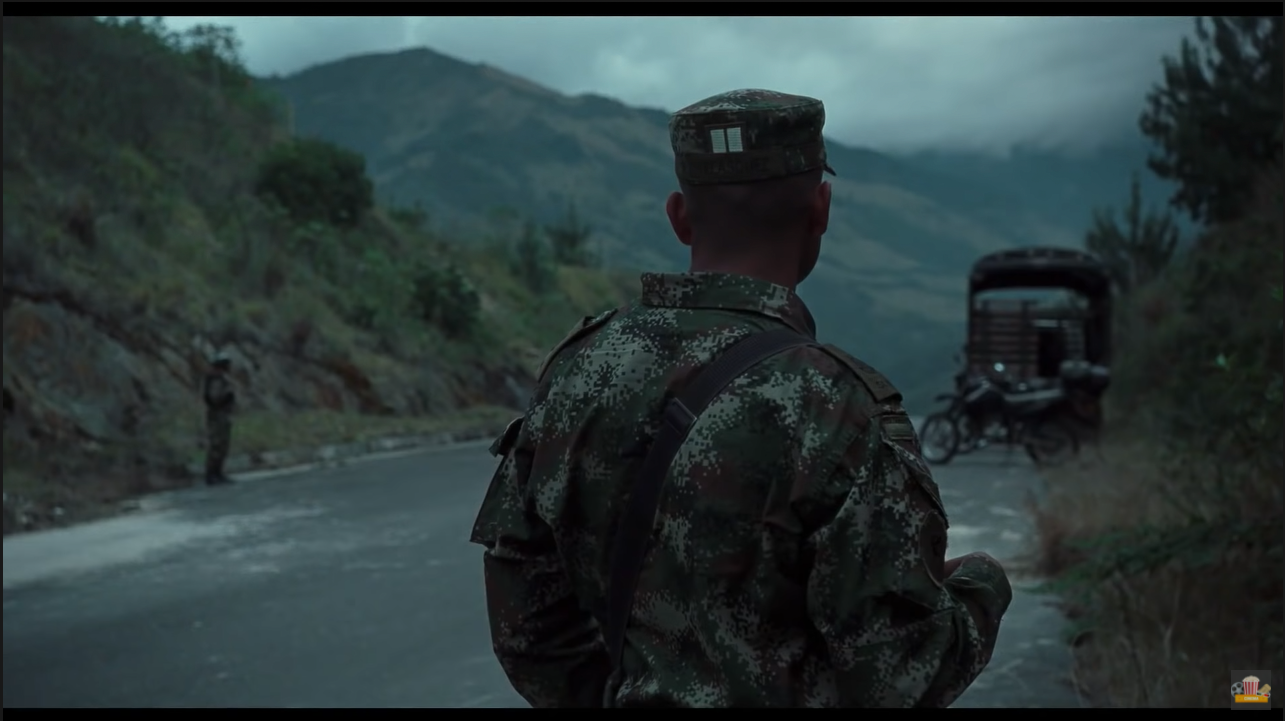
MEMORIA only sinks further beneath my skin with every passing day. On the one hand this was Weeresethekul’s epic breakout with international star Tilda Swinton in the lead, and dialog in English and Spanish. On the other hand, I found this to be the most starkly minimal film from the director yet. (I felt the length with this one, unlike with UNCLE BOONMEE or CEMETERY OF SPLENDOUR, though the running time is longer; the house was packed but the audience seemed to have a brutal time of it, unwilling to even shift in their seats, and when it ended we left in a pall of silence and existential dread.) UNCLE BOONMEE in comparison shares a lot about the characters’ subjectivities and their relationships to the setting. But we have to infer everything and anything about Swinton’s character Jessica, an expat living in Medellín, Colombia, visiting her sister in Bogotá who is recovering in the hospital at the national university. Of course the point is that Jessica is in a strange land, and with a sense of place denied, it’s as if her background and such becomes lost as well.

On a biographical note, I used to experience the same thing Jessica does in MEMORIA’s opening scene that kicks off her quest, namely exploding head syndrome, a sudden loud bang “heard” while falling asleep or waking up, not a real sound in the air but in the mind. This occurred to me semi-frequently when I was younger, up to the end of my teenage years. The “sound,” or the mental image of a sound, for me, was sometimes a dry thud similar to the sound effect in the movie, but it was more often a tinnitus-inducing schwing of a blade, or the pop of an electrical signal. Does Jessica’s bang really exist, as a memory or a premonition? Is it the same thing that’s setting off all the car alarms outside in the morning? 

The best point for restricting this film to the theatrical experience is the use of sound, the climax of the film is essentially a grand formal experiment where sounds from other worlds fill the present moment, and then the soundtrack to the reality of the world eerily drops away. In one scene Jessica walks into a music session, a sequence done in three shots: her approach in the hallway, her watching the performance, and a reverse shot of the musicians. There’s time to dwell on hearing without seeing, then seeing and hearing, and the interactions of the performers were great. I distinctly remember a moment between the pianist and guitarist. The piece itself was a cool and worldly jazz fusion tune, very well chosen, the driving 6/8 time echoing Jessica’s odyssey.

I won’t spoil anything, for this is a decisively rare film to see, but there is a solution to the cause of the sound. After so many decades of art narratives sustaining ambiguity, perhaps explaining the mysteries of the world has become a bold step. With A.W. ‘s work in general, it seems that the story, in the moment of its experience, jerks suddenly into the realm of speculative fiction, but in retrospect you can see the atmosphere of science fiction enveloping all of his art.

E. H. Carr is a big name in my reading solely as the author of a monumental, multi-volume history of the Soviet Union up to 1930, with the initial trilogy of volumes on the Bolshevik Revolution being his headlining achievement. I’ve only gotten through a volume and a half—each book is around 600 pages of small print—but Carr’s excellence as a writer is certainly felt. 

But if you listen to the national security punditry, Carr is also important in the space of international relations theory, and his book THE TWENTY YEARS’ CRISIS is considered a founding text for the twentieth century realist school in bourgeois political science. In its immediate context, the book was an argument for appeasement as the realistic policy choice (this was in 1939). While this is early on in Carr’s intellectual career and his grasp of Marxism remains superficial, his strengths as a prose stylist are well established. He delivers his argument in punchy lines such as: “the fact that utopian dishes prepared during these years at Geneva proved unpalatable to most of the principal governments concerned was a symptom of the growing divorce between theory and practice.” But underneath the rational presentation is a rather eclectic approach to diplomacy and the relations of forces at play in geopolitics.

The book’s ultimate result is a general description of the imperialist struggle of the great powers over spheres of influence. And this rough picture is colored by a bourgeois liberal perspective that is rather platitudinous. The theory of international relations is a simple spectrum between the poles of Utopianism and Realism, between argumentation based on the “common feeling of rights” and argumentation based on the “mechanical adjustment to changes” in geopolitical relations of forces. This balance is expressed concretely in the policy choices of Force or Appeasement. The fundamental problem of handling political change in the international sphere is that of a “compromise between power and morality.” Utopianism ignores power, Realism ignores morality. It becomes clear we’re in the liberal space of politics, since the ideal is nonviolent change (revolution is just as “immoral” as repression in the name of the status quo) and harmonization of class interests within each nation as well as a harmony of nations. But Carr’s critique of utopianism underscores how some overarching world system, either juridical or legislative, will never get off the ground as an adequate solution to the violent wars that keep erupting between competing monopoly blocs. These schemes did not reflect the material reality of international relations so much as the depression-era interests of engineers and technocratic intellectuals.

I ended up liking Hamaguchi’s adaptation of DRIVE MY CAR a lot, especially the low-key feelings it left me with at the end. It was enough to get me to try a Murakami novel out for myself, and I had a very used paperback of 1Q84 sitting around. This is a trilogy of science fiction novels, but I doubt I’ll make it more than halfway through the first volume, where my reading is currently sputtering out before a likely death.

Perhaps it doesn’t help that the book cross-cuts between two narrative lines, one involving a young woman on a mission named Aomame, and the other centered on Tengo, an up and coming writer who gets involved in an odd literary scam with his friend and a precocious teenager. It would clearly be many many pages before these lines converged.

Something about this prose makes it unpleasant to read yet just adequately interesting enough to keep me going. It is not repellant yet nothing attracts me to continue except I guess for its own ease of reading. Tragically, I keep opening the book again to give it another chance only to put it down after a couple pages, repeat ad nauseum.

I don’t enjoy inhabiting the characters’ worlds. What Tengo thinks about and the way he thinks about it stultifies me. These meandering thoughts in cafes, train stations, and bars sound more attractive than they are, like Katherine Mansfield getting drinks with a medicated Dostoevsky in a stuffy bar. Aomame comes off a bit shallow, and a petulant weirdo. She’s an assassin, an ex-softball player, a fighter, but she doesn’t reflect on her own goals that much and her gifts are laboriously presented by the narrator.

The number of people who could deliver a kick to the balls with Aomame’s mastery must have been few indeed. She had studied kick patterns with great diligence and never missed her daily practice. In kicking the balls, the most important thing was never to hesitate. One had to deliver a lightning attack to the adversary’s weakest point and do so mercilessly and with the utmost ferocity—just as when Hitler easily brought down France by striking at the weak point of the Maginot Line. One must not hesitate. A moment of indecision could be fatal.

Is this what fanfic readers refer to when they complain about a character being a Mary Sue? And what’s up with the favorable comparison to Hitler?

Perhaps this style serves to obscure the edge marking the alternate world that Aomame finds herself in, an alternative Tokyo 1984, which seems comfortably identical save for a few key details. This questionable 1984 is designated 1Q84 by Aomame. 

Update: Murakami abandoned. Now reading violent American horror novels.

Holiday reads, sayonara 2021

The Trial: A New Translation Based on the Restored Text (The Schocken Kafka  Library) - Kindle edition by Kafka, Franz, Breon Mitchell. Literature &  Fiction Kindle eBooks @ Amazon.com.

The last month of 2021 saw another review piece for FULL STOP, this time on the latest novel from the great Rikki Ducornet. I made some spicy remarks in this one (at least they might be), and they don’t have to do with Steely Dan trivia.

(source)

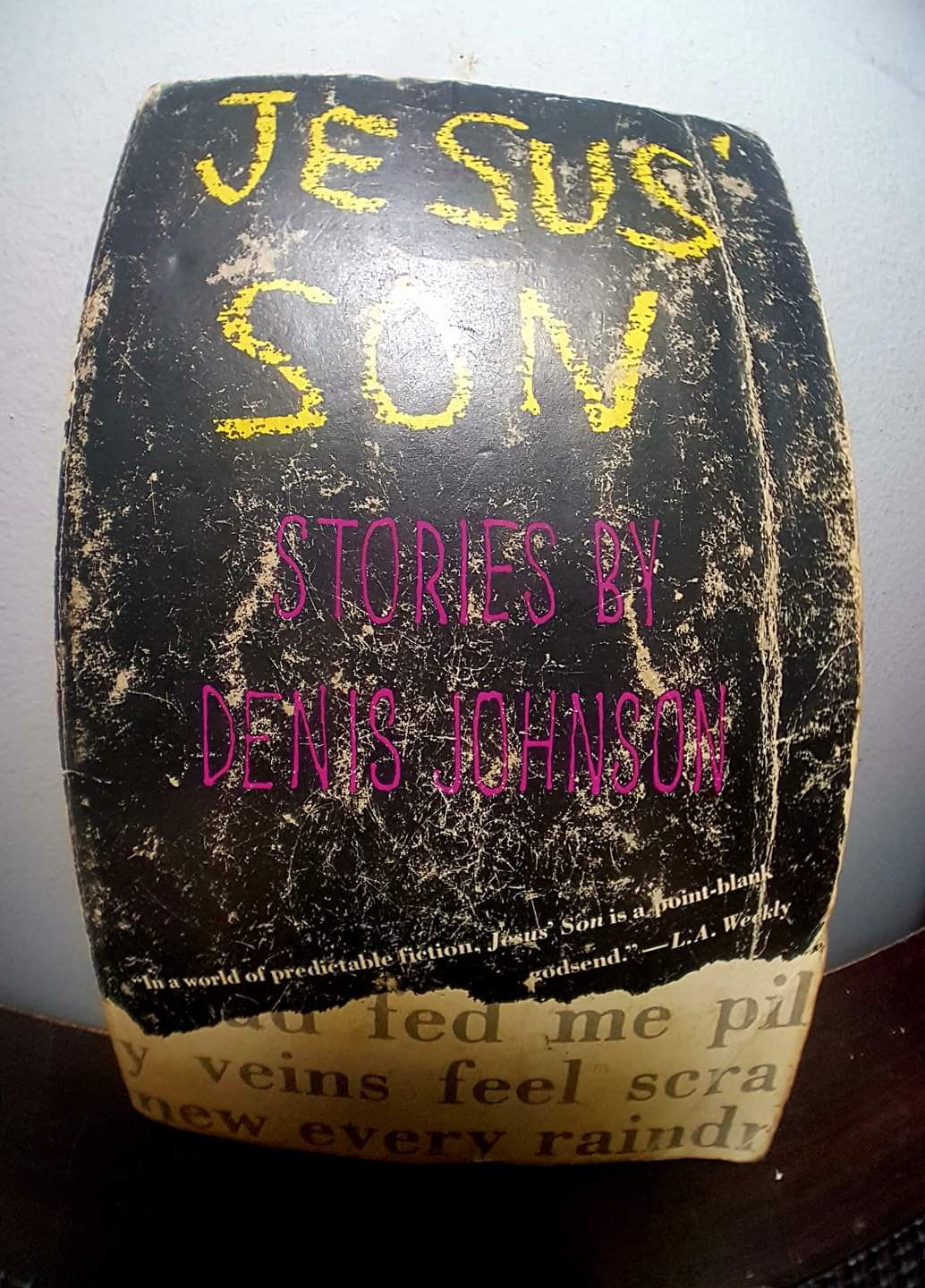
On my way back from one of the rallies for striking grad workers at Columbia, I picked up JESUS’ SON at a curbside book sale for four bucks. Denis Johnson was a great writer. TREE OF SMOKE was utterly engrossing (in a dark period), TRAIN DREAMS and SEAMAIDEN also excellent. But this collection from the 90s was an absolute knockout. The language is so clean and precise while still making all kinds of irregular choices in words and phrasing. When the speaker says he is a “whimpering dog inside” and nothing more, I felt it instantly. With Johnson there’s always this immediate connection so that you feel something for his cast of gentlemen losers. It brings to mind an image from Bruno Schulz of the writer and reader secretly holding hands under the table across which they face.

Every story in this cycle is a brief episode in the speaker’s drifting, dreg-filled life (the only name he goes by is Fuckhead). At the same time each story often breaks down into fragments that can read on their own like prose poems. Here’s one from “Emergency.”

Georgie and I had a terrific time driving around. For a while the day was clear and peaceful. It was one of the moments you stay in, to hell with all the troubles of before and after. The sky is blue and the dead are coming back. Later in the afternoon, with sad resignation, the county fair bares its breasts. A champion of the drug LSD, a very famous guru of the love generation, is being interviewed amid a TV crew off to the left of the poultry cages. His eyeballs look like he bought them in a joke shop. It doesn’t occur to me, as I pity this extraterrestrial, that in my life I’ve taken as much as he has.

#

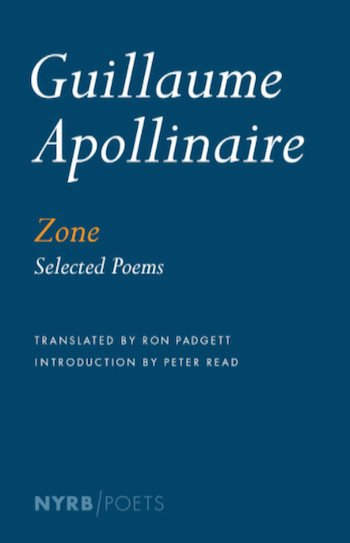
I couldn’t have asked for a better companion on a long plane ride than ZONE, a selection of Guillaume Apollinaire’s poetry translated by the great Ron Padgett. This book is the “fruit of [his] fifty-year engagement” with Apollinaire, and it’s hard to imagine a better fit between two poetic temperaments. Both are playful yet frank and unpretentious. Apollinaire’s lines are clear, even without punctuation, yet also have a capacity for avant-gardism that punches through every now and again, like in “Il pleut” and “The Little Car.” Padgett himself has a deadpan diction the majority of the time (BIG CABIN was a favorite read of last year) but he’s also written the most successful Oulipo text ever, in the form of a haiku that describes how a haiku works within the form of a haiku.

Many of Apollinaire’s poems are made of snatches of everyday conversation, and others are like stories or newspaper articles cut up into lines. And while they’re stuffed with references to mythology, religion, and ancient western literature, his poems are often funny. In “Annie,” the speaker sees a woman walking down a tree-lined road in Texas. This could be the easy occasion for some flaneur-like address to the eternal feminine, or to serendipitous encounters on the street; instead he finishes the poem like this:

Comme cette femme est mennoite
Ses rosiers et ses vêtements n’ont pas de bouttons
Il en manque deux à mon veston
La dame et moi suivons presque le même rite

(Since that woman is a mennonite
There are no buds or buttons on her clothes
Two of them are missing from my coat
The lady and I follow almost the same rite)

This project has become a new favorite book, and I speak as someone who thought he was over the romance of French bohemianism and all that early 20th century business. I was won over by how Apollinaire via Padgett can conjure that opium-addled atmosphere with such beautiful linguistic simplicity.

#

(source)

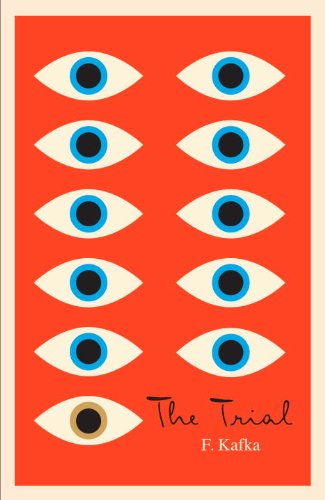
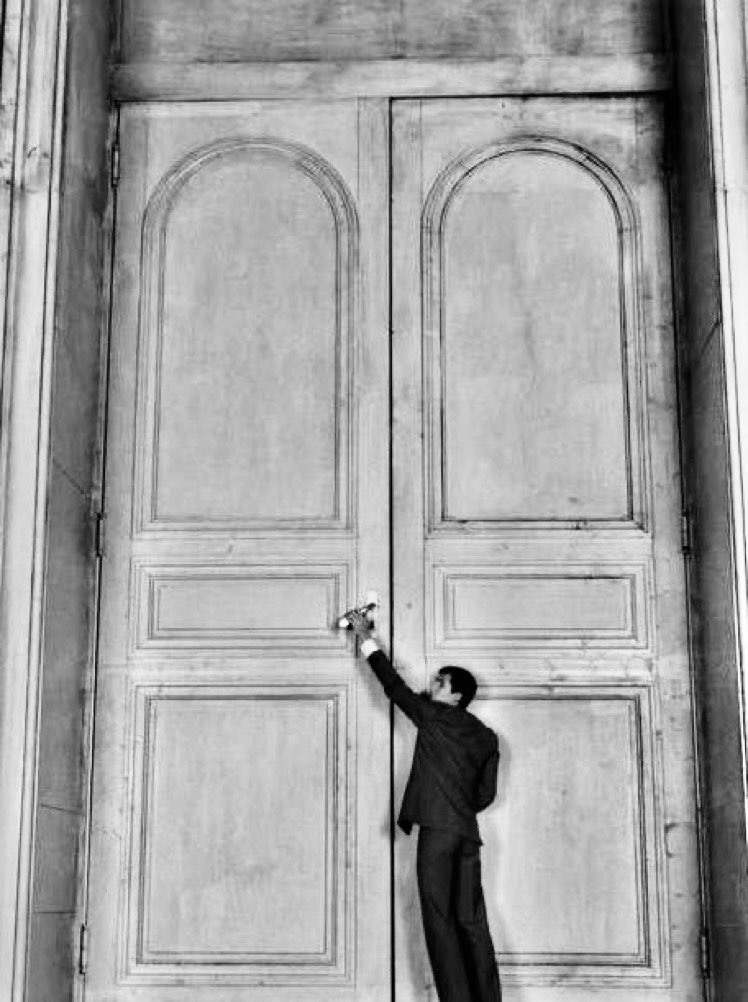
THE TRIAL by Kafka was ideal holiday reading. I may judge books by their covers after all. For a long time I avoided these new editions from Shocken Books because of their slick minimalist covers, whose bold colors and obvious eyeball iconography rubbed me the wrong way. I took them to be lazy and trendy reskins of facsimiles of older translations, similar to Vintage’s monochrome covers for Camus books. I was ignorant of Shocken’s publication history with Kafka in the 30s, in the context of a pro-Jewish cultural assertion against Nazism, and that in the case of THE TRIAL the new cover came with a new translation by Breon Mitchell, one that, according to his preface tries to preserve both the foregrounding of, one, legalese and other professional idioms that are woven in the text (for example, the opening line uses the word “slander” as opposed to the mundane “telling lies”); and two, the general rough character of Kafka’s prose, with its irregularly placed subordinate clauses and massive unbroken paragraphs. These aspects were eclipsed in the translation by the Miurs.

THE TRIAL opens with an absurd scene that from the beginning is presented in a theatrical way (and theatre jargon is used throughout the novel along with legal terms). Every dramatic beat is a comic reversal: K. rings for food, and his arresting officer enters the room, saying, “You rang?” When K., sitting in bed, explains that he wanted the landlady’s cook Anna to bring him breakfast, the stranger goes to the door, opens it a little, and calls into the next room, “He wants Anna to bring him breakfast,” and “a short burst of laughter” comes in response. Ever agitated, K. wonders if what’s happening to him is a joke by his coworkers for his 30th birthday, and worries he’ll come off bad for not taking a joke. He tries to cooperate by offering his papers, but the men in his home take this as an obnoxious play: “you’re behaving worse than a child. What is it you want? Do you think you can bring your whole damn trial to a quick conclusion by discussing your identity and arrest warrant with your guards? We’re lowly employees who can barely make our way through such documents, and whose only role in your affair is to stand guard over you ten hours a day and get paid for it.” But then when K. protests his innocence (to a charge that is never made explicit), they chide him for making a claim in ignorance of the Law. 

K. is in a game with no correct moves. Such is the atmosphere of dread and anxiety in Kafka’s fictive worlds. It is not a “totalitarian” or absolutist bureaucratic society that is the host of this arbitrary, inconsistent, pervasive and petty legal antagonist. It is in the Family structure where such oppression comes into play. The court of THE TRIAL uses the homes of its employees and defendants, in a series of running gags where furniture is being constantly shifted around the room, like stagehands preparing a scene for a play. But lest we get carried away with all this laying bare of the devices of fiction, the priest slash prison warden in the cathedral reminds us to respect the basic narrative integrity of the texts we consume. When K. imposes his reading of the parable of the Law and the door that climaxes this book, the priest critiques him with this remark: “You don’t have sufficient respect for the text and are changing the story.” This line could be addressed to all who say THE TRIAL is simply a dream, or an allegory, and not a story of an individual man, one who, for all intents and purposes, is real. And he really is guilty.

#

(source)

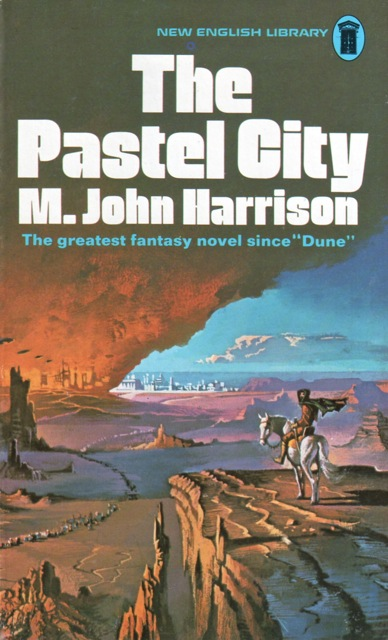
M. John Harrison wasn’t even on my map until 2020 when his latest novel, THE SUNKEN LAND BEGINS TO RISE AGAIN, took the Goldsmith Prize. It’s funny that I’d never heard his name in the same breath as Sturgeon or Le Guin, because he is another fantasy writer with excellent prose. Really, he is another great British master from the 70s I didn’t know about in my typical American ignorance.

PASTEL CITY is about and is another name for VIRICONIUM, a city/statelet in a world that has seen better days. This civilization sits atop layers of detritus from earlier, more advanced societies, so like pulp operas or like Wolfe’s BOOK OF THE NEW SUN, you get swords and sorcery in a landscape full of SF gadgetry.

We follow Lord Cromis, a warrior-poet who sets out to regroup the posse of knights called the Order of Methven, who defend the young Queen Jane, currently in a civil war for the throne of Viriconium with her half sister Canna Moidart. It’s like a western, only the landscape is one of rusted metal. And there are mechanical birds.

The “Lord of Birds” who created these cybernetic familiers resides in the tower of Cellur, an Orthanc-like obsidian structure in the marshes of Cladich. Harrison’s writing is like Le Guin’s in the sense that the quality of the prose isn’t flashy or ostentatious, but simply in the satisfying way in which the words “snap” together. The first book of the VIRICONIUM cycle is a straight ahead SF novel with all the proper western plot beats, but there’s still an extra layer of elegance in the phrasing and word choice. Here’s the description of Cellur in PASTEL CITY:

They reached the tower of Cellur in the evening of the second day. Cresting a ridge of pitted dolerite, they came upon the estuary of one of the unnamed rivers that ran from the mountains behind Cladich. Luminous in the fading light, the water spread itself before them like a sheet of metal. High black escarpments dropped sheer to its dark breaches; the cold wind made ephemeral, meaningless patterns on its surface.

Set in the shallows near the western bank was a small domed island, joined to the mainland by a causeway of crumbling stone blocks. It was barren but for a stand of white, dead pines.

Out of the pines, like a strong finger diminished by distance, rose the tower. It was five-faced, tapering: black. A tiny light shone near its summit, a glow that flickered, came and went. Birds wheeled about it, wailing mournfully, dipping to skim the water—fish eagles of a curious colour, with wings like cloaks in a gale. 

Now check out this romanticist, picturesque, more Tolkein-leaning description of the same locale 80 years later, that is also the opening paragraph of the sequel book A STORM OF WINGS:

In the dark tidal reaches of one of those unnamed rivers which spring from the mountains behind Cladich, a small domed island in the shallows before the sea, fallen masonry of a great age close faintly under the eye of an uncomfortable moon. A tower once stood here in the shadow of the estuarine cliffs, made too long ago for anyone to remember, in a way no one left can understand, from a single obsidian monolith fully two hundred feet in length. For ten thousand years wind and water scoured its southern face, finding no weakness; and at night a yellow light might be discerned in its topmost window, coming and going as if someone there passed before a flame.

Other reads from December: more Ashbery, early poetry by W.S. Merwin (some epic fantasy in its own right), and Tolkein’s THE FALL OF GONDOLIN for the LOTR Holidays of 2021.