Reading proletarian theory during the Alabama bill

Alabama and Georgia: the beginnings of another legal counterattack against the Roe v Wade precedent.

The question of women’s reproductive health rights is never far from proletarian literature—it was this particular strain of this history that started to win me over to socialism. The MANIFESTO highlights prostitution at least a couple of times. And just by coincidence the abortion issue came up time and again in my studies this year.

A great text is Lenin’s article from 1913: “The Working Class and Neo-Malthusianism.”

It’s a common sentiment to regret bringing children into the world, or to even refuse to have children on the philosophical basis that the world is just shit. Schopenhauer runs with this thought into a fully-formed anti-natalism. But this is in fact an expression of petty bourgeois despair. That despair reflects the petty bourgeoisie’s economically precarious existence but also (for the revolutionary-minded of its ranks) its structural inability to wage an independent struggle, as is made clear in STATE AND REVOLUTION. That is, the petty bourgeoisie is not, and can never be the revolutionary class against capitalism.

Yes, we workers and the mass of small proprietors lead a life that is filled with unbearable oppression and suffering. Things are harder for our generation than they were for our fathers. But in one respect we are luckier than our fathers. We have begun to learn and are rapidly learning to fight—and to fight not as individuals, as the best of our fathers fought, not for the slogans of bourgeois speechifiers that are alien to us in spirit, but for our slogans, the slogans of our class. We are fighting better than our fathers did. Our children will fight better than we do, and they will be victorious.

Okay, but what does Lenin think about abortion, since he opened this article with statistical data on it from New York and St. Petersburg.

It goes without saying that this does not by any means prevent us from demanding the unconditional annulment of all laws against abortions or against the distribution of medical literature on contraceptive measures, etc. Such laws are nothing but the hypocrisy of the ruling classes. These laws do not heal the ulcers of capitalism, they merely turn them into malignant ulcers that are especially painful for the oppressed masses. Freedom for medical propaganda and the protection of the elementary democratic rights of citizens, men and women, are one thing. The social theory of neomalthusianism is quite another. Class-conscious workers will always conduct the most ruthless struggle against attempts to impose that reactionary and cowardly theory on the most progressive and strongest class in modern society, the class that is the best prepared for great changes.

There you have it. So many liberals in the discourse keep trying to appeal to the Evangelical right, meet ’em at their own logical terrain, address their deep, genuine, cemented, firmly held faith. Yeah, right! Access to safe abortion is an elemental democratic right for all people who biologically can bear children. It is not a faith issue but a political one; it is one form of expression of the class antagonism undegirding capitalism. After all, why are they sponsoring and campaigning for this backward legislation, and all the energy and money that entails? Why don’t they just pray?

Next, to switch gears from politics to philosophy, is Engels in his 1880 SOCIALISM: UTOPIAN AND SCIENTIFIC.

In the second part on dialectics, he actually uses the “when is abortion murder” question—in fact he demolishes it through correct dialectical reasoning.

For everyday purposes, we know and can say, e.g., whether an animal is alive or not. But, upon closer inquiry, we find that his is, in many cases, a very complex question, as the jurists know very well. They have cudgelled their brains in vain to discover a rational limit beyond which the killing of the child in its mother’s womb is murder. It is just as impossible to determine absolutely the moment of death, for physiology proves that death is not an instantaneous, momentary phenomenon, but a very protracted process.

At what point is abortion murder? The question is a metaphysical non-starter, presupposing life and death as immutable categories, and that death is a switch of one to the other. In fact, death is a process. All of reality is a process, and an assumption that death can be determined at an exact point is a failure to appreciate the fundamental dynamism of the world.

Why reflect on 19th and 20th century communist texts when it comes to abortion struggles in the 21st century US? Because even though capitalism did not invent patriarchy, the former, as an economic system in which commodity production completely dominates, is the ultimate basis for the oppression and exploitation of women. The fundamental contradiction of the capitalist formation is the social character of labor and the private character of its appropriation (through private property and free market competition). The relations of prior human epochs and small-scale commodity exchange are taken up and reinforced by capitalism: the nuclear family and its entrapment of women as domestic servants, homo- and transphobia as weapons against sexual non-conformity.

With the abortion question, the backward social relations of capitalism are blinding. Criminalizing abortion is an attack on democratic rights, an exacerbation of public health when private services are prohibitively expensive, an expansion of racist police terrorism, and a bid to further disenfranchisement via incarceration. Such measures are yet another symptom of the bourgeoisie’s rabid authoritarianism due to the ongoing crisis in capitalism.

Religion? Morality and ethics? Bourgeois smoke screens. The instruments for understanding the issue are the same for addressing it: science and class struggle. We need science to understand the world, and to gain science we must practically act upon it.
Lukacs on the Leninist vanguard party

LENIN:  A STUDY OF THE UNITY OF HIS THOUGHT
Georg Lukacs tr. Nicholas Jacobs
Verso, 2009 p. 30

Lenin’s idea of party organization therefore contains as fixed poles: the strictest selection of  party members on the basis of their proletarian class-consciousness, and total solidarity with and support for all the oppressed and exploited within capitalist society. Thus he dialectically united exclusive singleness of purpose, and universality — the leadership of the revolution in strictly proletarian terms and its general national (and international) character. The Menshevik concept of party organization weakened both these poles, confused them, reduced them to compromises, and united them within the party itself. The Mensheviks shut themselves off from broad strata of the exploited masses (for example, from the peasants), but united in the party the most diverse interest groups, thus preventing any homogeneity of thought and action. During the chaotic melee of the class struggle — for all revolutionary periods are characterized by the deeply disturbed, chaotic state of society as a whole — instead of helping to establish the proletarian unity against the bourgeoisie so essential for victory, and of rallying other hesitant oppressed groups to the proletariat, a party so organized becomes a confused tangle of different interest groups. Only through inner compromise does it ever manage to take any action and, even then, either follows in the wake of the more clear-minded or more instinctive groups within it, or remains forced to look on fatalistically while events pass it by.

No one should starve again, post script to a new interview

I’ve added my first interview (as an interviewee) to the interview section.

It says I have a flair for all things Communism, but there was no space to talk about the ideas of communism, and I didn’t have the fortitude to inflict such an agenda on the interview.

It’s good to simply recall what Adorno says in MINIMA MORALIA. The reason we do what we do is lost in the complexity of socialist organization and analysis. Adorno is constantly making dialectical moves so that the complex is made simple and the simple complex. He says:

Genuine feeling is only to be found in the crudest response: that no one shall go hungry any more.

We can and of course should go on about the eventual abolition of private property, money, the commodity form, the state, and the capitalist system from every square inch of the planet. But he gives us the fundamental imperative. He’s ready to check our fleeting utopian happiness with the constant acknowledgment of eternal human suffering. In that one statement, no one shall go hungry anymore, we appreciate the simplicity of the demand and the how dauntingly complex a task it is to make it a reality.

We can feed the world with the arable land that is left; only a proper distribution and control of resources is missing. Of course, topsoil erosion and global warming has locked us in for a crisis that, along with the reality of global distribution, makes the regressive desires of anarcho-primitivism and anti-civ pastoralism unacceptable.

But we do what we do ’cause revolution is not only possible but necessary. And besides, you gotta feed your comrades before you’re strong enough to destroy the reactionaries.

Ben Kurns does the jungle boogie

Screenshot 2017-09-30 21.15.30

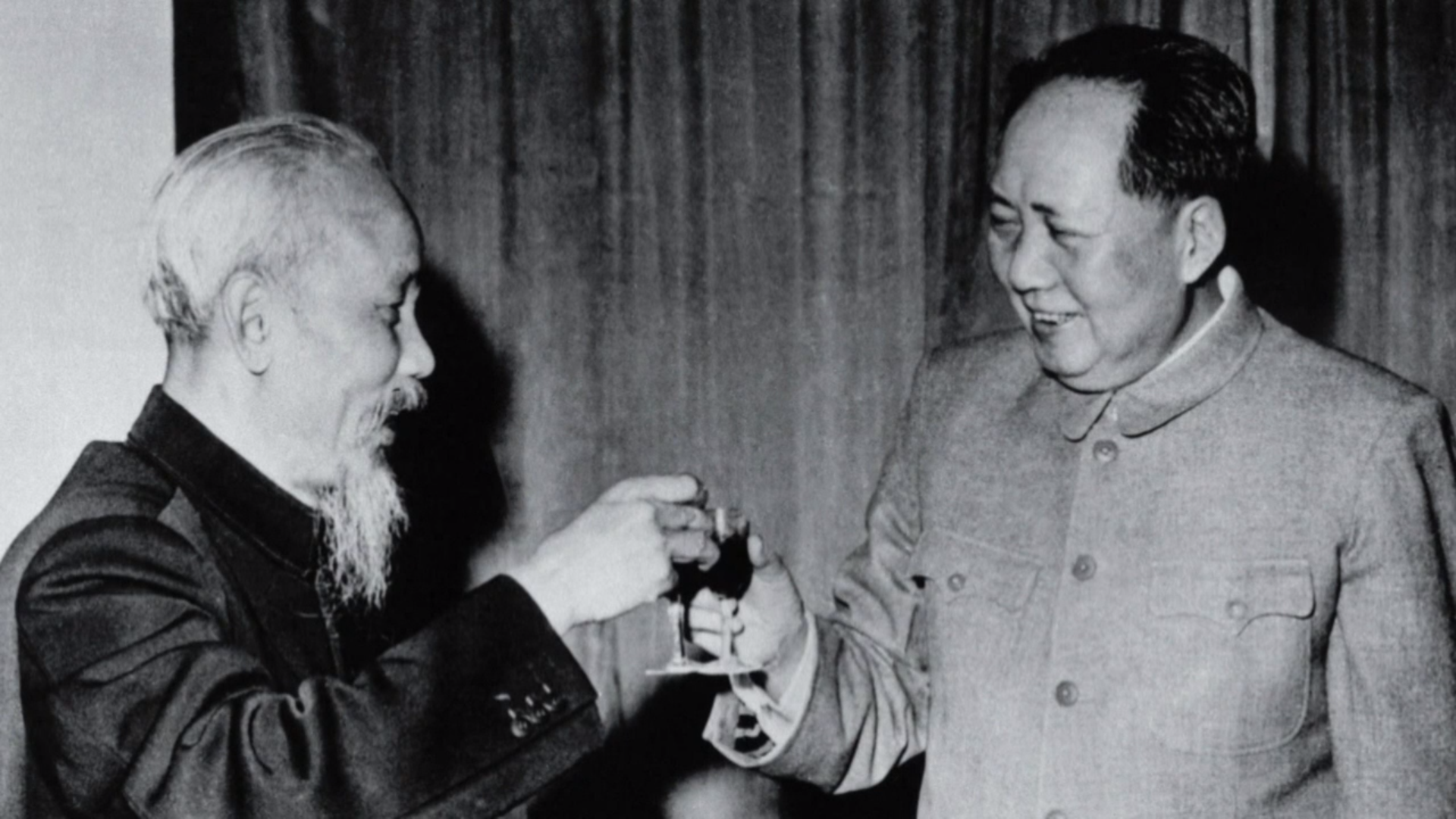
THE VIETNAM WAR
Dir. Ken Burns and Lynn Novik, 2017
Episodes 1-6

Every empire needs an epic, and Ken Burns, whose TV films I’ve been enjoying since, like, 2008, has offered at least six, not including the biopics.

CIVIL WAR has the respected historian Barbara J. Fields on equal standing with Shelby Foote, whose book has no citations, and who compared the Ku Klux Klan to the French Resistance. And as Eric Foner reminds us, it stops short of the Reconstruction, which is even more important than the war itself for understanding how white supremacy works in this country today.

THE NATIONAL PARKS: AMERICA’S BEST IDEA is Burns’s worst film. The displacement and genocide of the Indigenous people is erased, of course. The laconic narration and pans over archival photographs are already cinematic barbiturates, but this most nationalist work in Burns’s ouvre, one that, for all its tree-hugging surface peace, makes the most brutal statement of Amerikan belonging, is aggressively boring.

THE WAR was the best until THE VIETNAM WAR, where the liberal insistence on individual narratives actually gives the viewer contact with the experiences of the poor and proletarianized.

Now he’s talking about Vietnam’s 20-year war for national liberation, and he has edgy new aesthetic resources. A pounding soundtrack of artillery, sinister synth music from Trent Reznor and Atticus Ross, and orientalist world music with Yo Yo Ma on the cello.

Episode 1 opens with the sound of helicopters, announcing its cinematic place with APOCALYPSE NOW and the superior documentary IN THE YEAR OF THE PIG from 1968 by Emile de Antonio.

Then he makes his most avant-garde move yet: the archival footage plays backwards, so that napalm explosions get sucked into little star bursts and riot police charge away from the crowd. This is another cinematic allusion, to none other than Michael Moore’s FAHRENHEIT 9/11, where Moore asks was it all a dream? over hazy night bombing footage.

Narrator Peter Coyote tells us that America invaded Vietnam with the best possible intentions.

There are a lot of contradictions to symbolically resolve: How could the US do this colonial endeavor on a country that merely wanted independence just like this great nation herself? Even worse, how did the supreme capitalist super power get its ass whupped by a country of starving peasants? For the first, fighting communism is good enough, it seems. After the French leave, there is no more mention of rubber and rice as the colonial cash crops. We learn a lot about the Southern Vietnam puppet state (imagine if Madame Nhu had a twitter account). But it’s unclear what the US really had to profit from maintaining it; was it really just ideology?

Episode 1 is called “Deja Vu,” not only between the first and second liberation wars, demarcated by the battle of Dien Bien Phu, but also of course between Vietnam and Iraq/Afghanistan.

But then the filmmakers decide to time jump, so that a summary of Vietnamese anti-colonial struggle against the French is cross cut with testimonies that occur way later in 1968.  It struck me as irresponsible. The anti-war movement was a big part of the “bad sixties.” We should also talk about “bad postmodernism,” since this disintegration of narrative material, rather than shocking the viewer, Walter Benjamin style, out of the hypnotism of the dominant narrative, encourages a laid back relativism. Burns has mined the wave of avant-garde 80s documentary production by radical and feminist artists for their techniques, which are now brought back into the fold of liberal consensus. I’m sorry to see them made safe for work.

But that’s the main contradiction. Documentary filmmakers like Peter Watkins, Su Friedrich, Trinh T. Minh-ha, and Jean-Pierre Gorin dis-integrated their material, voices over black screen, images without sound, precisely so the viewer’s perception of history would be renewed. The Ken Burns effect is hyper integration: a shot of soldiers wading through a rice paddy field has rainfall on the sound track, we hear guns in pictures of gun fights, archival footage can cover for an chopped up talking head interview, etc. National epic poems consolidate the national population. It’s also like melodrama. Just like how the orchestra music has to swell up in the classic films, to formally compensate for what can’t be adequately presented in the narrative content. (Or think of the stings that come with the jump-scare in today’s commercial horror films, which I guess is our contemporary melodrama.)

And they do that liberal thing of cutting two opposing perspectives and calling it fair and balanced. This is more like an opposition than a contradiction ’cause Coyote reads off the death toll at the very beginning, and the Vietnamese suffered far more deaths and casualties (to say nothing of the lingering trauma and effects of Agent Orange and unexploded ordinance). But here we have one American marine talking head discussing an ambush, and we have a North Vietnamese army talking about an atrocity committed by the Americans, and we are invited to lament both equally.

The liberal political line devolves into five-and-dime metaphysics. Everyone suffered in the war. Suffering is the ultimate evil. The horror!

Honestly? I would have preferred leaving the Vietnamese side out: their talking heads don’t get as much screen time anyway. Let them remain ghosts in the psychedelic jungle like in APOCALYPSE NOW (an ugly film on every level). The well-meaning liberal condescension is worse than honest dehumanization.

Another example is when Peter Coyote says the US soldiers called the Vietnamese gooks, dinks, and mamasans, the latter for elderly women; and the communist Vietnamese called the Americans imperialists, invaders, and bandits. It should be obvious that not only are these not equal in severity, but the power situation makes the question of name calling neither here nor there. We already know who suffered more despite winning, since they couldn’t avoid the hard data, but they still try this equivocating rhetoric. But the spell of the Ken Burns effect is a powerful one indeed.

The structure of the film weaves the longue duree narratives of the policy makers and military tactics with harrowing first person accounts. This is one more example of the film’s formal contradictions. The best instance is in the climactic episode 6, which has to cover the Tet Offensive and the riots after the murder of Dr. King as well as the wave of uprisings throughout the industrial capitalist world in 1968. It’s left hilariously vague (you can see one protest sign that says capitalisme in what I think was Paris footage). If you didn’t know better you’d think everybody in May ’68 was just mad as hell at the same time.

But rammed through it is the survival narrative of a US Army doctor who survives a helicopter crash and is captured by the Viet Cong. They’re always ready to lure you into an individual’s experience before the information they present in other sequences might lead the good Democrat-voting viewer to uncomfortable political conclusions.

Pointing out the bad ideology in Burns’s films is like shooting American GIs in a bamboo spike trap. This Vietnam War film isn’t just about the Iraq/Afghanistan wars, or about the undying prestige of public history films. It’s about the unique pleasure of its own Ken Burns effect, which promises to show you the Real of history precisely through the materials where it’s the most absent.