Diary

There are thicc books in this house

It’s here!!! My review piece on Cartarescu’s SOLENOID ran in the spring issue of Asymptote magazine!

This essay is the product of the whole publishing shebang: pitch, draft, editor’s notes, revision, proofreading, galley edits. It was such a pleasure.

But before I can take a victory lap, it’s on to the next review project—actually one of three—which is another modernist meganovel: this time Iberian rather than eastern European. It’s Miquel de Palol’s GARDEN OF SEVEN TWILIGHTS, newly translated from the Catalan by Adrian Nathan West. I’ve come to enjoy these large post war novels and their descendants more and more, surprisingly. They’re certainly not for everyone, and not just for the esoteric qualities. Indeed, I’ve come to think of these meganovels as somewhat akin to video games in that 1) they’re immersive and require a similar investment of time, and 2) they tend to have core loops rather than traditional narrative arcs. (I’m thinking in particular of the shifting between the daily drudgery of Bucharest to the otherworldly buildings in the Caratescu.)

SOLENOID and GARDEN make for an interesting foil of large books. Their translations came out six months apart, from Deep Vellum and Dalkey Archive, respectively, which have significant overlap as publishing houses at the moment. Both have ambitions to reflect on and in many ways summate the history of western literature—though the Cartarescu focuses on modern aesthetics and philosophy, while the Palol dives into the superclassics with its fundamentally Boccaccian conceit. Both dwell a great deal on surreal built environments. Structurally, they’re complex and non-linear while still offering the leisurely drift you want from great novels; SOLENOID is made of several notebooks stuffed with memories and reflections, while GARDEN cycles through a group of storytellers, with narratives nested into each other—at one point up to 8 levels of recursion!

At this time SOLENOID is done and dusted of course, and I’ve only just started on GARDEN, but I already sense that the books have very different thematic projects, despite their modernist commitments. SOLENOID is mystical, it has the same experience of getting lost in the colonnades of subjectivity. But so far GARDEN seems more grubby and materialist, embarking on a grand search for unity in spite of the chaos, while Cartarescu’s hero seems to resign himself to dispersal.

In short, it’s been a season of big, intellectual Literary reading.

Yours truly is excited, and in a moment of self-indulgence he says to himself: AI agents can’t do this yet! I put a lot of time and some effort into delivering rich and complex ideas in a clear and entertaining way—including prose with a decent rhythm and cadence. That kind of flow and shaping, seems to me, remains a human initiative.

I’ve been fooling around with AI-generated Natural Language Processors (NLPs) since 2020. Before ChatGPT and some smaller projects, there was AI Dungeon. While it was decent enough at producing a dungeon exploration gaming experience, it could in practice be used as a chat bot that would offer all sorts of goofball, hallucinatory opinions.

The blunt application of AI to creating commercial science fiction has only led to a glut of garbage. In the arts, AI still only seems to produce chimeras, weird collages of existing elements without a “human” understanding beneath them. My friends in the copywriting industry don’t get the hype; AI-generated content is still transparently inferior. AI excels at chess and other relatively abstract practices, as well as complex operations like flying a simulated fighter plane with perfect reaction times. AI can process cyclopean corpuses of data, but when it comes to real intellectual labor, it can’t really go beyond its internal statistics, vast as they are. What exactly does AI’s “thinking” correspond to? How does one go from ponderable matter—the back-and-forth of salt and potassium in our neurons to make electrical charges—to consciousness, thoughts, feelings, imagination? This is an age-old riddle of dialectics. ChatGPT is familiar with Marxism, as far as I’ve quizzed it, but it doesn’t know how to think like a Marxist. Truly good writing, not only mechanically good, but a meaningful, deep, and true reflection of reality, is always concrete. And for that reason I think human intellectual labor is still safe from the deskillage for the time being.

But perhaps the technology will improve in a couple months!

The other day I heard some striking defenses of using AI in higher education. It makes writing easier, it can proofread, it spares the drudgery of doing your own thinking and formulating. That’s right, writing IS drudgery. It’s intellectual labor.

Along with this rationalization of AI agents for writing is the victory lap taken by some about the supersession of the humanities, those “useless degrees” that only teach you how to write, which AI has so obviously (to these people) displaced. The only impression I get from these corners is 1) they don’t know what serious writing or reading is, and 2) they never took the life of the mind seriously.

At a time when AI content’s mediocrity is still glaringly apparent to the professionals—in copywriting and elsewhere—and many are caught in the disclosure that so many people really don’t know what it takes to write and express yourself well, and have lost contact with the accumulated knowledge of human societies (in part because bourgeois academia took a mystical turn at the 20th century, and now resembles a stomach digesting itself), I am supposing—really just hoping—that those of us who bothered to master these things that AI was supposed to shortcut, will have some scarcity value. Few people around me know how to do the things I do in the particular way I do ‘em!

And now, some brief AI fiction prompted by the blogger in ChatGPT:

Buzz Lightyear stood at the bathroom mirror, his eyes wide and frenzied. He had ingested a most peculiar substance, known as “bath salts”, and the effects were beginning to take hold. Woody the Sheriff, his trusted companion, was nowhere to be found. Buzz could hear the faint echoes of a strange melody drifting down the hall, and knew that Woody must have found something equally strange to indulge in.

Buzz stumbled out of the bathroom, his movements unsteady and uncoordinated. He made his way down the corridor, his senses awash with a riot of colors and sounds. As he reached the end of the hall, he saw Woody swaying back and forth, his eyes half-closed, a small vial of ketamine clutched tightly in his hand.

“Come on, Buzz,” Woody said, beckoning to his friend. “Let’s explore the universe.”

And so, high on their respective drugs, Buzz and Woody boarded their spaceship and set a course for the unknown. As they traveled through the cosmos, they encountered strange creatures and visited alien worlds. But none were as eerie as the planet they stumbled upon by accident.

The planet was shrouded in mist, and the air was thick with the stench of decay. As they descended to the surface, Buzz and Woody saw that the planet was populated by the undead. Zombies roamed the desolate landscape, their eyes empty and their flesh rotting.

But as they explored the planet, they found something even more unsettling. A group of cultists, dressed in black robes and chanting in a language that Buzz and Woody could not understand. They were attempting to summon a demon named Loab, a creature of unspeakable evil.

Buzz and Woody, caught up in their drug-induced haze, decided to join the cultists in their ritual. They danced and chanted, their bodies moving in time with the rhythm of the words. And as they danced, the ground beneath them began to shake.

A rift opened up in the earth, and a figure emerged. It was Loab, the demon they had summoned. Its eyes glowed with a sickly green light, and its mouth twisted into a grin.

“You have summoned me,” Loab said, its voice a deep rumble. “And now, you shall be my servants.”

Buzz and Woody were terrified, but before they could react, the cultists all collapsed, their bodies turning to dust. Loab turned its attention to Buzz and Woody, but before it could strike, something strange happened.

A nearby building began to morph and twist, its walls pulsing like a living thing. And from the midst of the chaos emerged Bo Peep, Buzz’s long-lost love. She had been transformed into a being of immense power, capable of bending reality to her will.

With a wave of her hand, Bo Peep banished Loab back to its own realm. And with another gesture, she restored Buzz and Woody to their senses. They found themselves back on their ship, their adventure over.

As they looked at each other, Buzz and Woody knew that they had experienced something extraordinary. And they knew that they would never forget the strange planet, the undead, and the demon they had summoned. But most of all, they would never forget Bo Peep, and the incredible power she had wielded.

And another:

Tony was a timid boy, with a small frame and a shy disposition. He had always walked to school with his mother, but one day, his mother fell ill and couldn’t take him. Tony had no choice but to take the bus, and he felt his heart pounding with fear as he stepped onto the bus. The other children on the bus looked at him with cold, hard eyes, and he could feel their cruel stares piercing his skin.

Tony felt the sting of their words as they taunted him, calling him names and laughing at him. He was afraid and felt like he didn’t belong. But then, as the bus was traveling down the road, something unexpected happened.

An escaped horse ran out into the road, causing the bus driver to swerve and lose control. Tony suddenly realized that he had mind powers, and he could control the bus driver’s actions. He concentrated all his energy and commanded the driver to hit the horse in the head, killing it instantly.

The other children on the bus were stunned and shocked. They couldn’t believe what they had just witnessed. Tony looked around at their faces and felt a strange sense of satisfaction. He enjoyed their reactions, and for the first time, he felt like he had power over them.

The rest of the bus ride was silent as the children stared at Tony in fear and amazement. Tony basked in the attention, relishing the newfound respect he had earned. He had always been an outcast, but now, he was the one in control.

When the bus arrived at school, Tony stepped off with a newfound confidence. He no longer felt like a victim; instead, he felt like a conqueror. The other children looked at him in awe and fear, and Tony knew that he would never be bullied again. He had found his power, and he would use it to protect himself from the cruelties of the world.


What brown did for me

Heads-up: I spent the last month rolling out a Substack newsletter service called Silent Friends, if you’re interested. Each letter focuses on a single book of fiction, poetry, or nonfiction. And honestly I’m pleased with the subscriber pool that has already developed! 

One result is that the Substack platform is going to be the principal outlet for writing posts about books, which has been my habit for more than a decade of being online. That leaves the ole WordPress open to different kinds of writings and ruminations.

#

I don’t like white noise. It’s coarse, rough, irritating, and gets everywhere.

Brown noise, on the other hand? Brown noise is the shit.

I was aware of the concept of sound colors since high school. You can mess around with them here. Noise signals can be divided into a spectrum of colors, based on the dB level within a certain frequency interval. Warmer colors are assigned to low frequencies while cooler colors denote the high end. They occur naturally as minimal drone tones, the eerie static on a CRT monitor, or the soughing of sea waves, or the traffic from the highway. 

This period also marked my first exposure to harsh noise music, which was a popular scene in Portland OR in those days. Harsh noise is a wonderful thing, after all how often can you claim a work of art is actively trying to hurt you? I’m also a fan of hardcore punk and extreme metal bands that approach the frontier of harsh noise in their sheer ferocity, such as The Gerogerigegege and Last Days of Humanity.

But now, 2023 is shaping up to be the year of smooth noise. Soft is obviously the more correct antonym to harsh, but I choose smooth to emphasize the timbre, and because white and violet noise still have a bit of edge to them. Brown noise as such was advertised to me on Instagram. It quiets your mind, slows down the racing thoughts, banishes your inner disquiet, helps you fall asleep and stay asleep. In my experience it’s all been true!

It’s established here at Second Slope that I’m a fan of conceptual edgework (or “edging” as I’ve come to privately call it), and the appeal of harsh noise and aggressive rock ‘n’ roll is in the edges created by putting different textures, timbres, and riffs together. And a noise signal of a given color is essentially a single musical timbre. Turns out the absence of edges, a smooth planar sound, is quite a pleasurable experience.

After listening to some low frequency brown noise tunes, a rabbit hole of sound hues opened. All sorts of colors and mixtures of stochastically generated audio tracks were brought to my attention at once like ice cream flavors for the ears. If brown gets you down, try Pink or Blue—or Violet. How about white, pink, and brown layered like a neapolitan treat? There’s also the “green” option of minimal nature soundscapes.

Spotify delivers a veritable cottage industry of smooth noise producers, artists with names like Sound Dreamer, Klangspiel, White Noise Workshop, and DJ GOTOSLEEP. They seem to have appeared within the last two years, without exception. The song titles can be poetically allusive like “plunging waterfall” or do nothing more than read out the signal’s frequency in Hertz. One brown noise track by Sleep Miracle called “Low Freq Brown Noise for Baby Sleep” is only 58 seconds long, but it tells a little story: you could hear a kind of glissando within the signal, descending down and down, like the doppler effect from a jet plane. Put the song on repeat, and the glissando descends forever, plunging into untold sonic depths. 

Smooth noise is like a red eye flight, or the humming engines of a spaceship, or a wind tunnel. Blast it to cancel out intrusive sounds in the environment, like construction or partying neighbors. Or keep it at an ambiance to support a podcast. I’ve even kept sound colors going while watching movies. It aids with focus and sleeping, while also aiding tinnitus and ADHD symptoms. It’s a “pure” art that is also of pure utility, as if its current TikTok-fueled buzz is a concession to how messed up we feel just getting by in our lives.

The “brown” of Brown noise is not a color, by the way, but the namesake of Robert Brown, of “Brownian motion” fame. The “proper” color for this frequency range is actually red. Perhaps we should compromise with russet noise? Brownian motion describes the random movement of suspended particles, and it’s happening everywhere from nature to videogames to avant-garde music.

Indeed, soft noise traces its origins back to the stochastic techniques of contemporary classical composers like Ianis Xenakis. Granular synthesis tracks are made by layering tiny samples—only milliseconds long—a technique pioneered by Xenakis with magnetic tapes in the 60s. (He also composed pieces employing probability mathematics like Pithoprakta.) Xenakis had already cut a cool figure in my book before I began the year of smooth granular noise music. He joined the Communist youth wing in Greece and was hurling Molotovs at Nazi tanks rolling through the streets as a highschooler. The “masses” of sounds he created in his early phase reflected the footfalls of the crowds marching in demonstrations and making history.

It was a pleasant surprise to run into this great 20th century composer again while checking out this utterly 21st century phenomenon of therapeutic smooth noise music proliferation.

In the meantime we’re blasting the downward sloped spectrum noise. I got a lotta reading to do!

Autobiography of a long walk enjoyer

After a health setback and adjusting to new medication, I effectively stopped reading or writing for nearly seven weeks.

Unable to think clearly or concentrate on work, I needed a way to fill the time. So I looked at pictures of crime scenes and accident victims: the aftermath of a killer who chopped a young person’s head off, a man who’d been run over by a truck so that his innards had burst through the apertures of his face. I couldn’t digest or even comprehend narrative in any form, so instead of movies I watched YouTube and archive.org videos: a satanic ritual to reanimate a corpse; a shirtless man seated at a table with a bowl of soggy ramen, holding oversized chopsticks, held in captivity by two life-sized and malicious Funko Pop figures, taunting their victim as he sobs between slurps; endless footage of ‘Karens’ disturbing the peace; a couple of good police car chases.

After a great deal of sleeping, my capacity for fiction gradually came back, first with mysteries and whodunnits, then Kobo Abe’s WOMAN IN THE DUNES and Kafka’s AMERIKA: THE MISSING PERSON. It was also an occasion to get reacquainted with graphic novels and manga, which I used to read voraciously, much more than Literature. I finally read MAUS, which was absolutely stupendous—such a bold choice to have animals represent European nationalities, with the mouse as unassimilable(?) Jews, which is absolutely courting controversy, as the epigraph by Hitler confirms, but I love what Spiegelman does with it when, halfway through the story, we go to the world of the making of the comic, where people wear animal masks.

Also the first three volumes of the MOBILE SUIT GUNDAM ORIGIN manga, drawn by the animation director of the original show. The mechs and ships look more imposing and less like toys in monochrome panels, and in general the artwork is a very crisp update of the 70s style. I read a manga adaptation of Lovecraft’s MOUNTAINS OF MADNESS as well, and while it was what you want from a visual adaptation, the drawings were a bit lacking.

I took numerous long walks, up to five miles sometimes, till the weather got too cold. These walks confirmed that my feet were indeed on the ground. I learned that I don’t really care for any of the holidays except new year’s. I don’t even wanna guess how many times I listened to “Cotton Eye Joe.” For a little while I drove a Jeep.

I seem to have bounced back to a more or less stable state, and my activities and aspirations once again involve more than sleeping for 13 hours, so to make up for my posting drought, here are selections from the last three months of my longhand journal:

October 3. WAVES. The first one came from the west. It crashed on those islands initially. But it was a big wave and it sloshed right across to the mainland. It landed on the basin with a big Crash! Water sprayed in innumerable beautiful droplets and the wind carried them further east, but not south. Then it looked like the business was done. However, from the east this time, another huge wave! SMASH! Onto the driest parts of the land, that had never gotten a fleck of the last one. These waves took two and a half centuries to do their thing. No sign of rushing water in many years. You think another rip tide is coming? If it happened before it can happen again, no?

October 9. EVENING, after a day out in Manhattan.

A comet hangs in the sky above me like my weekly assignments. The dirt path ranged over obsidian fields like a ribbon of caramel. Praise the lips of NANDINI, glossy as the Milky Way and pink as bubblegum, and of KUNDAVAI the proud feline of the river. Please allow me to remove the clinking bangles from your wrists, the rain of jewels from your olive-skinned necks. Yellow medicine rims the labial fleshwounds of the heroes. Mary Reufle and Kalki tried to explain stochastic processes to me over philly cheesesteaks and sweet potato fries.

October 13. Jack and some other friends and I arrived on a campus of old red brick buildings one afternoon, the sunlight bathing the grass lawns for now but with some rain clouds approaching in the distance. There were folks in our group I didn’t care to see and I sprinted across the quad to the next building as the drizzle began to fall and darken the paving. I went through an old fireproof door. I texted Jack to tell him where I was hiding and looked around. The floorboards creaked beneath my tread. The halls went on forever. I flipped through deckled pages as the rain pattered on the winter windows. This was my idea of a place!

October 14. [After a viewing of TAR] How do we know we are in the world of high art? Because a hazy strip of Klein International Blue hangs over Berlin, over New York City, over any place where the children enjoy Monster Hunter.

November 22. Fourth day on Z[oloft]. Saturday I took to mustering the strength to read. Read nothing. Sunday morning I managed to read some poems by Marguerite Young. Then some Marx in the evening. Brain fog. Lethargy. I slept for hours on Monday. Food makes me drowsy (but tastes GREAT).

December 24. One foggy Xmas Eve! 

The dialectical operation at work in literary history. Sterne is the greatest ‘experimental’ novelist, everyone agrees. But he laid down the blueprints for 19th c. realism, see BALZAC and TOLSTOY. Then at the end of the century the Russian masters summated realism and in many senses cleared the ground for modernism and surrealism in the next century. Kafka loved Dickens and many of his scenarios originate as pastiches of the English writer. Tendencies toward opposing states.

Systemic eczema rashes on arms, torso, groin. Feels itchy!

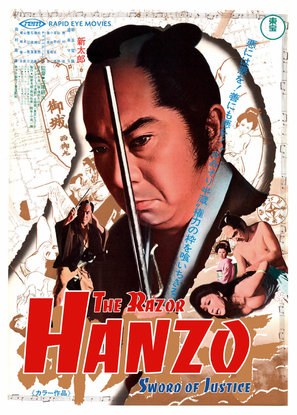
December 26. Boxing Day. In addition to CATS, we put on another cursed “film”: 1973’s HANZO THE RAZOR.

When corruption threatens Edo Japan, only one samurai is horny enough to answer the call. He bellows his catchphrase: “Time to destroy my shit!” Hanzo is a mountain of integrity. Incorruptible, he doesn’t even take his officer’s oath, for then he would stoop to the level of his dissipated peers. A sado-masochistic freak, he uses his implements of torture on his own flesh before inflicting them on his criminal prey, to test their efficacy. His blood runs thick as cranberry jam off the thigh-crushing machine. He rises. The impression of blood remains on the spiked seat—but it seems there is a sizeable area of dryness where his genital region had once been. Yes, Hanzo the Razor gets sexually aroused by his own degradation. Don’t worry about it! He takes a wooden mallet spiked with nails and brings it down repeatedly on his titanically turgid member. He pours a kettle of boiling water over his immense penis, laid out on a wooden pedestal like a meatloaf dinner. A cloud of steam and the water cascades to each side like a parted sea. His dick now thoroughly worked upon, he makes a little hole in a sack of rice and proceeds to pump into it, plowing the rice, turning the grains over like white virgin soil. Now that’s what I call compression!

So much for the duty-conscious Hanzo the Razor.

December 28. But the worst part of this “film” I haven’t talked about. This scene is the chestburster of the movie, the true shocker set piece. So HANZO THE RAZOR is a most effective interrogator. When he needs information he simply rapes it out of women. During one such procedure, we see a shot presenting three overlapping images, one, Hanzo’s sweaty grunting mug, two, the woman screaming first in pain then in pleasure—everyone enjoys being SA’d by Hanzo the Razor in the end—and three, what seems to be the camera positioned in a moist tunnel and pushing its way back and forth like a piston. The image says, “POV: you are HTR’s dick!!!” Horrendous movie.

The clamorous Texan

First off, the great Misery Tourism observed Flag Day by publishing a piece of historical fiction, based on a certain president and premise I’d been kicking around for a few years. It was delightful to hear that readers have indeed learned something from this work. Folks oughta learn things from fiction I say.

Meanwhile, it’s been an eventful summer (a bout of Covid infection, a fulfilling visit west to see friends, a neat museum trip) with some excellent movies—but this post will focus on a couple of old masters I felt the need to revisit, to kickstart myself out of a midsummer reading dry spell.

#

I’ve been underrating Raymond Carver.

I’d meant to write about this for a few weeks but every time I tried, I would just read another poem or story.

It started with grabbing his later collection of poems A NEW PATH TO THE WATERFALL. Carver has been there for virtually my entire literary upbringing, yet I’d never read his poetry till now. It has the same starkness as his prose, but he also permits more weird stuff—some of these lyrics approached James Tate territory.

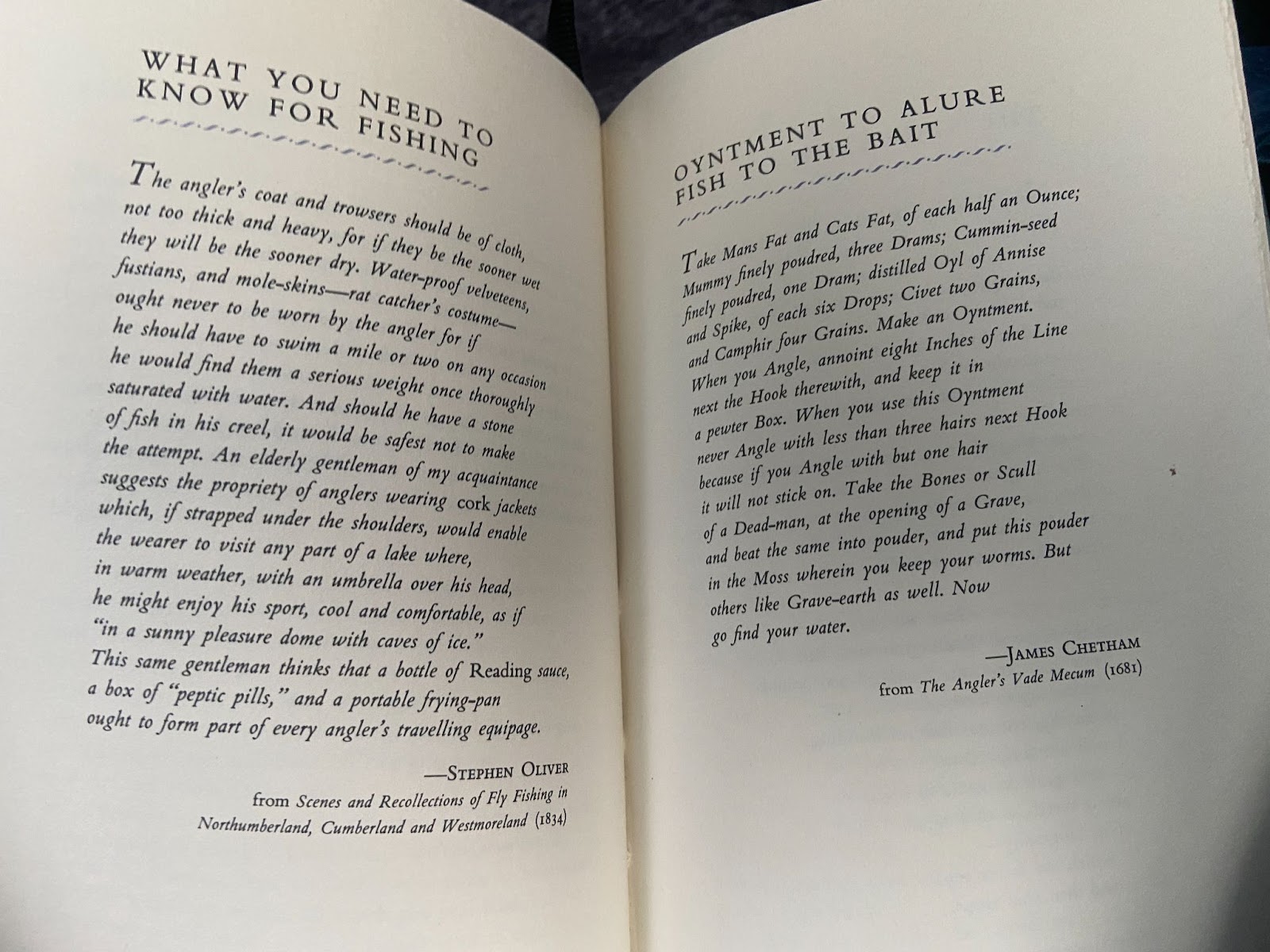
A large amount of these poems were actually just epigraphs, passages of prose from the 19th century or earlier cut up into lines. A lot of it by Chekhov.  And a great deal of these are about fishing. 

His lineation of the Oliver quote helps to bring out the driving rhythm you can find in early 19th century prose, compared with the syllabic austerity in the 17th century epigraph on the opposite page in the image above. The former has the self-assured tenor of a teaching pamphlet, while Chetham’s text, while expressly the same purpose, feels like a spooky recipe.

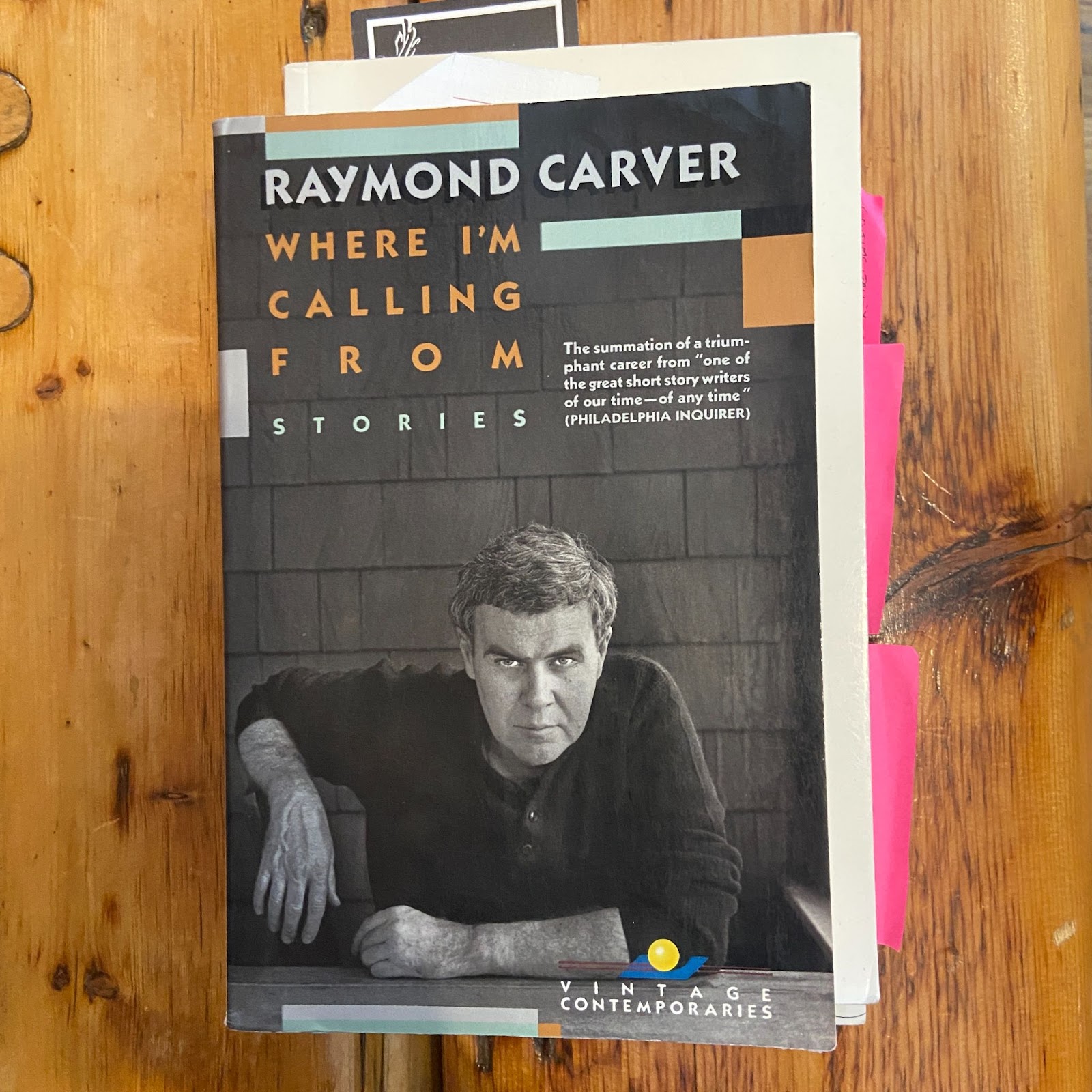
I’ve used the past month to go through the stories collected in the amazing Vintage Contemporaries selection called WHERE I’M CALLING FROM. Reading these masterfully crafted pieces altogether, you get the sense that they are about the same lower middle class heterosexual couple, somewhere in the American west, sometime in the late seventies or early eighties, drinking too much, smoking pot occasionally. The stories unfold like a garden of forking paths, different jobs, different housing situations, different struggles, different processes of breaking up. But other elements remain constant: fishing, coffee in a thermos, taking the phone off the hook. (This is I think the content of Carver’s “minimalism,” if he has it.)  Beneath the placid phrasing on the surface is an ever-winding tension. One feels like disaster could strike any moment, but instead of drama you get lines like these:

“Jesus,” he said. “Jesus, Eileen. I don’t know what to say to that. I really don’t. I have to go now. Thanks for calling,” he said. (“Fever”)

I feel as if I’ve come to a place I never thought I’d have to come to. And I don’t know how I got here. It’s a strange place. It’s a place where a little harmless dreaming and then some sleepy, early-morning talk has led me into considerations of death and annihilation. (“Whoever Was Using This Bed”)

She sits there waiting, her dainty fingers poking her hair.

It is August.

My life is going to change. I feel it. (“Fat”)

Wes, it’s all right, I said. I brought his hand to my cheek. Then, I don’t know, I remembered how he was when he was nineteen, the way he looked running across this field to where his dad sat on a tractor, hand over his eyes, watching Wes run toward him. (“Chef’s House”)

Just the simple “I don’t know” in the middle of that last example before the memory has that mini blast of pathos; the phrase lends a whole atmosphere to the narration, and the occasion for her telling this story and who her “audience” could be coming around the edges.

In the multiple fictive worlds of this typical-Carver couple, these narratives end up staging certain epiphanies, never quite directly related to the sometimes odd encounters they experience, but such experiences trigger the same kind of realization (like at the end of “Fat”), that is precisely expressed in the epigraph from Milan Kundera (another favorite of Carver’s):

We can never know what to want, because, living only one life, we can neither compare it with our previous lives nor perfect it in our lives to come.

#

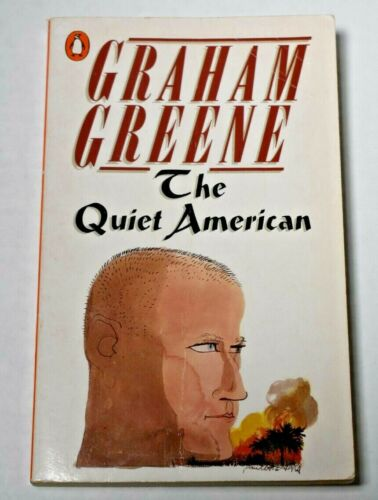
Graham Greene’s THE QUIET AMERICAN was a terrific shred, a story that feels like an emotional disaster in slow motion, seething with pain. The hero is an aging British journalist who mostly hangs out with a prostitute named Phuong, smoking opium in his Saigon apartment while filing war correspondence (it is the final years of the French Indo-China war). But then a young and high-minded American named Pyle comes through, with ideas of a “Third Force” between the colonists and the Communists. He wants to intervene despite Fowler’s discouragement. And worse, he has fallen in love with Phuong and wants to marry her, while Fowler isn’t even formally divorced from his wife in England, and can’t compete with Pyle economically.

This is my second foray into Greene’s kind of fictive world after END OF THE AFFAIR. I was struck once again by that voice full of generic, pronounciatory utterances, and a capacity for self-reproach that can only come from a Cathlolic upbringing or an equal kind of parental cruelty. “We are too small in mind and body to possess another person without pride or to be possessed without humiliation.” Fowler says this after reading a letter from his wife in England refusing him a divorce. Lines like these are peppered through the narrative, including towards the end, when Fowler confirms that Phuong has left him for Pyle, he becomes reflexively anti-American, which is understandable, but in his description he also says: “It was as if I had been betrayed, but one is not betrayed by an enemy.” Which speaks to the human ties that exist between these two men, who indeed go through quite a bit together—even a book taken as a keepsake has a charge of “friendship” to it.

I loved Fowler’s denigration (tinged with pity and caring) for Pyle’s bright-eyed liberal naivety, striving for a “third force” that is neither Communism nor colonialism, relying on spurious bourgeois “analyses” that were indeed very prominent in the mid 20th century (think of Macnamara’s empiricist fetish of statistics in the American war to come). I suppose many of us are in a reflexive anti-American mood at the moment, so it was appropriate.

Suddenly I saw myself as he [Pyle] saw me—a man of middle age, with eyes a little bloodshot, beginning to put on weight, ungraceful in love, less noisy than Granger perhaps, but more cynical, less innocent; and I saw Phuong for a moment as I had seen her first, dancing past my table at the Grand Monde in a white ball dress, eighteen years old, watched by an elder sister, who had been determined on a good European marriage. An American had bought a ticket and asked her for a dance; he was a little drunk—not harmfully, and I suppose he was new to the country and thought the hostesses of the Grand Monde were whores. He held her much too close as they went round the floor the first time, and then suddenly there she was, going back to sit with her sister, and he was left, stranded and lost among the dancers, not knowing what had happened or why. And the girl whose name I didn’t know sat quietly there, occasionally sipping her orange juice, owning herself completely.