New publications, if you are interested~ My story “Blue Hour” in now live in Issue 18 of Scissors & Spackle, the experimental supplement to Emerge Literary Journal, and the ever-excellent Full Stop has published a review essay of WARNING TO THE CROCODILES by Lobo Antunes that I had mentioned working on back in my November 2021 post. Oof, those paragraphs looked shorter in the manuscript. Bah, paragraph breaks are overrated. Right?
And now for the blog
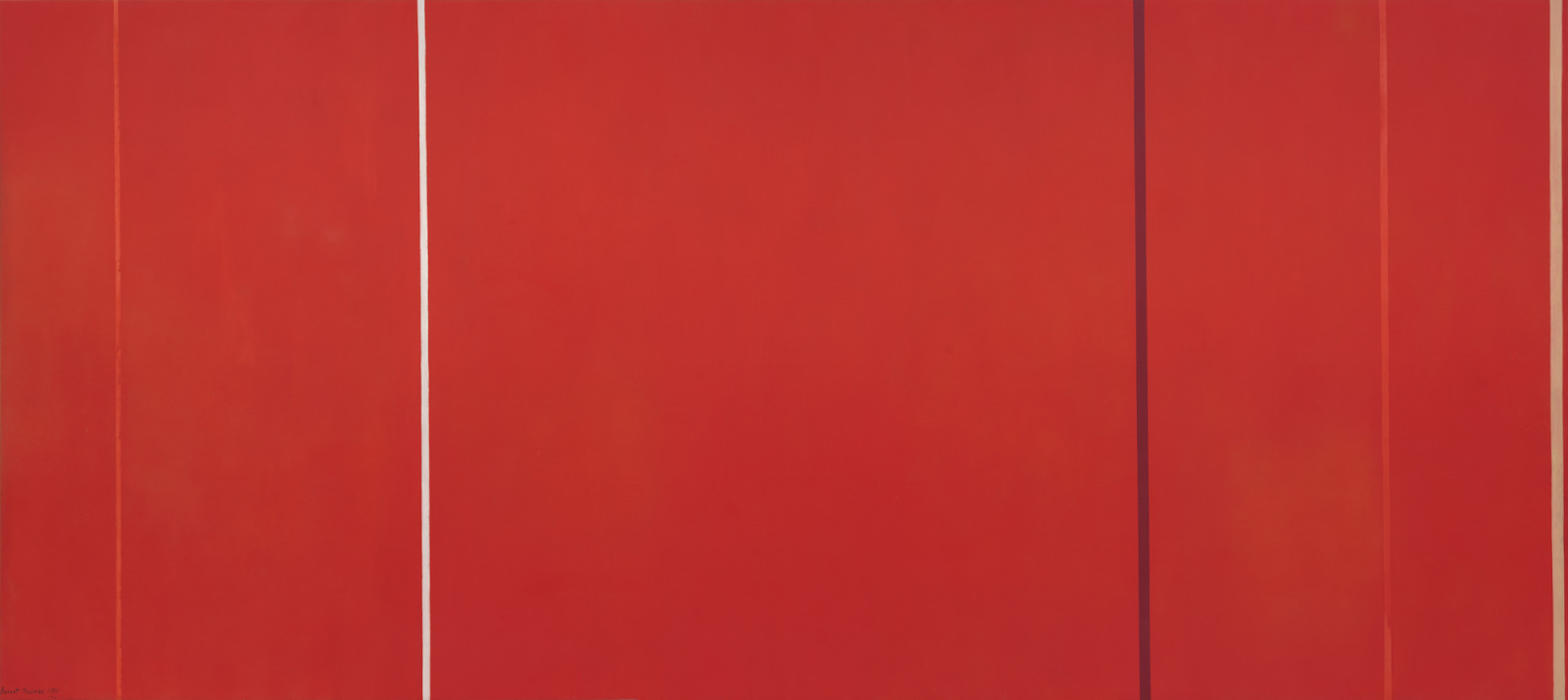
I do miss going to museums. I remember seeing Barnett Newman’s VIR HEROICUS SUBLIMIS in the flesh 12 years ago. Just your usual abstract expressionism, a big—massive color field. A simple composition, five lines before a pure red space, that might reach toward a hazy alien landscape, or a graph of the spectra of visible light.
However, being able to get up close to the painting, more things can be brought to your attention. There are subtleties in how these zips were applied to the picture.
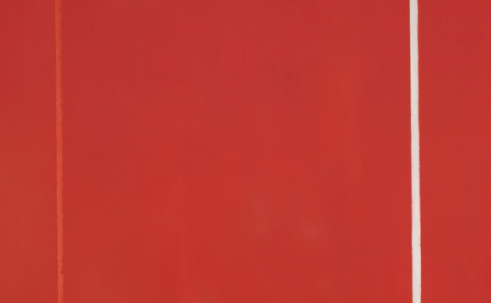
The passage of one’s gaze over one of these lines brings out differences not just in color, but in the texture of the paint layers, and the nature of the edge, whether it is hard or rough. If you read cognitive linguistics and poetics, then at a conceptual level, you can talk about all of these definitional aspects of the painting as edges. It was convenient of Newman’s pictures to be concerned with the arrangement of edges as such. Edges and edgework (I wish they’d call it edging) are essential to the perceptual process. Edges bind the forms of objects in our vision, and distinguish these objects spatially through foreground and background. It’s in the processing of the edges that we process the imagined worlds presented by works of art. Changes in edge-processing reflect changes in artistic texture.
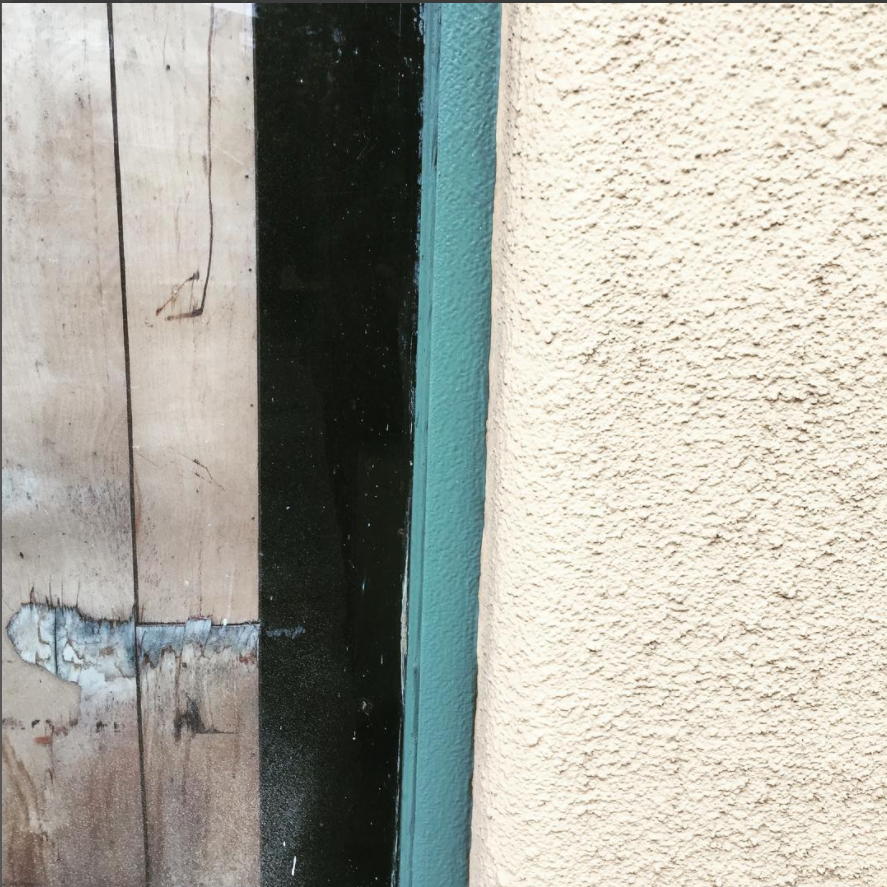
Any form of conceptual transition in any artistic medium, as well as our own physical experience, can be thought of as edges. Moving your hand over wood and glass and feeling the qualitative tactile change of the surfaces, seeing the grain of the wood become the smooth transparency, is an experience of edges. And so is moving your eyes over a line of normal text that suddenly becomes italics. Mr. Lanz would also have us know that switches in point of view, in the reference points for the grounding of figures, also qualify as edgework.
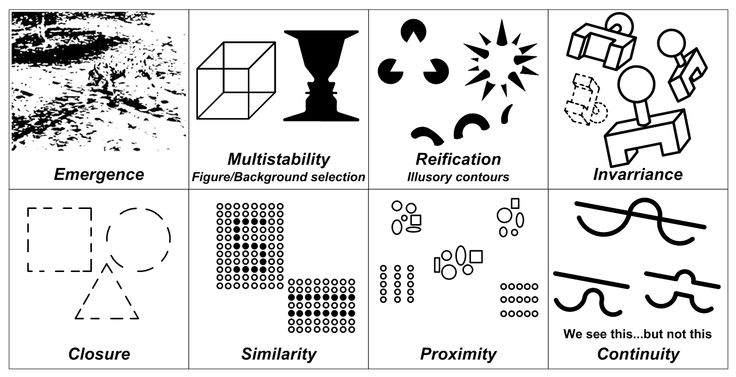
It’s interesting how fundamentally visual the concept is (based in part on gestalt psychology, with principles like in the above illustration), but that appears to be the orientation indicated by modern research into human consciousness. The “movie in your head” metaphor for reading fiction may be quite unavoidable.
(source)
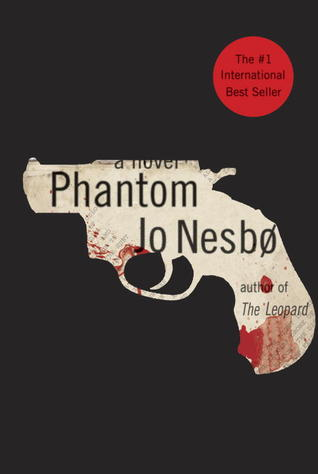
Edges abound even in literary texts. And it was edges I had in mind while reading my third Jo Nesbø thriller. PHANTOM is Harry Hole novel #9. It was hearing about this one that got me to check out the series starting with SNOWMAN, so that I could get here. I was told this one is a deeply sad, slow burn, that it even reaches the realm of Literature. It’s certainly an intimate and dark scenario: the detective returns to Norway to clear the name of his sort-of adopted son Oleg, who is accused of murdering a drug dealer. There are painful scenes of Harry facing Oleg’s addiction problems. It’s a slow burn, and not that suspenseful, mainly because of a dead man’s testimony that interrupts Harry’s detective work.
To go back to edgework: most everyone knows spontaneously how storytelling works. You set a sequence of events, then it’s just a matter of how detailed you want to get. Novels and short stories by professionals aren’t fundamentally different. But where mastery and command come in is the way good writers can establish a story world while directing your attention around and through it. The opening paragraph of PHANTOM is a good example. There’s a general hierarchy of figures that attract readerly attention, with active human agents at the top and abstractions at the bottom, and the narration can brighten these figures or dim them, make them large or small, loud or quiet, bring them near or far away—like a conceptual black box theater. What happens when a text opens without any humans strictly speaking? The main “attractor” in his passage will be an animal, and a human being won’t appear till the end:
Amid the noises of the night in downtown Oslo—the regular drone of cars outside the window, the distant siren that rose and fell and the church bells that had begun to chime nearby—a rat went on the hunt for food. She ran her nose over the filthy linoleum on the kitchen floor. The pungent smell of gray cigarette ash. The sugary-sweet aroma of blood on a piece of cotton gauze. The bitter odor of beer on the inside of a bottle cap, Ringnes lager. Molecules of sulfur, saltpeter and carbon dioxide filtered up from an empty metal cartridge case designed for a nine-by-eighteen millimeter lead bullet, also called a Makarov, after the gun to which the caliber was originally adapted. Smoke from a still-smoldering cigarette with a yellow filter and black paper, bearing the Russian imperial eagle. The tobacco was edible. And there: a stench of alcohol, leather, grease and asphalt. A shoe. She sniffed it. The obstacle lay on its side with its back to the wall blocking the entrance to the nest, and her eight newly born, blind, hairless babies were screaming ever louder for her milk. The mountain of flesh smelled of salt, sweat and blood. It was a human body. A living human being; her sensitive ears could detect the faint heartbeats between her babies’ hungry squeals.
As readers we’re fixed in a place but not necessarily with a point of view (it’s there but it’s delayed, put at the end of the sentence). It’s like a movie whose first shot opens on an empty set before a character enters the frame. In this place there is a regular tone in “the drone of cars,” a faint sound in the “distant sirens,” and a new sound in “the church bells,” that come through a window in a room, placed in an interruptive clause that delays the appearance of the rat, who must be perceiving these things. A familiar scene of urban squalor is established through a defamiliarized POV (to use a keyword from Russian formalism, now a post-“Marxist” term of art). Linguists talk about “impersonation,” which can boost the “attractor” status of a given figure by lending it human qualities. Anthropomorphism is only the most visible form of this strategy: give a bear clothes and he immediately becomes more human, as many English authors understood. In this case, this rat is not just a rat but a momma rat (a mother is a mother), whose way to her hungry babies (not “pups”) has been blocked, not by a human being, but the shoe being worn by one.
The writer could have let us follow the rat until she runs up against “the body,” or “the dead man,” as a kind of readerly jumpscare, but that would miss the point. It is by obscuring the human, the figure that “should” be the most attractive to us, behind the shoe and the smells of a fresh crime scene, by blending him into the setting, that the rat retains our POV alignment. It’s all capped off with the faint heartbeats of the dying man woven in with the cries of the rat’s pups. Guiding readerly attention in this way, amplifying animals and downgrading humans as per the needs of the story, is the novelist’s bread and butter.
Motherhood is not the only thing applied to this rat that contributes to the “impersonation.” This is one attuned rat, who can pick out the smells of “wet cigarette ash,” blood on cotton, the residue of beer on a bottle cap, and she even knows the brand name. And what about that sentence in the middle, beginning with “molecules,” which might lead back to the animal’s smell, good enough to perceive the molecules “filtering up” from the bullet casing, but goes into a full forensic register about gunpowder and Makarov bullets. Is it the rat or the third person narrator demonstrating this ballistics knowledge? Maybe it’s the still-dying man, whose first testimony is about to begin. Maybe it’s what Harry Hole would have observed, if he could have.
Actually, in fiction there’s always a narrator and a POV, even when the first person is employed, and both sides supply language to the text in tandem.
As cool as the above passage was, I dunno, this entry in the HH series isn’t doing it for me (I’m 75% done). It feels slower than previous books even though it’s shorter. The crosscut structure with the dead man’s testimony dampened things down. The writing style is beginning to annoy me (Don Bartlett also translates Knausgaard’s books). I don’t know what writers and readers see in these clipped sentences that leave out verbs or agents. “Alex set his americano on the table next to his laptop. Took a small sip. Opened the laptop and got to writing.” It brings to mind a very narrow open door frame, and only one thing can ever come through it at a time. Perhaps it’s the intensively monotrack mentality of a detective.
One example is this passage where Harry Hole falls off his horse into the water. Because Harry’s been knocked out of his senses, this disintegrated experience from his POV gives us essentially a walkthrough on how edgework works in literature:
Harry swam toward the light, toward the surface. The light became stronger and stronger. Then he broke through. Opened his eyes. And stared straight up at the sky. He was lying on his back. Something came into his field of vision. A horse’s head. And another.
The edges mark the transitions from water to air (a literal edge of surface tension), darkness to light (and the light brightens). How much more basic can it get? An undefined shape, a “something,” resolves into a horse’s head, joined by an additional identical shape.
If you count the full stops, there are nine sentences. But I prefer to think that there are four sentences, and that two of them have four and three full stops, respectively.
And I may prefer to read about a rat detective than the next Harry Hole.


 Second Slope