Great movies and not-so-great books // April summation

Watch the skies!

Sometimes it be like that.

I’ve been giving up on novels at an above-average rate lately, tho it could be that my threshold for putting down a work of fiction is lowering. 

It’s clear to me how well I’ve avoided writing about books here that I find unsatisfying. Talking about these experiences doesn’t come as easily.

But on the other side are two positive things on the movie-going front. Really, going from EVERYTHING EVERYWHERE ALL AT ONCE by Daniel Kwan and Daniel Scheinert to MEMORIA by Apichatpong Weeresethekul was as hard a shift from maximalism to minimalism you could make within current narrative cinema.

It’s funny that a few posts back I had talked about quantum mechanics being surrealistic in its implications. Then in March mainstream audiences get nailed by a high-concept martial arts comedy whose conceit—fundamental it seems to a lot of Daniels’ work—is essentially a quasi-scientific rationalization for surrealism. Rather than subjective freedom of the imagination or the mysterious unconscious, this kind of goofiness is placed on an objective basis, with all matter being in a superposition of forms, and so on. However, the practical result is the same, for as Michelle Yeoh’s character says, you can imagine whatever nonsense you want and somewhere it is inevitably real. The absurdism may be too much for some audiences, and everyone will have a threshold at a different gag, but as someone who grew up on Stephen Chow I enjoyed this absurd hyperpop romp as produced by the Russo Bros. Stupid gags that are well thought out are the supreme form of comedy. The emotional core in the family drama was smartly written, especially at the beginning. The resolution was naive but one can appreciate the gesture against apathy and disappearing into the bagel/anus singularity, wrapped in a sci-fi concept that contains the noise of the multiverse as a reflection of the noise of the modern world. I can’t really think of anything else from the twenty-first century quite like it, except MINDGAME. And I have definitely never felt a crowd rocked so hard by a film in my life.

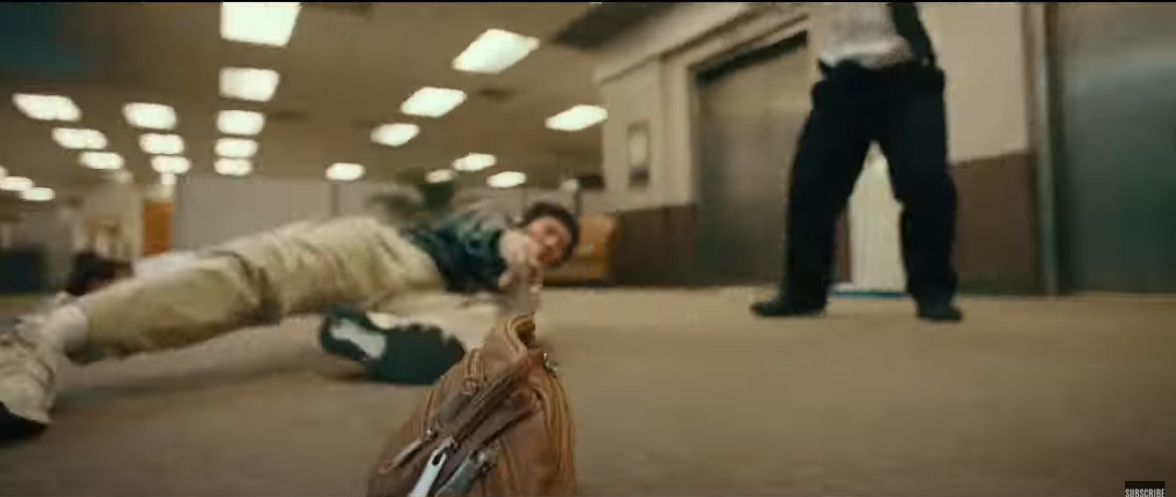
The fight scenes were fun to watch. There seemed to be a little bit of undercranking or a sped up quality to it, and there were things like the shot locked to the fanny pack rolling along the floor, reminiscent of Hong Kong movies. That’s the kind of over-the-top you want.
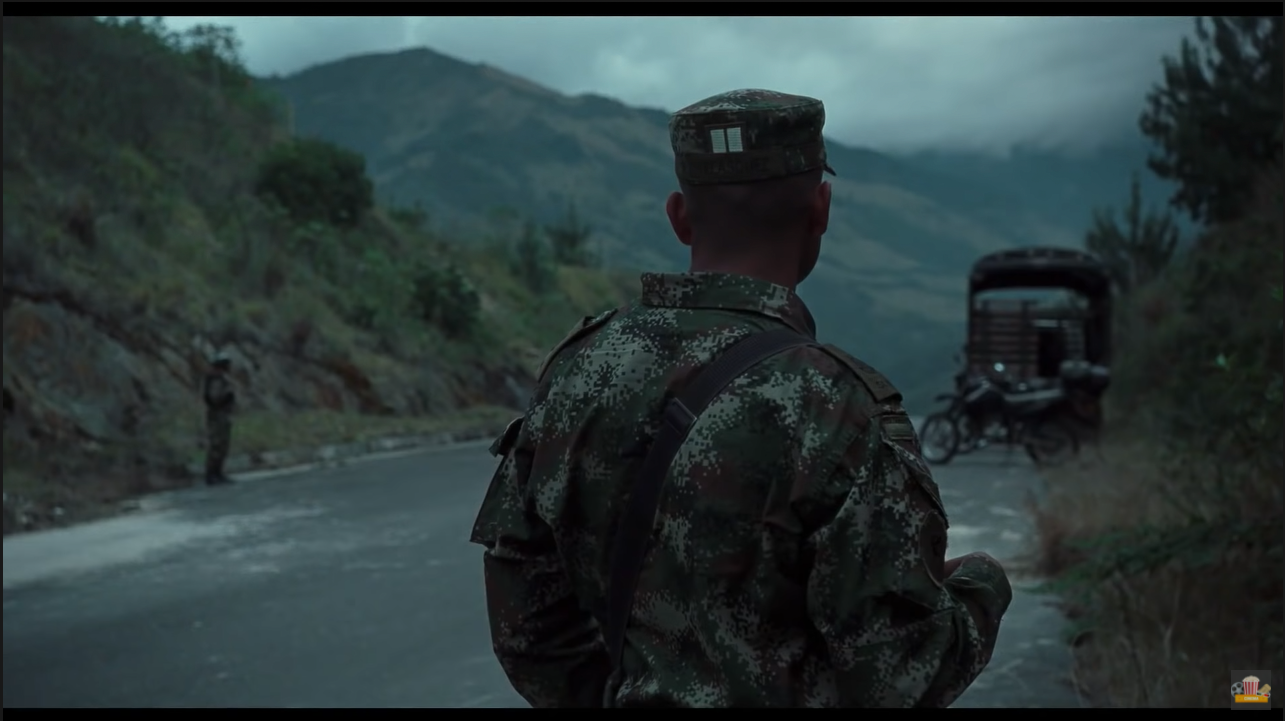
MEMORIA only sinks further beneath my skin with every passing day. On the one hand this was Weeresethekul’s epic breakout with international star Tilda Swinton in the lead, and dialog in English and Spanish. On the other hand, I found this to be the most starkly minimal film from the director yet. (I felt the length with this one, unlike with UNCLE BOONMEE or CEMETERY OF SPLENDOUR, though the running time is longer; the house was packed but the audience seemed to have a brutal time of it, unwilling to even shift in their seats, and when it ended we left in a pall of silence and existential dread.) UNCLE BOONMEE in comparison shares a lot about the characters’ subjectivities and their relationships to the setting. But we have to infer everything and anything about Swinton’s character Jessica, an expat living in Medellín, Colombia, visiting her sister in Bogotá who is recovering in the hospital at the national university. Of course the point is that Jessica is in a strange land, and with a sense of place denied, it’s as if her background and such becomes lost as well.
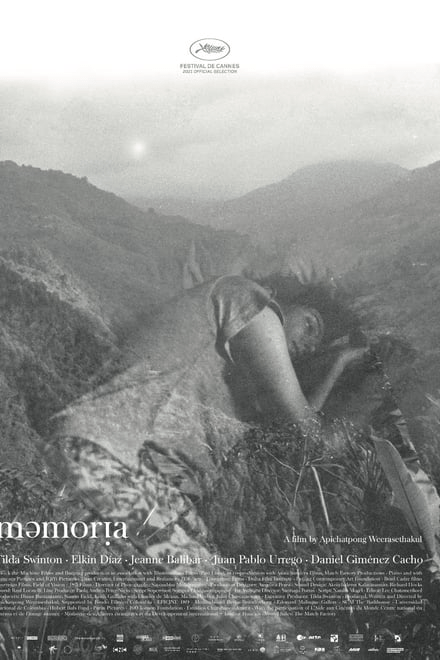
On a biographical note, I used to experience the same thing Jessica does in MEMORIA’s opening scene that kicks off her quest, namely exploding head syndrome, a sudden loud bang “heard” while falling asleep or waking up, not a real sound in the air but in the mind. This occurred to me semi-frequently when I was younger, up to the end of my teenage years. The “sound,” or the mental image of a sound, for me, was sometimes a dry thud similar to the sound effect in the movie, but it was more often a tinnitus-inducing schwing of a blade, or the pop of an electrical signal. Does Jessica’s bang really exist, as a memory or a premonition? Is it the same thing that’s setting off all the car alarms outside in the morning? 

The best point for restricting this film to the theatrical experience is the use of sound, the climax of the film is essentially a grand formal experiment where sounds from other worlds fill the present moment, and then the soundtrack to the reality of the world eerily drops away. In one scene Jessica walks into a music session, a sequence done in three shots: her approach in the hallway, her watching the performance, and a reverse shot of the musicians. There’s time to dwell on hearing without seeing, then seeing and hearing, and the interactions of the performers were great. I distinctly remember a moment between the pianist and guitarist. The piece itself was a cool and worldly jazz fusion tune, very well chosen, the driving 6/8 time echoing Jessica’s odyssey.

I won’t spoil anything, for this is a decisively rare film to see, but there is a solution to the cause of the sound. After so many decades of art narratives sustaining ambiguity, perhaps explaining the mysteries of the world has become a bold step. With A.W. ‘s work in general, it seems that the story, in the moment of its experience, jerks suddenly into the realm of speculative fiction, but in retrospect you can see the atmosphere of science fiction enveloping all of his art.

E. H. Carr is a big name in my reading solely as the author of a monumental, multi-volume history of the Soviet Union up to 1930, with the initial trilogy of volumes on the Bolshevik Revolution being his headlining achievement. I’ve only gotten through a volume and a half—each book is around 600 pages of small print—but Carr’s excellence as a writer is certainly felt. 

But if you listen to the national security punditry, Carr is also important in the space of international relations theory, and his book THE TWENTY YEARS’ CRISIS is considered a founding text for the twentieth century realist school in bourgeois political science. In its immediate context, the book was an argument for appeasement as the realistic policy choice (this was in 1939). While this is early on in Carr’s intellectual career and his grasp of Marxism remains superficial, his strengths as a prose stylist are well established. He delivers his argument in punchy lines such as: “the fact that utopian dishes prepared during these years at Geneva proved unpalatable to most of the principal governments concerned was a symptom of the growing divorce between theory and practice.” But underneath the rational presentation is a rather eclectic approach to diplomacy and the relations of forces at play in geopolitics.

The book’s ultimate result is a general description of the imperialist struggle of the great powers over spheres of influence. And this rough picture is colored by a bourgeois liberal perspective that is rather platitudinous. The theory of international relations is a simple spectrum between the poles of Utopianism and Realism, between argumentation based on the “common feeling of rights” and argumentation based on the “mechanical adjustment to changes” in geopolitical relations of forces. This balance is expressed concretely in the policy choices of Force or Appeasement. The fundamental problem of handling political change in the international sphere is that of a “compromise between power and morality.” Utopianism ignores power, Realism ignores morality. It becomes clear we’re in the liberal space of politics, since the ideal is nonviolent change (revolution is just as “immoral” as repression in the name of the status quo) and harmonization of class interests within each nation as well as a harmony of nations. But Carr’s critique of utopianism underscores how some overarching world system, either juridical or legislative, will never get off the ground as an adequate solution to the violent wars that keep erupting between competing monopoly blocs. These schemes did not reflect the material reality of international relations so much as the depression-era interests of engineers and technocratic intellectuals.
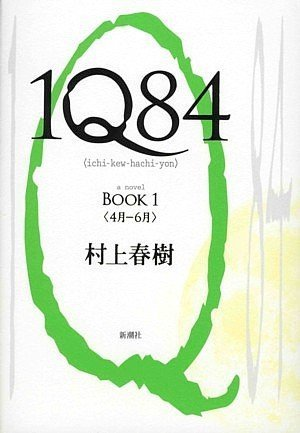
I ended up liking Hamaguchi’s adaptation of DRIVE MY CAR a lot, especially the low-key feelings it left me with at the end. It was enough to get me to try a Murakami novel out for myself, and I had a very used paperback of 1Q84 sitting around. This is a trilogy of science fiction novels, but I doubt I’ll make it more than halfway through the first volume, where my reading is currently sputtering out before a likely death.

Perhaps it doesn’t help that the book cross-cuts between two narrative lines, one involving a young woman on a mission named Aomame, and the other centered on Tengo, an up and coming writer who gets involved in an odd literary scam with his friend and a precocious teenager. It would clearly be many many pages before these lines converged.

Something about this prose makes it unpleasant to read yet just adequately interesting enough to keep me going. It is not repellant yet nothing attracts me to continue except I guess for its own ease of reading. Tragically, I keep opening the book again to give it another chance only to put it down after a couple pages, repeat ad nauseum.

I don’t enjoy inhabiting the characters’ worlds. What Tengo thinks about and the way he thinks about it stultifies me. These meandering thoughts in cafes, train stations, and bars sound more attractive than they are, like Katherine Mansfield getting drinks with a medicated Dostoevsky in a stuffy bar. Aomame comes off a bit shallow, and a petulant weirdo. She’s an assassin, an ex-softball player, a fighter, but she doesn’t reflect on her own goals that much and her gifts are laboriously presented by the narrator.

The number of people who could deliver a kick to the balls with Aomame’s mastery must have been few indeed. She had studied kick patterns with great diligence and never missed her daily practice. In kicking the balls, the most important thing was never to hesitate. One had to deliver a lightning attack to the adversary’s weakest point and do so mercilessly and with the utmost ferocity—just as when Hitler easily brought down France by striking at the weak point of the Maginot Line. One must not hesitate. A moment of indecision could be fatal.

Is this what fanfic readers refer to when they complain about a character being a Mary Sue? And what’s up with the favorable comparison to Hitler?

Perhaps this style serves to obscure the edge marking the alternate world that Aomame finds herself in, an alternative Tokyo 1984, which seems comfortably identical save for a few key details. This questionable 1984 is designated 1Q84 by Aomame. 

Update: Murakami abandoned. Now reading violent American horror novels.
See ya later, doppelgänger! October summed up

First things first.

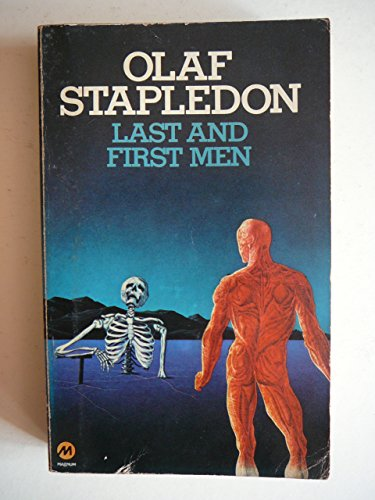
I had a new story published in Passages North at the beginning of the month, inspired by Olaf Stapledon but really more in the manner of A. E. Van Vogt. Neat! I read it out loud at the open mic in the cafe where I wrote it. There were so many stand-up comics doing sets at the show that even I got heckled. Laugh-a-minute. I put cinnamon in my coffee every day till I saw DUNE in theaters.

More reads: Anne Carson’s SHORT TALKS | Paul Curran’s LEFT HAND| Thomas Mann’s MAGIC MOUNTAIN (whew!) | Stevens’s PARTS OF A WORLD | Ashbery’s CAN YOU HEAR, BIRD | 

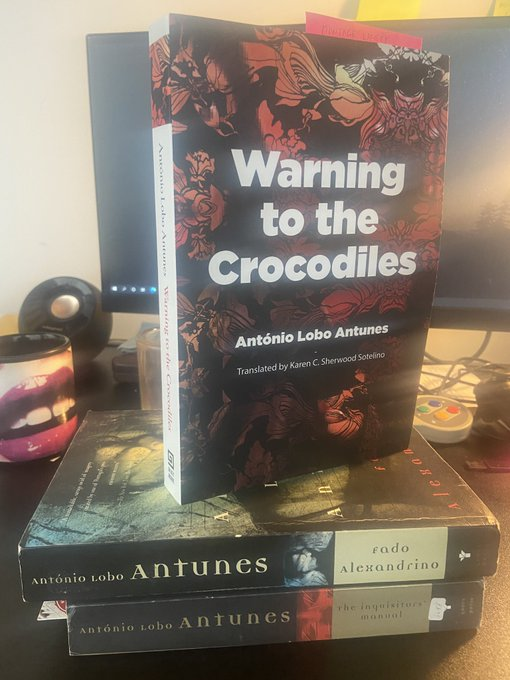
And a press copy of my most anticipated novel of the year, for two years in a row: WARNING TO THE CROCODILES by Antonio Lobo Antunes, translated by Karen C. Sherwood Solentino, from Dalkey Archive.

If you’re at all interested in translated literature then I urge you not to sleep on this great Portuguese novel from 1999. Lobo Antunes is a living grandmaster of literary modernism, and even all my personal hype did not prepare me to realize that this translation is very important, as this work is a summation of the tendencies in his 90s output, in the same way FADO ALEXANDRINO (perhaps his masterpiece) works as a summation of the 80s. A review to come, probably next year. As for the cover, I like the palette, and when you look past the fractal floral pattern and see that it is masking a strange image with pixelated faces, which is suggestive and fits as a depiction of the Lobo Antunes literary experience, with its ultra-subjective haziness. But my reflexive tastes definitely prefer the monochrome with red accent minimalism of Dalkey’s typical covers. Perhaps uniform covers are on their way out more generally.

Now for my trip to Norway via Fosse.

#

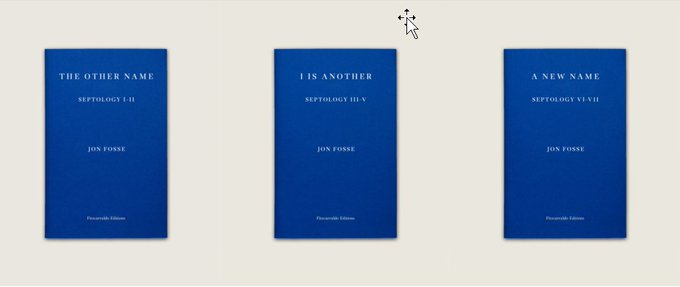
During the day I wrote the opening of Septology. I just started with my laptop on my stomach in bed. I write easily. Something comes to me when I sit down to write. I have never had writer’s block. […] What I experience when I write has as great an impact, if not greater, than what I experience in life. To write is to dream while awake, to place oneself in a controlled dreamlike state where one advances by listening.

Jon Fosse, interview in MUSIC AND LITERATURE

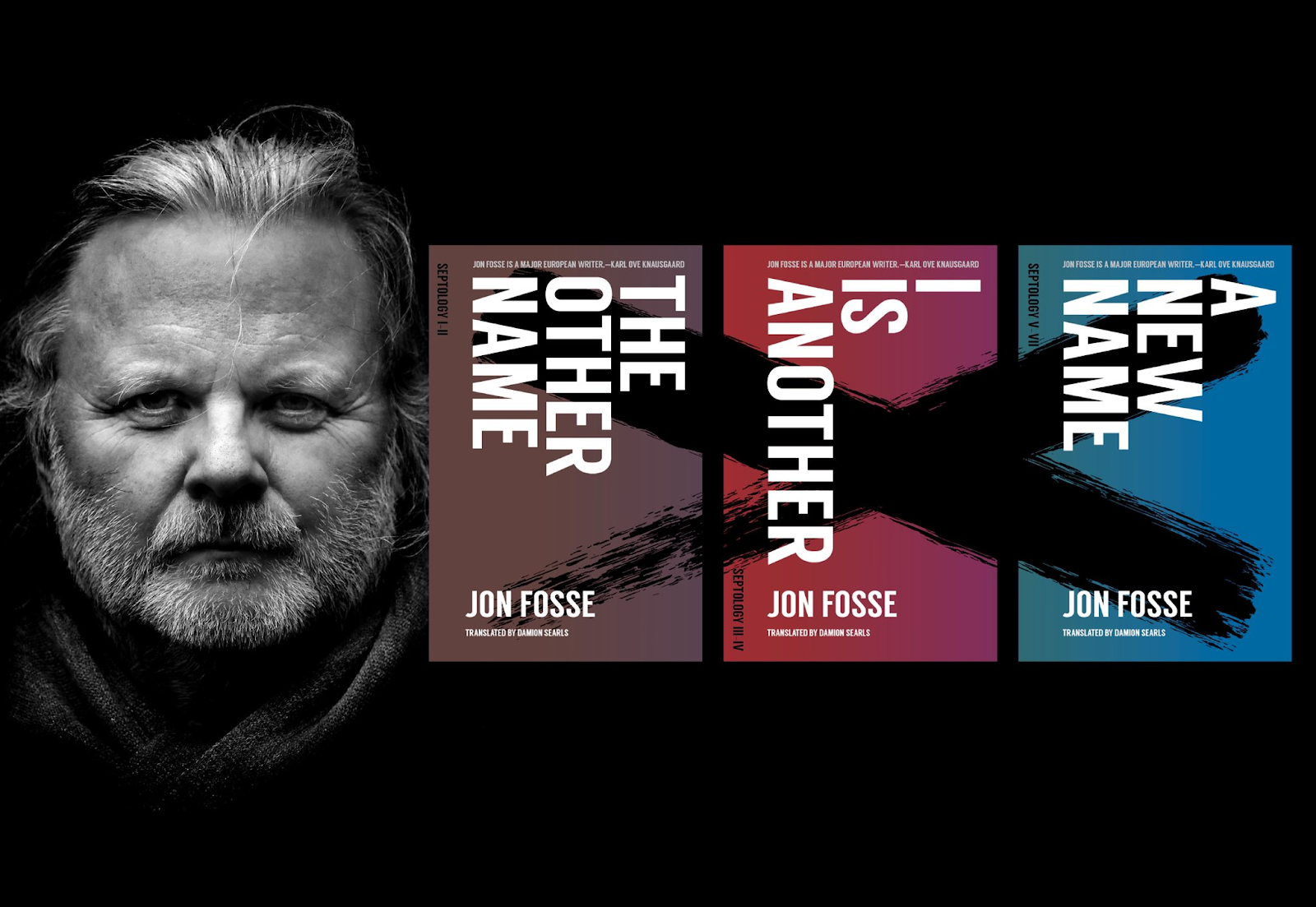
SEPTOLOGY follows a painter named Asle, seemingly from one day to the next. Every morning he imagines or “sees himself” looking at his latest picture, made of a purple and brown line that cross diagonally; and every night he ends the day with his rosary, reciting the Lord’s Prayer in latin, slowly, till it comes one or two words at a time as he inhales and exhales. Which encapsulates nicely the extreme down-tempo nature of this literary experience. Each day begins and ends the same way, with slight variations on what crosses Asle’s mind when he contemplates his picture, will he sell it, will he gift it to his neighbor Åsleik’s sister named Guro but is called Sister, will he stow it away in his crawl space, will he give up painting all together? And in his closing prayer sometimes he wonders if he really believes. “…then I say Ave Maria and that usually helps, I think and sitting there in my car I take my rosary out from under my pullover and I think now do I really believe in this, no, not really, I think…” (Part V) 

I fell in love with this bleak and beautiful fictional world, a world of habits, routines, grieving (for his late wife Ales), and the peculiar human sight made possible in complete darkness, which is how Asle prefers to look at his pictures to make sure they’re truly good and finished. But that’s not all. When we follow Asle heading into the town of Bjørgvin in the first book, he finds his double passed out on the snow: another Asle, also a painter. This Asle is an alcoholic, while our narrator Asle has gone sober; the narrator was devoted to Ales and it was love at first sight, while the double is twice-divorced with distant children; the double has a dog while the narrator doesn’t (though he’d like one); the double’s life is considerably more fucked up, and he spends much of the story recovering in a clinic after the narrator drops him off. Everyone takes the doppelgangers in stride (and there’s another doubling in Åsleik’s sister and a local woman of the same name who bumps into the narrator a few times). The biggest point of tension in the first book is who will take care of the dog Bragi. I found all of this to be profoundly beautiful.

Most of the novel’s space is taken up with the narrator’s almost clairvoyant visions of his life, childhood, a sexual attack by The Bald Man, attending Art School, falling in love with Asle, sneaking cigarettes in those slate roof boat houses that dot the west Norwegian coast. It read to me like he was seeing pictures in his mind not unlike what he paints, and we are reading the “language of pictures,” in the narrator’s phrase, especially since he seems to experience them as compulsive images that wash over whatever he’s doing in the present moment the same way his ideas for paintings do. “I have all these pictures inside me, yes, so many pictures that they’re a kind of agony, yes, it hurts me when they keep popping up again and again, like visions almost” (Part II?). The phrase “I see myself” that heads every part, mantra-like, so perfectly condenses Fosse’s procedures, a narrative act that arrests narrative time in the same moment of its expression.

SEPTOLOGY’s landscape is overwhelmingly darkened snow: the narration so telescoped on individual acts and objects, the pace so languid, the tone so even and gentle, it puts not a movie but a black box play in the mind’s eye. Fosse is a highly mature child of Beckett and Bernhard, but not so caustic as either, taking the former’s absurdism and the latter’s music.

and I grip the edge of the table tight and then I look at Bragi standing there and looking at me with his dog’s eyes and I think that dogs understand so much but they can’t say anything about it, or else they can say it with their dog’s eyes, and in that way they’re like good art, because art can’t say anything either, not really, it can only say something else while keeping silent about what it actually wants to say, that’s what art is like and faith and dogs’ silent understanding too, it’s like they’re all the same, no now I’m getting in over my head with these thoughts, I think, because I’ve never been a thinker, and the only language I’ve so to speak mastered is the language of pictures, I think and I look at Bragi and maybe he’s hungry or thirsty… (Part V)

The last book really threw me in for a loop. First of all, it seems several weeks have elapsed before the beginning of Part VI. I’d thought the seven parts naturally lent themselves to a week (they’re collected in three volumes, just like LORD OF THE RINGS’s seven books, incidentally). But that’s not all, Asle’s schedule changes, as he spends most of this section at night staring out his window at some landmark in the darkness over the Sygne Sea. Asle seems to have been a gifted painter from the beginning. He’s so talented he can start Art School without finishing high school, and after that the Art School runs out of things to teach him. There’s no resistance to his artistic upbringing. It’s God’s grace. I loved the intense mixture of modes in this gentle transformation of the story at the very end.

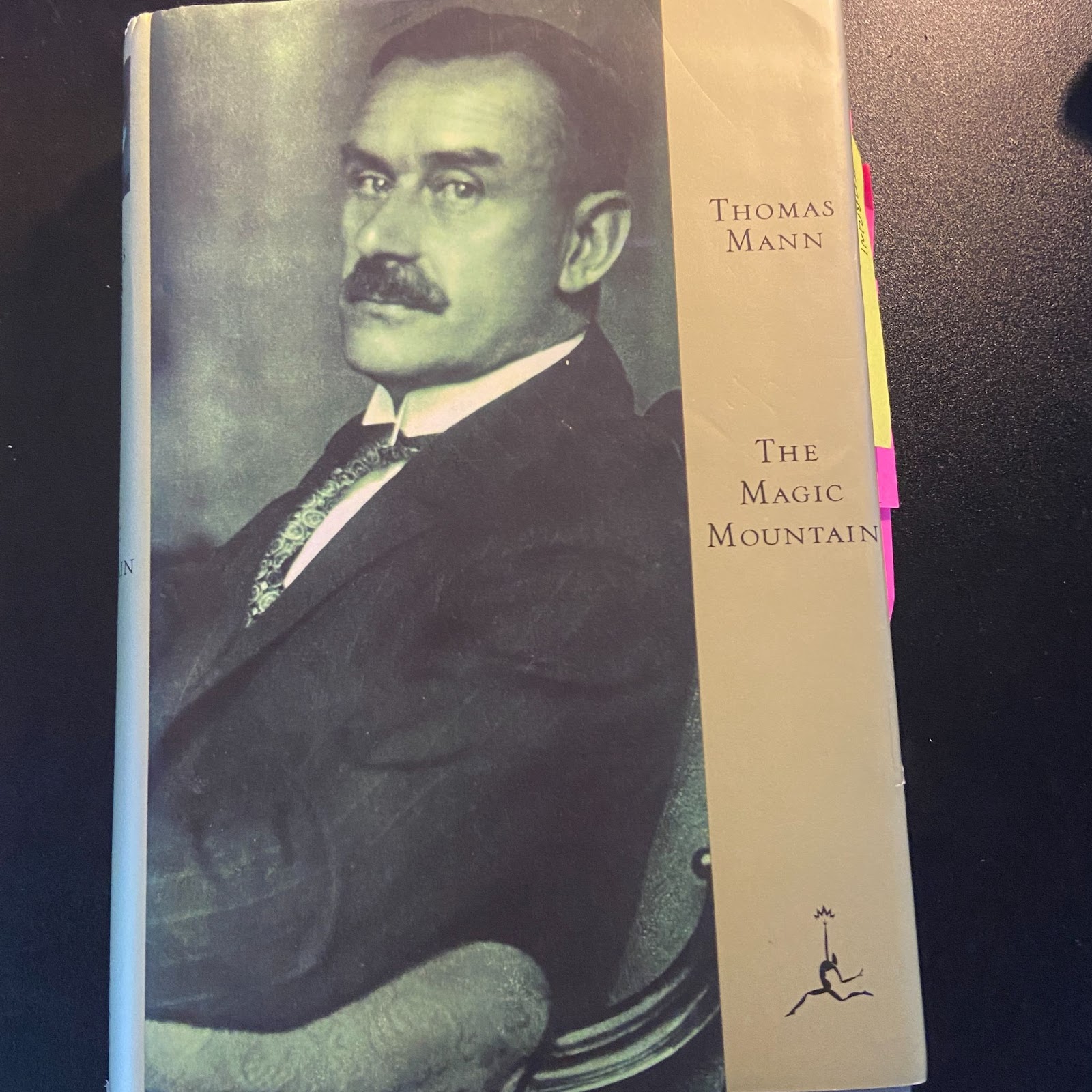
Mann’s MAGIC MOUNTAIN was three months of delectable reading. I may have enough to say about it to make a proper essay, though the didactic allegory and the ironized bildungsroman conceit Mann employed so masterfully here have been rendered transparent by scholars already. The experience itself is like climbing a mountain by stages, first unrolling slowly until around the sixth of the big chapters, things develop faster, the narrator starts summarizing more, the tone gets funnier and more deranged as we go along, and before you know it you’ve careened over the finish line in a runaway toboggan. 

I read a hard copy of the Lowe-Porter translation, pictured above, but also ended up reading large stretches of it electronically through the more recent John E. Woods translation. This was interesting if irresponsible. They are quite different, with Woods overall being very smooth to read, as I expected after his DOKTOR FAUSTUS, while Lowe-Porter goes for an antiquated pastiche with lots of idioms and untranslated French. Which approach is more faithful to the German I can’t say; the two translations read to me as trying to get to Mann’s sense of humor in different ways. In the first chapter, Hans Castorp laughs his head off at a particular word used by his cousin and asylum resident Joaquim. In Mann, the word is “Seelenzergliederung” which means psychoanalysis, but literally can mean soul dissection. Lowe-Porter translates this to “psychoanalysis” which in the scene made me laugh, while in Woods it’s “psychic dissection.” Is Wood’s more literalized choice a way to make the concept as bewildering as it might be to Castorp’s perspective?

It’s probably because I’m still high from finishing it, but the very best comparison sentence for me is the very last one. 

Lowe-Porter:

Out of this universal feast of death, out of this extremity of fever, kindling the rain-washed evening sky to a fiery glow, may it be that Love one day shall mount?

And Woods:

And out of this worldwide festival of death, this ugly rutting fever that inflames the rainy evening sky all around—will love someday rise up out of this, too?

I originally went to Lowe-Porter because, being a hopeless aesthete, I’d previously found Woods suspiciously accessible, but I prefer the Woods formulation here. The fever is more concrete with its “ugly rutting,” and while “feast of death” and “kindling the rain-washed evening sky” have an old macabre ring, “festival” and “inflames” seem more precise. And Woods adds some structural redundancy with the repeated prepositional phrase “out of this” while Lowe-Porter’s sentences are much of the time extremely heavy on either the front or the back end in terms of what you have to keep in mind about the subject while reading through these long sentences. Putting the main verb mount at the very end felt awkward, no doubt because of my modern American ears.

So if I had to recommend the best translation on the market, I don’t know, I’d probably say go with Woods then Lowe-Porter on a possible reread.

Next read: a trip with Mr. Lowry to Mexico, on All Saints’ Day, and something about a dead dog?

Any Welt that I’m welcome to

Fingering:
Arms disarmed and explaining themselves
—Brenda Shaughnessy

That was quite a hiatus. I ended up putting most of my energy in the April/May to finishing my thesis for my masters program, which centered on Jameson’s ideas about allegory—and “national allegory”—and Althusser. I’ve talked about the connection here before. Then immediately after, the George Floyd protests and urban rebellions directed my activities elsewhere (including writing activities).

I read a lot of great literature in this period, including Baldwin, O’Connor, Anne Carson, and a full catch up is beyond me, but I can share notes on a few texts recently finished. I am also eager to blog through THE TUNNEL by William H. Gass. I haven’t dug into this great writer on this platform yet, and after another two years of graduate (over)education I think I have more of the tools needed to crack into the concepts that manifest themselves “behind” the dazzling and terrible prose style.

For the lightning round of this post I’ll start with the SF.

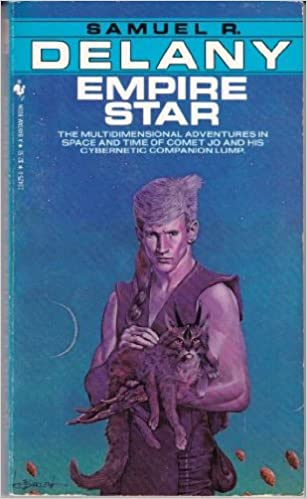
I gotta admit, this is the first Delany fiction that I actually finished. It helped that this a nice novella that basically reimagines Goethe’s WILHELM MEISTER’S APPRENTICESHIP, transposing the bildungsroman formula onto a planetary opera with metafictional anagrams and time manipulation. I found this early 60s work enjoyable and compelling in ways that the post-DHALGREN novels I’ve attempted (STARS IN MY POCKET and TRITON) were not.

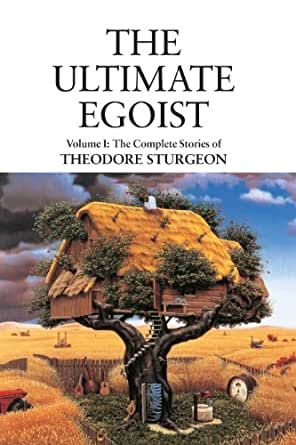
Delany also mentions Theodore Sturgeon in EMPIRE STAR. A Sturgeon story is also talked about at length in Bolano’s SAVAGE DETECTIVES. Sturgeon has commanded so much respect–I liked the tributes to him in this book from Bradbury and Wolfe. I’ve been an intense admirer ever since I read those brilliant opening lines of MORE THAN HUMAN.

I rooted around through this first volume of the collected stories, from North Atlantic Books. Most of these are short newspaper syndicate and pulpy stories, pretty hacky, but well written. It turns out Sturgeon doesn’t hit his stride till 1940, and I love his account of bashing out “Brianna’s Hands” in one of those urgent situations that distract a writer from assigned work–I know the feeling well, and there’s a parallel dynamic with reading books too, perhaps. That story is dark and twisted, in a kind of timeless setting, like Shirley Jackson or some of Robert Aichman. Brianna is a woman with no consciousness or volition except in her hands, which literally drag her body around the house. There is a gothic pulp formula here, but all it does is support really fucked up situations and a great style.

Then there’s “It,” which is a solid monster thriller, also apparently written in a white heat of inspiration on the writer’s honeymoon. But it’s an important work–the elements for Swamp Thing, Incredible Hulk, and other giants without emotion, or a surplus of only one emotion, in comics.

An honorable mention is “Helix the Cat,” which goes on for a little while, but is a diverting exercise in rationalizing the idea of the immortal soul (with a lot of mechanics introduced).

What opens up Sturgeon’s work is not only a new market for those weird tales that can surpass the rigid conventions and cheap O. Henry twists of the newspaper story, and allow him to stretch out his prose style beyond hard boiled narrators and 30s dialog, but also these kind of basic philosophical concerns about perception and being in the world: A moldy mud golem that investigates and analyzes things (quite literally, to grisly effect); it has perception and interests, without any feeling. “Helix” has some early discussions about the sense perception of “souls” too. (I’m afraid this will be an obsession of mine for a little while as I’m going through classical subjective idealism, like Berkeley and Avenarius and all that; it will also be very useful for Gass!)

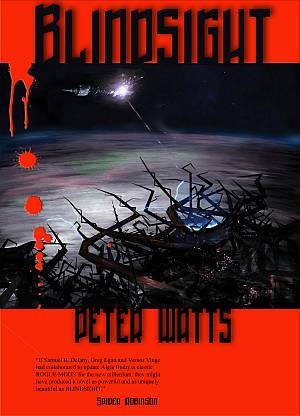
Just as useful will be this hard SF Cartesian fable from hell, available for free

I remember being terrified by this episode of LOST IN SPACE, which my dad taped off the Sci-Fi channel in the 90s. 

Consciousness, the realm of the thought, the mind, that’s the thing that creates our mental images of the world, our ideas and feelings and reflections, what would we be without it? Well, what if consciousness and self-awareness is just a vestigial object, an evolutionary glitch, a burden on our capabilities to survive, an energy sink. Maybe we’d be better off without it, and maybe the “intelligent” life that exists out there is far more likely to be without it. The aliens of this novel can do higher logic and mathematics as instantaneous reflexes, but without any thought for themselves. They operate in a vessel giving off insane electromagnetic fields that completely disturb the human astronauts, like convincing you to the core that you are in fact dead. It’s a very classical idealist notion, that you are only your perceptions, that the world you experience is something modeled from sensory inputs, the permeable membrane between self and matter. The novel explores other aspects of consciousness in a fun way: half of the narrator’s brain is cybernetic, leading to trouble with relationships, and a generally isolated kind of life.

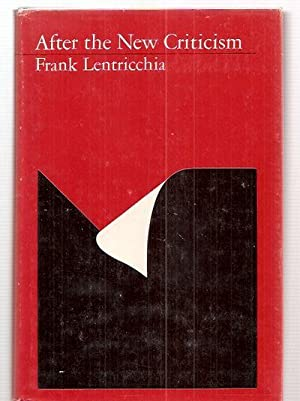
This is an amazing book. Frank Lentricchia in the 80s produced a solid, astoundingly well-written survey of American literary theory in the second half of the 20th century. He portrays this sequence—so convincingly—as a series of formalist polemics against the New Criticism, from Frye to existentialism to the American phenomenologists to the structuralists and post structuralists. Harold Bloom along with Hirsch and others get individual chapters, and even Bloom is so busy countering the NC’s attack on Romanticism that the multicultural interventions and the canon wars must have struck him as an attack on the rear. Here is Lentricchia on Heidegger’s language of earth and world:

The work of art “sets up” a world, but it “sets forth” the earth: “The work lets the earth be an earth” is the way Heidegger phrases it. What he means by this is not that the work is realistic in its portrayal of nature, but something far more familiar to readers of neo-Kantian aesthetics. In “The Origin of the Work of Art” earth is a reference to the aesthetic medium: the sculptor’s stone, the painter’s pigment, the poet’s language, the architect’s rock and wood. The aesthetic handling of medium is in brilliant contrast to the handling of medium as equipment: “Because it is determined by usefulness and serviceability, equipment takes into its service that of which it consists: the matter. In fabricating equipment-e.g. an axe-stone is used, and used up. It disappears into usefulness …. By contrast the temple-work, in setting up a world, does not cause the material to disappear, but rather it causes it to come forth for the very first time and to come into the Open of the work’s world.”

So we have the familiar formalist distinction of utilitarian and aesthetic values, of a medium which must remain unobtrusive if it is to be useful, if it is to mediate, and of a medium cherished for its own sake, set forth in its irreducible sensuous reality, as good in itself, thrusting itself upon our attention.

The whole book holds to this level of solidity, of careful argumentation and quotation. The type and design of the book is so nice too. One of those rare experiences of a theoretical text that is also just really delightful to read.

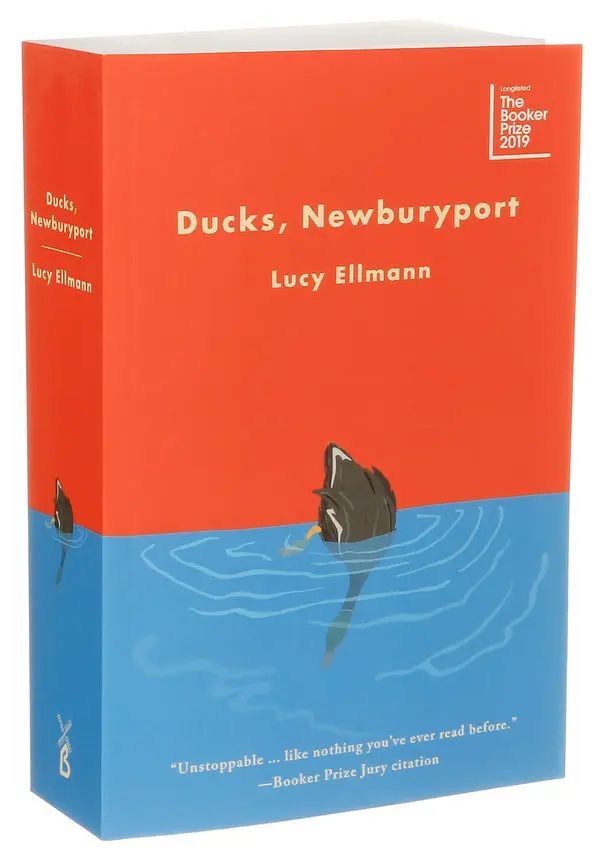
Somewhere along my insane drive to finish school I also finished up the new novel by Ellmann. I heard a lot of excitement about it toward the end of last year (plus it took home the Goldsmiths prize). Among the more core vanguard crowd of readers it might be getting a slight backlash now. I admired what this book was doing. It’s not at that supreme level of innovative fiction, but it draws on that tradition, on Stein, Lessing, Richardson, Young. It’s not that experimental or demanding, despite the form. I don’t think it’s a “river book” in the “stream of consciousness” sense (though Ohio’s rivers are important), but a spiral book, both a mental downward spiral and a compulsive circling of recurring thoughts around some absent center with no end in sight…till one reaches the unthinkable.

Basically, the form of the book is a single sentence that expresses the inner monologue of a white middle aged suburban housewife making baked goods for some extra income. She has a loving second husband and a few kids. The monologue is broken up with the lyrical story of a mountain lioness in the greater area who embarks on a quest to find her lost cubs–this is actually the A plot. There is something of a writing constraint. The Oulipo had an exercise called “Starter Text,” where every sentence of a work has to begin the same way. George Perec’s “I Remember” is the classic example, and there’s also le Tellier’s book A THOUSAND PEARLS where every sentence starts with “I’m thinking about…” DUCKS, NEWBURYPORT is driven by “the fact that.”

That idiomatic phrase is meant to point to the significance of something. But when it’s used as the main connecting points for wall-to-wall language, containing almost everything the middle classes have been worried about in the pre-Covid society, then the problem becomes the pure lack of significance or the ability to draw out significance in this flattened landscape of thought (Ellmann runs a risk in making historical tragedies seem trivial when they poke out among a collage of pop lyrics and clickbait article titles, though perhaps that is the point made about our daily lives now). Sometimes the “fact” is definitely an opinion, or a memory, or a question–”the fact that why do I remember that Amish woodshop and not my mother…” As a result a lot of the language is generic in that classically novelistic way (the fact that a single man in possession of a large fortune must be in want of a wife).

And the details of her life and history come through, her concerns with her eldest daughter, her ex-husband, the daily chores, skeevy neighbors, financial worries, family history, US politics, etc. There’s still plenty of plot, maybe even too much. I admit I found the ending disappointing for this reason, though I liked the story with the lioness very much.

SF is a bit more pessimistic than I remember

I recently enjoyed two famous works: THE STARS MY DESTINATION by Alfred Bester from 1958, and THE THREE BODY PROBLEM by Cixin Liu from 2006. This post has some loose thoughts without quotes; the texts are not at my disposal anymore.

I admire Bester’s punchy, no-nonsense sensibility, and you can tell he observed the urban counter cultural circles of his day, much as Delaney did for his own “heterotopian” depictions. STARS is also a progenitor of cyberpunk, focusing on the administrative society, gifted old children with ESP, a flaming vision with an explanation in time travel—all things that find a new articulation in AKIRA (those six volumes from Dark Horse were my LORD OF THE RINGS in middle school).

But most striking to me was where we end up philosophically. The anti-hero’s revenge quest concludes on a note of classical pessimism. We are not causes but effects, vessels of the will, a blind drive to exist, with no purpose. However, the gifts that Gulliver (!) Foyle unlocks also make him into a philosopher of the future or a free spirit that Nietzsche spoke of.

What makes SF stand out to me compared to other speculative genres or paraliterature is its mooring in historical totality as the Marxist tradition has described it. (It’s in this sense that Jameson has argued consistently that SF is a continuation of 19th century realism, up to ANTINOMIES OF REALISM.) Leigh Brackett’s planetary romances show an amazing sensitivity to those contradictions in the economic base that motivate the growth and movement of production, with THE LONG TOMORROW offering that analysis without the ideologically backward conceit of imperialism in space.

But Bester reminds me that even the so-called golden age of the pulps of course had a streak of mysticism running through it, and a increasing skepticism or hostility toward science as it is practiced in our society. This skepticism goes back to the immediate postwar period. The New Wave authors systematized this tendency, perhaps, through Le Guin’s Taoism, but by no means started it.

Liu’s novel is contemporary but is clearly a throwback to the Anglo-American early 20th century. It’s committed to hard SF concepts, to the use of the mystery structure, and its representations of an alien society evoke the satirical parables from the French enlightenment.

But here too is a pessimistic view, with a gothic dimension to it. The novel talks about the cultural revolution in the same way early 19th century gothic tales spoke of the French terror as ground zero for ghosts and monsters. Our fundamental understanding of physics is put to doubt in a familiar experience of postmodern demolition: the grid of rationalism swept off to make way for supernatural chaos—but like the gothic tales there is a rational explanation. The implications of this story about contact across interstellar cultures and civilizations, however, are rather dark, even tending to social Darwinism.

Perhaps SF as I’ve understood it only survives as “Hard SF,” and it is the fantastic tale (now called fabulism) that is on the order of the day in the genre scene. Or these distinctions are ancillary to a post-subgenre attitude. I only wish for more optimism in SFF, not merely in the sense of tropes and conventions, but the undergirding philosophical assumptions and structures that SF has articulated unlike any other form of fiction. We have enough modernist and late modernist stories that tell us a better world is not possible.