The utterly scuppered summation for November

Image
(Source)

Read in November: Nesbo’s THE LEOPARD (much more violent, and more of a whodunnit than the dark motive-searching of Snowman; I’m glad Nesbo is willing to mix it up in this series) | Ashbery’s WAKEFULNESS.

António Lobo Antunes’s THE LAND AT THE END OF THE WORLD

An early book that has Lobo Antunes channeling Malcolm Lowry—and to better effect, since unfortunately I find UNDER THE VOLCANO disappointing in some respects (haven’t finished it yet). It’s hard to put a word on the fault I find with it, but it’s obscure. Even though the writing is clear for the most part, though it does slur in its rhythm. The novel’s landscape and characters remain shadowy from start to finish. Whenever we’re in the Consul’s point of view a kind of deranged yet pure-hearted and idle wordplay takes up the foreground, a semantic drift that serves as a kind of touchstone of the shitfaced: katzenjammer becomes cat’s pajamas, katabasis into cat’s abysses, then Cathartes atratus and so on.

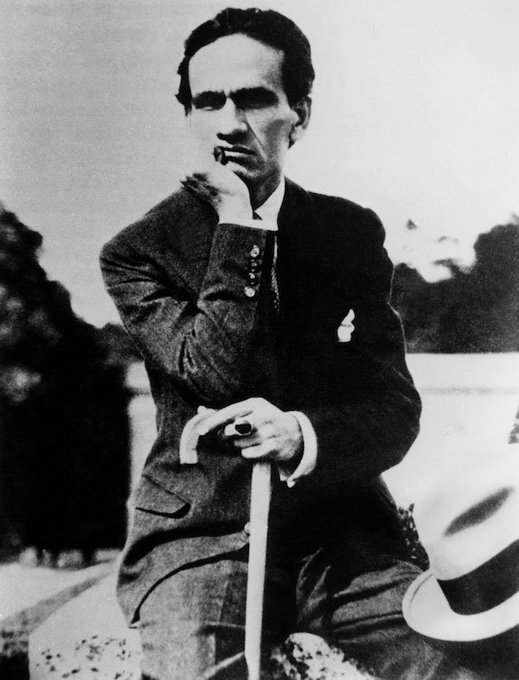
Vallejo’s AGAINST PROFESSIONAL SECRETS 

This is a wonderful collection of prose pieces and notes. There’s such whimsy coming round the edges of these aphoristic constructions.

Cuando un órgano ejerce su función con plenitud, no hay malicia posible en el cuerpo. En el momento en que el tenista lanza magistralmente su bola, le posee una inocencia totalmente animal.

Lo mismo ocurre con el cerebro. En el momento en que el filósofo sorprende una nueva verdad, es una bestia completa. Anatole France decía que el sentimiento religioso es la función de un órgano especial del cuerpo humano, hasta ahora desconocido. Podría también afirmarse que, en el momento preciso en que este órgano de la funciona con plenitud, el creyente es también un ser desprovisto a tal punto de malicia que se diría un perfecto animal.

(When an organ carries out its function fully, there is no possible malice in the body. At the moment a tennis player masterfully tosses the ball, he is possessed by animal innocence.

The same occurs within the brain. At the moment the philosopher discovers a new truth, he is a complete beast. Anatole France said that religious sentiment is the function of a special organ of the human body, yet to be discovered. One could also affirm that, at the precise moment that this organ of faith functions at its peak, the believer is also a being so devoid of malice that he could be called utterly animal.) 

I had a reading of these lines, but my booster shot for the Covid vaccine obliterated it, so that I can no longer understand what I had thought.

Vallejo is someone you want to follow as a disciple, what a scary authoritative presence. This book includes fragments from his notebooks, and just the single mention of Knut Hamsun compels me to put him at the top of the TBR. Also: “El arte según Marx: reflejo de la economía (Art according to Marx: reflection of the economy).” And “Poetas según Marx, que deben ser políticos militantes y conocerlo y vivirlo todo (Poets according to Marx, should be militant politicians who know it all and live it all).

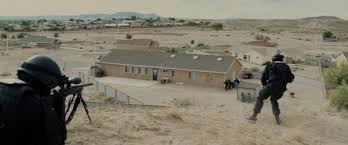
Lately I’ve been thinking about the opening shot of SICARIO, where the federal troops creep into a view of suburban America. A story I once read in PLOUGHSHARES (I can’t seem to locate it) opens with a similar image, armed cops on the rooftop of a family home to stop a mass shooter. The same vibe is achieved in THE GHOST SOLDIERS by James Tate, a poetry collection that creates the impression that all these pieces take place in the same small town in the Midwest that is constantly disrupted by warfare, with bombs landing in cow pastures and tanks blowing away farm houses. I’m increasingly drawn to this conceit of massive, mechanized violence brought to bear on safe and idyllic places where such things aren’t supposed to happen, but of course the comfort of the latter rests on the former taking place elsewhere.
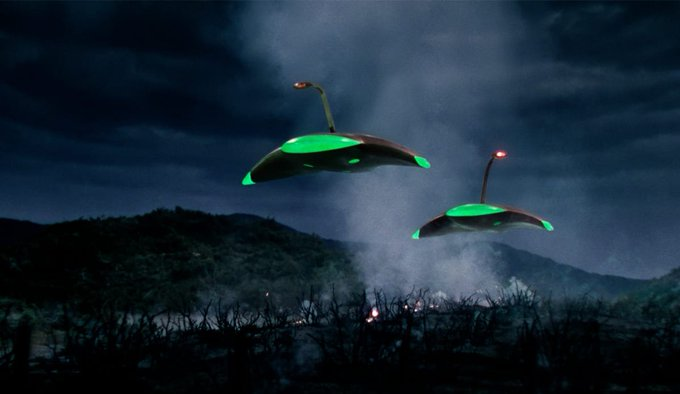
The first 30 pages of WAR OF THE WORLDS makes this point again, as ground zero for the Martian invasion is the peaceful northern London suburb of Barnet. A Sci-fi war bursts into a scene of bourgeois domestic bliss:

About six in the evening, as I sat at tea with my wife in the summerhouse talking vigorously about the battle that was lowering upon us, I heard a muffled detonation from the common, and immediately after a gust of firing. Close on the heels of that came a violent rattling crash, quite close to us, that shook the ground; and, starting out upon the lawn, I saw the tops of the trees about the Oriental College burst into smoky red flame, and the tower of the little church beside it slide down into ruin. The pinnacle of the mosque had vanished, and the roof line of the college itself looked as if a hundred-ton gun had been at work upon it. One of our chimneys cracked as if a shot had hit it, flew, and a piece of it came clattering down the tiles and made a heap of broken red fragments upon the flower bed by my study window.

I’m pretty sure the first time I read this book was shortly before 9/11, and perhaps the longer you wait before a reread, the more empowering it may feel. It goes by fast. I was moved to revisit it by the 83rd anniversary of Welles’s radio broadcast last Halloween weekend. And to my surprise the modern film and TV adaptations are pretty faithful to Wells’s original plot, but with faster pacing and other adornments.

Unfortunately I seemed to have entered a trough toward the end of November, and in the middle of producing this post, I have forgotten how to read and write.

Short stories are very good for you

I’m always drawn to a book of poems when I heard it has a great sestina. And Joyelle McSweeney’s experimental lament TOXICON AND ARACHNE delivers. The poems, including a cycle of sonnets, deal with bodily toxins as well as suffering and environmental destruction. Then the book finishes with poems about the death of the poet’s infant daughter.

Her work has a driving style that is driven by sound, similar to Michael Laly, while also engaging with the established lyrical forms and the proper literary field of allusions. The pieces are also topical.

The joystick’d boys sink arrows into the ozone.

If we can’t have bees we’ll have drones.

Sometimes a line is re-mixed by ear:

like fruit loops the beak of a toucan
or fish hooks the mutilated pelican

One of the two exceptional sestinas in this collection is about the disappeared Mexican students.

McSweeney’s poems also have an element of decay and decomposition, or a sense of leaving things to nature/chance/entropy, in the form of evocative pseudo-typos that almost approach flarf: “rainment,” “doggrowl,” “Like a dog returns to her thesis,” “urne-buriall.”

These poems go right into the muck at the same time as they evoke classical forms. The grief flows through, careful and multidimensional, and yet delivered in a jaunty rush of language. Achingly beautiful collection from this year.

I want to look so young it would be foolish to think about having kids after all, I have my whole life ahead of me! I could get an MFA!

I attend the MFA thesis reading as a faculty member (of course) and cheer on our small brigade. Afterwards I want to text my friend to come to the graveyard with me so she can watch my back while I press my face in the mud in front of my baby’s grave.

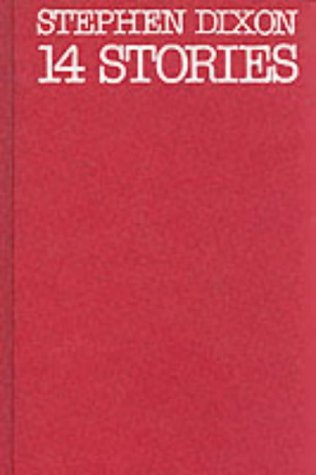
Stephen Dixon is a writer I’ve inexplicably delayed getting around to even though his work is right up my alley. The title story is outstanding: an attempted suicide on the 14th floor of a NY apartment building triggers 14 story lines, the paragraphs all running together whereas an author would typically use space breaks, with the characters ignorant of all the connections. And we delightfully note that this book holds 13 stories, and considering that sometimes a building will renumber the 13th floor to 14…

Ther other standout in the collection is the Pushcart-winning “Milk is Very Good For You,” a piece of erotica narrated by Richard Richardson, in which all the dirty words are systematically misspelled, and the hedonistic escapades of mom and dad and the babysitter are interrupted by the children’s wailing for more milk. Disturbingly pure.

His writing is clear and tight, transparent not only in terms of narrative but for all these underlying algorithms and chain stories–for situations that in some cases are truly horrible and morbid.

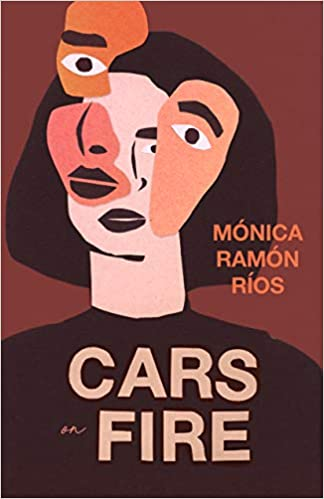
Another collection of urban stories, by a cosmopolitan author from Chile. Bolaño is too obvious a name to drop here, but I do think Ramón Ríos is interested in failed, disaffected people in similar ways. She is plugged into the political crises that are very specific to her generation of Chileans, after what Bolaño’s experienced. Both are masters of the story in which nothing happens yet everything culminates and vibrates with significance; you have to wonder how these pieces are holding themselves together. Most of them are very short, only the middle three stories are plied out. On the surface the action is simple, but the scenes are weighed down with memory.

As he descends the stairs, he’s met with the occupations his father used to threaten him with, like a line-up of ghosts: this-beggar reading tarot cards on a bench in the square. This-numbskull selling water bottles on the corner of Atlantic and Nostrand. This-busybody reading a book, sprawled out on the sidewalk, covered with that blanket that this-guy, this-animal, stepped on yesterday as he made his way home from work on East 11th. This-guy stumbling, feeling the city’s pavement under his back. Dirty streets scorching in the sun.

Ramón Ríos chooses amazing details that just plant you in a particular time and place, like upper Manhattan in the early 90s, in “The Object.” There’s a tension between realistic and fantastic modes of narrating the same content. That story moves from a tense and tirade-heavy event with Gordon Lish at Book Culture (the 80’s realism plus the cult of the sentence vibe) out of the bookstore to outside—”we can breathe.” Then we’re leaving Manhattan on a bus, the prose gets more fabulous and “magical realist”: 

Outside, space has twisted into folds, a spiral where our very breathing grants it those multiple universes. The city fades away with every block: the city of shortage, poverty, excess, the centripetal force of fantasy, the void where bombs and fish rain down.

“Invocation” is an ambitious and fascinating two-column story that runs like a libidinal interview between two artists with a past. (The only other two-channel prose piece I can think of is the one in DICTEE by Theresa Cha.) This long story has the best and worst elements of the book. There’s a generous quotation of and reference to critical theorists which I don’t like to come across in this way in fiction, though it is pretty seamless as far as that goes. At the same time there is amazing imagery and transformations in the narration—like if Djuna Barnes were in this trend of feminist theory-driven fiction. The entire “Obituaries” sequence is amazing, capped off by the punk rock lamentation “Dead Men Don’t Rape.” I also loved “Extermination,” which complements Sturgeon’s “It” and the swamp thing mythos, while also working as an allegory that happily and wonderfully marries politics and artmaking.

Sideways periscope

DEBTHS
Susan Howe
New Directions, 2017

FINNEGANS WAKE is making more and more sense every day, now that I’m a professional transcriber. This language is far from nonsense, neither Carroll nor Deleuze. Its semantic drift, of words “misspoken” and “misheard,” happens in every day speech all the time, so the WAKE is an oral history, badly and ingeniously transcribed, and the potential for semantic drift, usually repressed to the utmost, is unleashed to explore all the possibilities for acoustics and poetics.

But aside from speech to text transcription there is also text to text. Susan Howe is back at it again, focusing on material from the scholarly archive. Before, it was the microfilms of Charles Peirce in some basement under the Yale campus. Now in DEBTHS it’s a facsimile of the manuscript for T.S. Eliot’s NEW POEMS, which include clean typewritten versions of messy handwritten pages, with cross outs and brackets and such.

These doggedly Quixotic efforts at conversion are a declaration of faith. The textual scholar hopes, through successive processes of revision, to draw out something that resists articulated shuffling. Secret connections among artifacts are audible and visible and yet hidden until you take a leap – overwriting signified by a vertical brace – superimposed letters with others underneath – sometimes empty brackets signify a tear or a worn place. (22)

Language as it exists on a page or screen has a similar potential for the “continuity of drift,” as she said back in “Arisbe.” It’s like a palimpsest, in which we can peer and see, in the dep/bths, an unintentional and older language, almost always held at bay through copyediting and standardized English. We’re a long way from the oratorical realm of writing, of which Joyce was a kind of last gasp.

The book is like a quartet of poems. “Titian Air Vent” keeps things easygoing, and the first page is basically a thesis statement.

A work of art is a world of signs, at least to the poet’s
nursery bookshelf sheltered behind the artist’s ear.
I recall each little motto howling its ins and outs
to those of us who might as well be on the moon
illu illu illu (27)

Of course I can’t do justice to the neat square formatting. I was surprised at the rhythm of this verse. So many of Howe’s print blocks work more like linguistic monads, language that appears to not have a speaker, but have just appeared on a page. It’s one formal strategy for claiming aesthetic autonomy, because an art work is a world of signs, and all artistic practice is informed by a poetic ear, forged in a childhood of nursery rhymes and fairy tails. “Motto” is interesting sounding word, and its etymology has a dialectic of civilization and barbarism, it’s the good word, the witty word, but it used to mean grunt. Howe now includes pure acoustic elements as a memento of that primordial language that came before speech—and maybe it’s true that the writer’s style is forged in childhood.

Howe’s usual interests are here, the American renaissance, fine art, utopian socialism, myth and mysticism. Now they are supplemented with a concern for the old old world, enduring through pieces of an older language that appear like revenants.

“Tom Tit Tot” is an alternative name for “Rumpelstiltskin,” and of course it’s better for Howe’s purposes: the triplication, the logic of the children’s story.

These are amazing collages, with Ovid in the ancient Greek, the Brothers Grimm, the Eliot transcripts, and a lot of other stuff. Sometimes they are squares arranged in squares of two distinct tones, like Rothkos. Others are like Constructivist or Suprematist compositions. Often there are simple lists of vowels, which become more of those cries of non-speech. (The title poem is a collage sequence that’s even more extreme.)

How do you read this stuff? I’ve come to relate to Howe’s pages the way I would to paintings, treating them like monochrome wall hangings. Bishop complains of a “Large Bad Picture” where a flock of birds just looks like someone scribbled the letter n a bunch of times. Howe is launching the process from the other way, so that writing becomes visual, rather than the pictorial devolving into writing.

Sure, I read the actual text, and it’s interesting, and you have to turn the book sideways from time to time. But of more interest is how the different types – the different ink densities, saturation, serif versus sans-serif – clash against each other to create abstract works.

Here then is Howe’s neo-modernist or neo-avant garde practice. I’m halfway through MODERNISM’S OTHER WORK by Lisa Siraganian, who builds an insightful reading of the ideology of high modernism, which was by and large classically liberal or libertarian, at least for Western and American practitioners. Gertrude Stein’s sentence production, although deliberately redundant and based on logical forms, are very hard to read because they are under-punctuated. But a gesture of flippant illegibility is also a sign of respect. Stein’s text is a world of signs, and the reader’s situation is irrelevant to its meaning. Siraganian distinguishes between the autonomy of the work and the autonomy of meaning: the former is familiar to historical materialism, for modernism had taken free market mass culture as its antonym, since the literary mode of production had not yet been subsumed under capital. For the latter doctrine, Stein’s text respects the body of the reader because it doesn’t tell her when to pause and take a breath, as extraneous commas and punctuation do. It doesn’t care what the reader makes of the text—it’s already made, and any enjoyable encounter with readers, the “strangers,” is a pleasant bonus. It’s a mutual respect: the writer has her business and readers have theirs.

What we have here is the valorization of civil liberties and private property. (Siraganian is careful to distinguish this autonomy or autonomization of meaning from yet another type, propagated by bourgeois New Criticism, which needed to jealously guard the poem from the riff-raff, who may somehow vandalize or deface the work with bad readings. That danger is not possible in the Stein doctrine, such is the degree of the reader’s irrelevance to the work.)

To assert its autonomy of meaning, Howe’s book I think is relaxed not so much about the way we read, but an even more basic division of labor in the intellect, like how you’re free to move in an art gallery without trying to grasp the meaning of each canvas, sculpture and installation in endless hermeneutic cycles, instead simply looking around for your favorite colors. Things keep looping back into the poems here, from the instructions from the Tom Tit Tot story about running counterclockwise around a hill, or “WOODSLIPPERCOUNTERCLATTER.”

So, Language poetry is dramatizing poststructuralist thought as it has been. The centered subject is gone, language does not make sense because we make sense of it, it’s a closed system of signs, of intentional speech which gets molded or punctured by an unintentional language.

There’s a strong argument that the autonomy of the work has a new political charge, now that free market mentality has run rampant. But it’s clear now that structuralism and its “echo,” or “shadow sold for you too” poststructuralism was an idealism — a very magisterial one, granted. This is a pseudo self-critique, since I’ve been taken up with structuralist thought with literature in the last two years. I hesitate to liquidate it right away. There’s a lot more work to be done when it comes to whether or not formal materialism is welcome in a revolutionary communist terrain, let alone making a formal materialist balance sheet for literary theory.

There’s something I haven’t mentioned yet. “Tom Tit Tot” has a page that’s simply a thumbprint (58). A blot, in the Lacanian sense? Or maybe the same function as concrete objects in synthetic cubism, the framing device that moves out laterally…