See ya later, doppelgänger! October summed up

First things first.

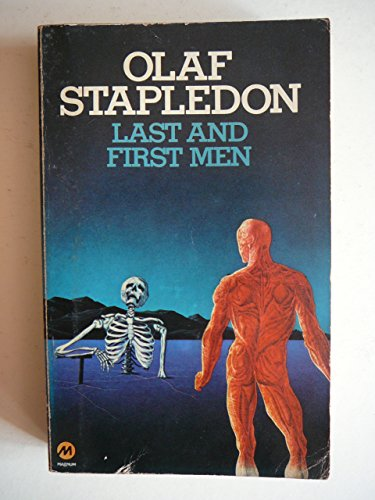
I had a new story published in Passages North at the beginning of the month, inspired by Olaf Stapledon but really more in the manner of A. E. Van Vogt. Neat! I read it out loud at the open mic in the cafe where I wrote it. There were so many stand-up comics doing sets at the show that even I got heckled. Laugh-a-minute. I put cinnamon in my coffee every day till I saw DUNE in theaters.

More reads: Anne Carson’s SHORT TALKS | Paul Curran’s LEFT HAND| Thomas Mann’s MAGIC MOUNTAIN (whew!) | Stevens’s PARTS OF A WORLD | Ashbery’s CAN YOU HEAR, BIRD | 

And a press copy of my most anticipated novel of the year, for two years in a row: WARNING TO THE CROCODILES by Antonio Lobo Antunes, translated by Karen C. Sherwood Solentino, from Dalkey Archive.
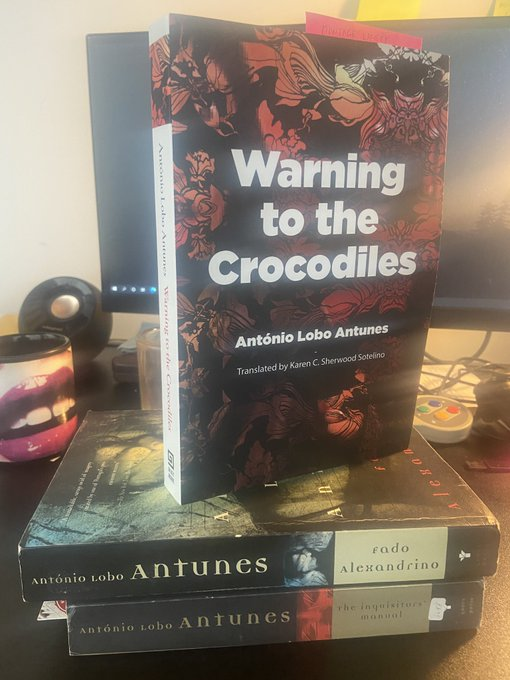
If you’re at all interested in translated literature then I urge you not to sleep on this great Portuguese novel from 1999. Lobo Antunes is a living grandmaster of literary modernism, and even all my personal hype did not prepare me to realize that this translation is very important, as this work is a summation of the tendencies in his 90s output, in the same way FADO ALEXANDRINO (perhaps his masterpiece) works as a summation of the 80s. A review to come, probably next year. As for the cover, I like the palette, and when you look past the fractal floral pattern and see that it is masking a strange image with pixelated faces, which is suggestive and fits as a depiction of the Lobo Antunes literary experience, with its ultra-subjective haziness. But my reflexive tastes definitely prefer the monochrome with red accent minimalism of Dalkey’s typical covers. Perhaps uniform covers are on their way out more generally.

Now for my trip to Norway via Fosse.

#
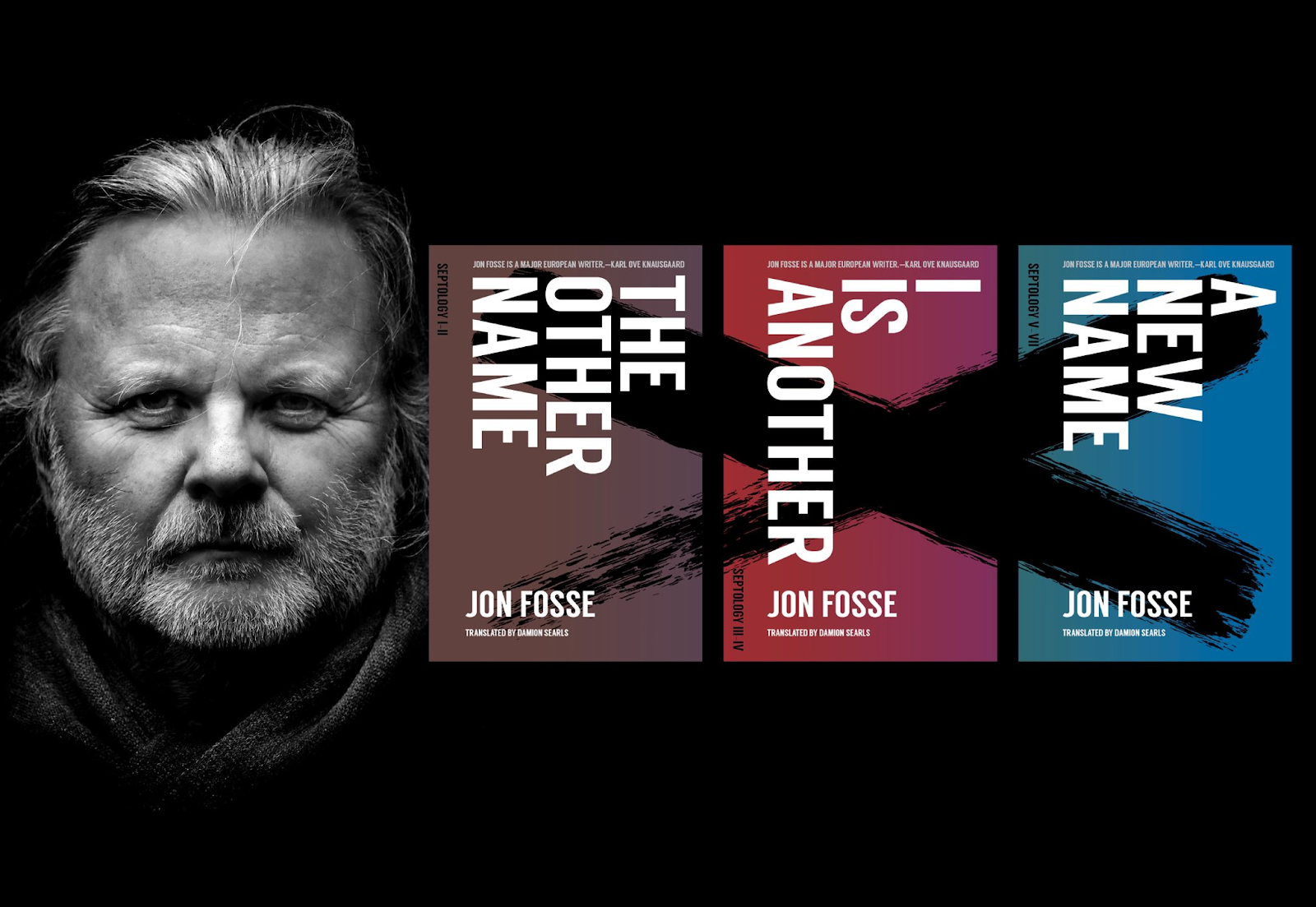
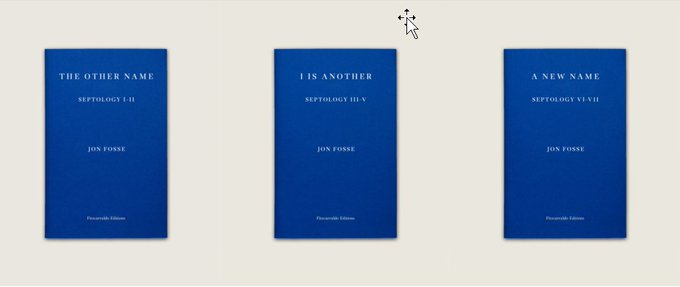
During the day I wrote the opening of Septology. I just started with my laptop on my stomach in bed. I write easily. Something comes to me when I sit down to write. I have never had writer’s block. […] What I experience when I write has as great an impact, if not greater, than what I experience in life. To write is to dream while awake, to place oneself in a controlled dreamlike state where one advances by listening.

Jon Fosse, interview in MUSIC AND LITERATURE

SEPTOLOGY follows a painter named Asle, seemingly from one day to the next. Every morning he imagines or “sees himself” looking at his latest picture, made of a purple and brown line that cross diagonally; and every night he ends the day with his rosary, reciting the Lord’s Prayer in latin, slowly, till it comes one or two words at a time as he inhales and exhales. Which encapsulates nicely the extreme down-tempo nature of this literary experience. Each day begins and ends the same way, with slight variations on what crosses Asle’s mind when he contemplates his picture, will he sell it, will he gift it to his neighbor Åsleik’s sister named Guro but is called Sister, will he stow it away in his crawl space, will he give up painting all together? And in his closing prayer sometimes he wonders if he really believes. “…then I say Ave Maria and that usually helps, I think and sitting there in my car I take my rosary out from under my pullover and I think now do I really believe in this, no, not really, I think…” (Part V) 

I fell in love with this bleak and beautiful fictional world, a world of habits, routines, grieving (for his late wife Ales), and the peculiar human sight made possible in complete darkness, which is how Asle prefers to look at his pictures to make sure they’re truly good and finished. But that’s not all. When we follow Asle heading into the town of Bjørgvin in the first book, he finds his double passed out on the snow: another Asle, also a painter. This Asle is an alcoholic, while our narrator Asle has gone sober; the narrator was devoted to Ales and it was love at first sight, while the double is twice-divorced with distant children; the double has a dog while the narrator doesn’t (though he’d like one); the double’s life is considerably more fucked up, and he spends much of the story recovering in a clinic after the narrator drops him off. Everyone takes the doppelgangers in stride (and there’s another doubling in Åsleik’s sister and a local woman of the same name who bumps into the narrator a few times). The biggest point of tension in the first book is who will take care of the dog Bragi. I found all of this to be profoundly beautiful.

Most of the novel’s space is taken up with the narrator’s almost clairvoyant visions of his life, childhood, a sexual attack by The Bald Man, attending Art School, falling in love with Asle, sneaking cigarettes in those slate roof boat houses that dot the west Norwegian coast. It read to me like he was seeing pictures in his mind not unlike what he paints, and we are reading the “language of pictures,” in the narrator’s phrase, especially since he seems to experience them as compulsive images that wash over whatever he’s doing in the present moment the same way his ideas for paintings do. “I have all these pictures inside me, yes, so many pictures that they’re a kind of agony, yes, it hurts me when they keep popping up again and again, like visions almost” (Part II?). The phrase “I see myself” that heads every part, mantra-like, so perfectly condenses Fosse’s procedures, a narrative act that arrests narrative time in the same moment of its expression.

SEPTOLOGY’s landscape is overwhelmingly darkened snow: the narration so telescoped on individual acts and objects, the pace so languid, the tone so even and gentle, it puts not a movie but a black box play in the mind’s eye. Fosse is a highly mature child of Beckett and Bernhard, but not so caustic as either, taking the former’s absurdism and the latter’s music.
and I grip the edge of the table tight and then I look at Bragi standing there and looking at me with his dog’s eyes and I think that dogs understand so much but they can’t say anything about it, or else they can say it with their dog’s eyes, and in that way they’re like good art, because art can’t say anything either, not really, it can only say something else while keeping silent about what it actually wants to say, that’s what art is like and faith and dogs’ silent understanding too, it’s like they’re all the same, no now I’m getting in over my head with these thoughts, I think, because I’ve never been a thinker, and the only language I’ve so to speak mastered is the language of pictures, I think and I look at Bragi and maybe he’s hungry or thirsty… (Part V)

The last book really threw me in for a loop. First of all, it seems several weeks have elapsed before the beginning of Part VI. I’d thought the seven parts naturally lent themselves to a week (they’re collected in three volumes, just like LORD OF THE RINGS’s seven books, incidentally). But that’s not all, Asle’s schedule changes, as he spends most of this section at night staring out his window at some landmark in the darkness over the Sygne Sea. Asle seems to have been a gifted painter from the beginning. He’s so talented he can start Art School without finishing high school, and after that the Art School runs out of things to teach him. There’s no resistance to his artistic upbringing. It’s God’s grace. I loved the intense mixture of modes in this gentle transformation of the story at the very end.
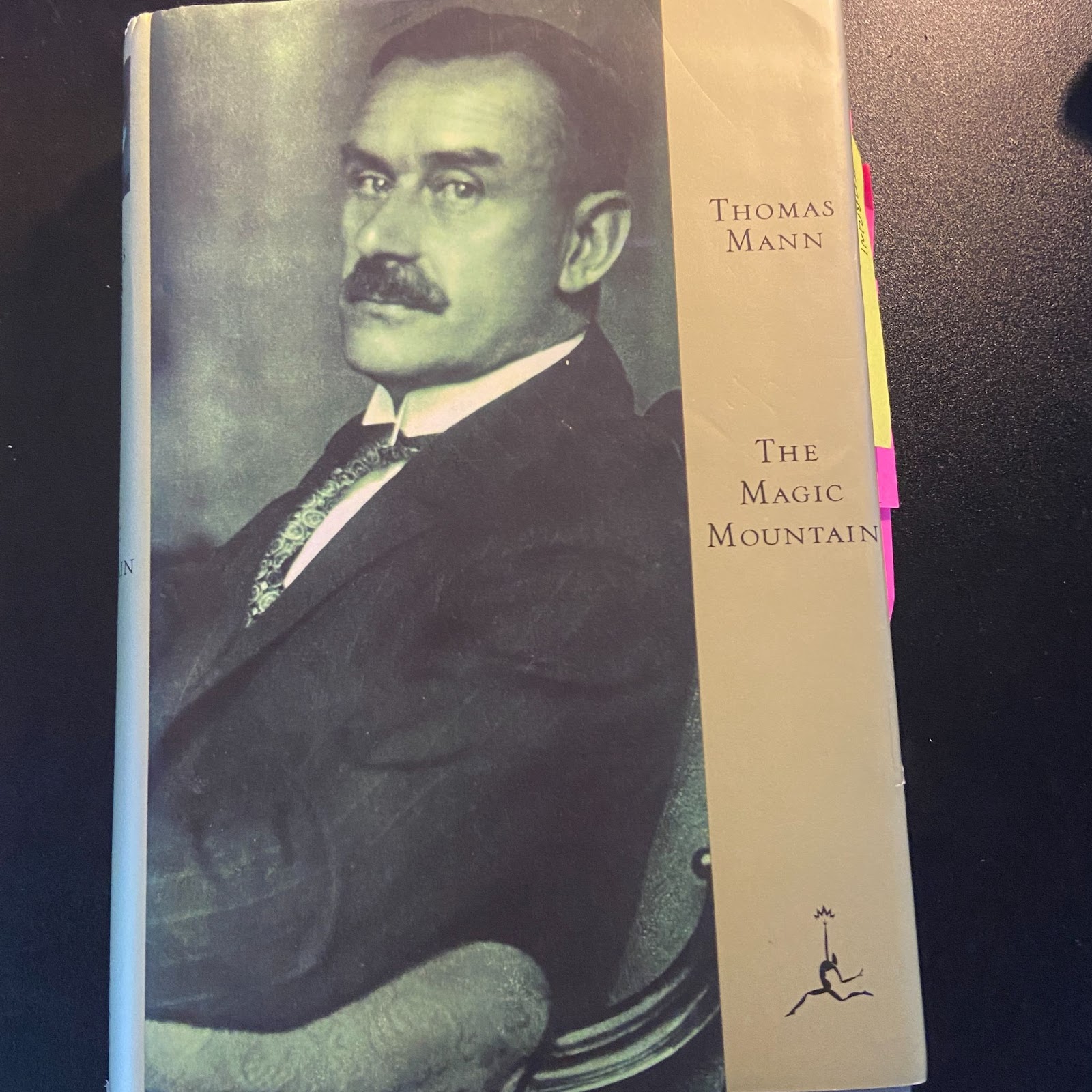
Mann’s MAGIC MOUNTAIN was three months of delectable reading. I may have enough to say about it to make a proper essay, though the didactic allegory and the ironized bildungsroman conceit Mann employed so masterfully here have been rendered transparent by scholars already. The experience itself is like climbing a mountain by stages, first unrolling slowly until around the sixth of the big chapters, things develop faster, the narrator starts summarizing more, the tone gets funnier and more deranged as we go along, and before you know it you’ve careened over the finish line in a runaway toboggan. 

I read a hard copy of the Lowe-Porter translation, pictured above, but also ended up reading large stretches of it electronically through the more recent John E. Woods translation. This was interesting if irresponsible. They are quite different, with Woods overall being very smooth to read, as I expected after his DOKTOR FAUSTUS, while Lowe-Porter goes for an antiquated pastiche with lots of idioms and untranslated French. Which approach is more faithful to the German I can’t say; the two translations read to me as trying to get to Mann’s sense of humor in different ways. In the first chapter, Hans Castorp laughs his head off at a particular word used by his cousin and asylum resident Joaquim. In Mann, the word is “Seelenzergliederung” which means psychoanalysis, but literally can mean soul dissection. Lowe-Porter translates this to “psychoanalysis” which in the scene made me laugh, while in Woods it’s “psychic dissection.” Is Wood’s more literalized choice a way to make the concept as bewildering as it might be to Castorp’s perspective?

It’s probably because I’m still high from finishing it, but the very best comparison sentence for me is the very last one. 

Lowe-Porter:

Out of this universal feast of death, out of this extremity of fever, kindling the rain-washed evening sky to a fiery glow, may it be that Love one day shall mount?

And Woods:

And out of this worldwide festival of death, this ugly rutting fever that inflames the rainy evening sky all around—will love someday rise up out of this, too?

I originally went to Lowe-Porter because, being a hopeless aesthete, I’d previously found Woods suspiciously accessible, but I prefer the Woods formulation here. The fever is more concrete with its “ugly rutting,” and while “feast of death” and “kindling the rain-washed evening sky” have an old macabre ring, “festival” and “inflames” seem more precise. And Woods adds some structural redundancy with the repeated prepositional phrase “out of this” while Lowe-Porter’s sentences are much of the time extremely heavy on either the front or the back end in terms of what you have to keep in mind about the subject while reading through these long sentences. Putting the main verb mount at the very end felt awkward, no doubt because of my modern American ears.

So if I had to recommend the best translation on the market, I don’t know, I’d probably say go with Woods then Lowe-Porter on a possible reread.

Next read: a trip with Mr. Lowry to Mexico, on All Saints’ Day, and something about a dead dog?
Someone set us up the bomb–translated literature in July

ALL FIRES THE FIRE
Julio Cortázar, translated by Suzanne Jill Levine
New Directions 2020

All eight stories in this collection are masterful. I bought the new New Directions paperback with its own spine number and everything, but it’s a reprint of a Penguin-Randohouse edition from the 50s or 60s. I’m forever indebted to Cortázar for the Axolotl story, which taught me about the placement of details and how they transfer the tension around a narrative. The pieces here have depth and control, and spacious paragraphing. And the endings are so perfect.

THe first two, about a days-long traffic jam bringing about new social relations, and an accelerated Garcia Marquez fable where a family household conceals death and illness from Mama for her health’s sake, were terrific. But I have to say what stood out was the title story and the one before it, “Instructions for John Howell.” The latter is a single paragraph describing how a theatergoer gets roped into the performance during intermission, an avant-garde gesture that turns into a prolonged mind game that turns into a possibly genuine intrigue.

But the experimentalism at work in “All Fires the Fire” is indeed pyrotechnical; and these long running paragraphs call attention to themselves here because two completely different scenarios, one in ancient Rome and the other in a modern apartment, begin to run together. In the first story, a proconsul gets revenge on his wife by sending a gladiator she desires to his death; in the other, a rake of a boyfriend has a phone call with the woman he’s cheating on. The narrator speaks fatalistically, of a “cruel and monotonous succession of events,” or “unavoidable continuation of action.”

There is also someone on the phone line calling out numbers. 

On the line there’s a crackling of mixed communications, someone dictating figures, suddenly a silence still darker than that darkness the telephone pours into the eye of his ear.

This third strand is like a peak into the story’s underlying code or algorithm. This is truly classical hermeneutics, where the Greek and Hebrew letters of the holy texts can be switched around, or converted into significant numbers.

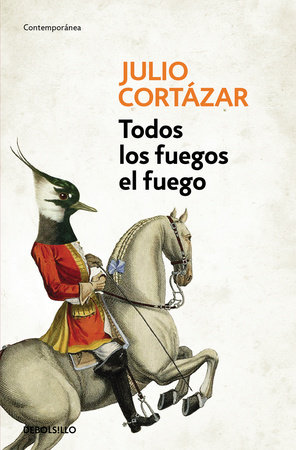
The minimal collage on the ND cover is a great illustration of what the story is doing. The continuity is the all-consuming eternal fire that makes up the Heraclitean universe. 

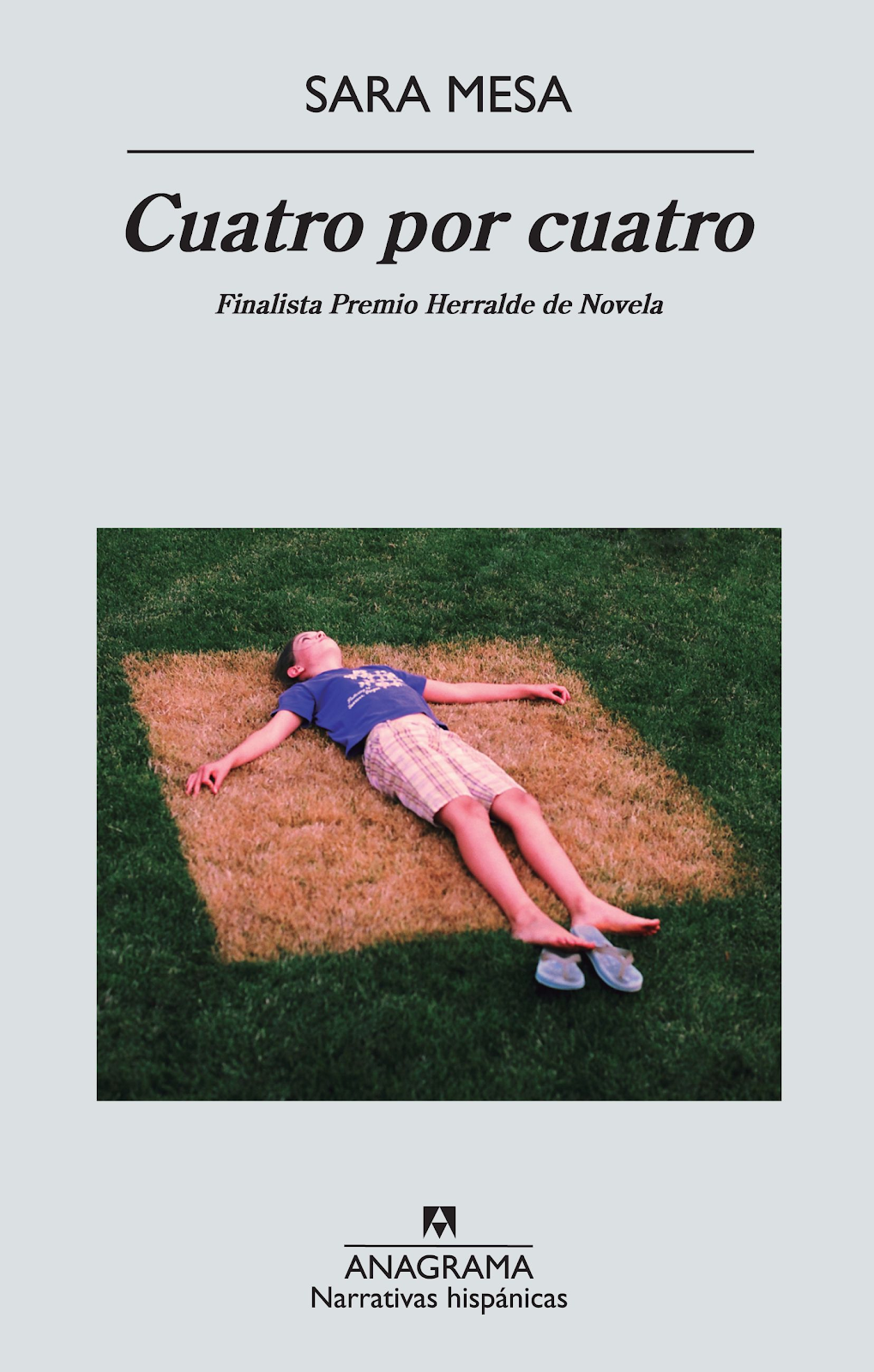
FOUR BY FOUR
Sara Mesa, translated by Katie Whittemore
Open Letter 2020

“You do know, you dear thing,” says the narrator in THE TURN OF THE SCREW by Henry James, “only you haven’t my dreadful boldness of mind, and you keep back, out of timidity and modesty and delicacy, even the impression that, in the past, when you had, without my aid, to flounder about in silence, most of all made you miserable.”

Sara Mesa’s FOUR BY FOUR is in the same gothic feel as that text, steeped in sexual anxiety and implication about children in danger. We’re in a surreal boarding school for well off children, in the English style, yet appearing as if out of nowhere in Spain. Some of the children are here on scholarship, and their parents in fact work as custodians. A mystery is afoot and it seems like the administrators and faculty are hiding something. It unfolds like a Hardy Boys mystery as interpreted by Luis Bunuel.

These are simple sentences but what keeps it from going down too easily is how spaced out and elliptical the narration can become. There are two main parts, one anchored around the students, and the other in the form of an impostor substitute teacher’s diary, a hilariously unreliable narrator, whose recurrent blackouts bring to mind the madness of a Poe story or maybe an extremely hapless Philip Marlowe. Coverups, power games, institutional depravity, and owls taking flight at dusk. There’s also a political dimension, a transparent but creative allegory for “totalitarianism,” of security versus freedom. If you’ve checked out Foucault or Agamben these will be very familiar ideas. This is the postmodern analysis of power, which is divided into two forces or “techniques”: the political technique, where the state integrates natural life into its operations and reproduction, “biopolitics” and so on; and the technology of the self, through which you bind your identity and consciousness with an external power. Mesa’s story makes this all more concrete, and shows how in this framework resistance and revolution are impossible. I keep coming back to Zygmunt Bauman’s point about the “liquid modern society” that prevents the struggle for freedom by convincing the people that they are already free. 

There’s also a link between controlling the lives of students and grooming them to be sexual servants that has not left my mind once established.

At one point, the substitute talks in his diary about writing, and the thought links all this authoritarianism with “autofiction” as a kind of behaviorism; a mechanical reporting of every outside impact on the writer’s consciousness; who the writer is is almost irrelevant.

I protected myself with indifference and avoided facing hardship and failure. I began to keep a diary because I didn’t have to make anything up. A simple log, a methodical, factual record. If I see rain falling outside my window, that’s what I write. The only decision I have to make is whether to be concise or to describe the rain in detail. I can note how it changes over time, how heavy it falls, who gets wet and who doesn’t. Or, I can simply write: it’s raining. That’s it. I write about what happens to me, why I think it happens, how I feel about it, what people tell me, how I respond. If something doesn’t interest me, I don’t write about it. Or I write a summary, strip it of meaning. I never have the urge to make anything up or change my story. I wouldn’t be capable. My creativity has dried up, or maybe I destroyed it. Who knows.

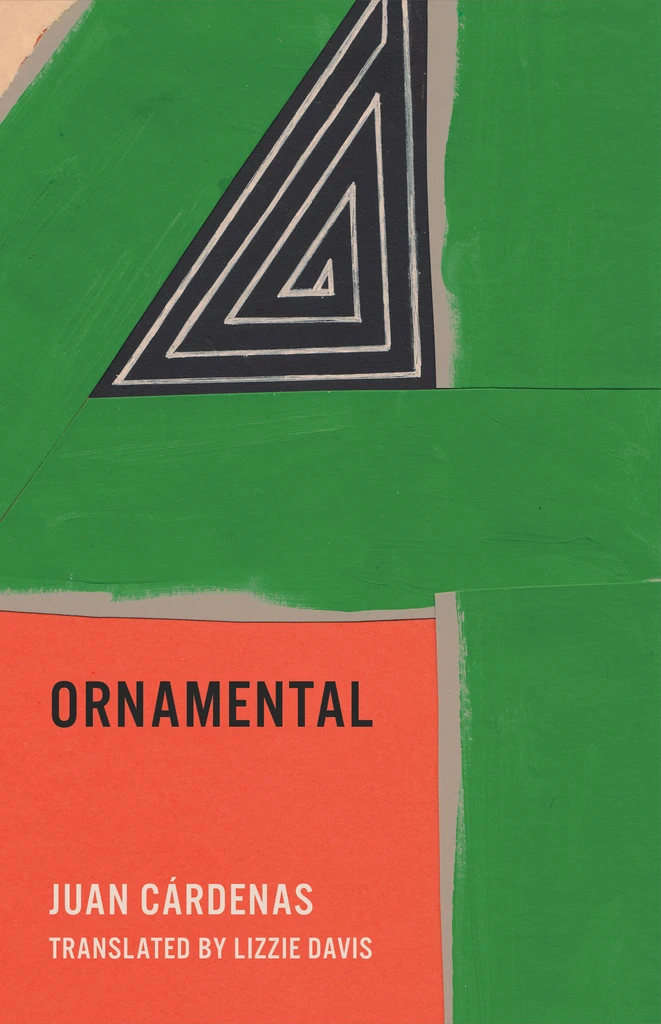
ORNAMENTAL
Juan Cárdenas, translated by Lizzie Davis
Coffee House Press 2020

The worlds of art and pharmaceuticals collide in this short book, which makes perfect sense. Which other two industries are more saturated with the blood money of capitalism, the public face of this mixing being the decadent high life of coked out artists and connoisseurs. At the core is a brief triangle between a doctor, his wife the artist, and subject number 4 of the trials of a drug he’s developing. This is a pill for total wellness without side effects, civilization without barbarism—-and it only works for women. Whether it’s brain chemistry or philosophy and culture, postmodernism is an all-in drive toward solipsism; if the world is only full of good sensations then it is only full of good, period. This is a quick, interesting read, and the doctor, while an asshole, is more clever than, say, Houellebecq’s protagonists.

The doctor’s wife, the celebrated and tasteful artist, to me stands in for the aesthetic postmodernism Cardenas is making fun of here. Her pieces, vaguely described, are “perfect little nothings,” as Gwendolyn Brooks would say, just ornaments, or embellishments that don’t contain much meaning by themselves. But she justifies herself in interviews with the deliberate superficiality of pomo theory.

What matters with anamorphosis is the distortion itself and not the hidden form. Perhaps, as my wife likes to say, we have to completely renounce our urge to interpret.

Similar with Mesa, this is a very disagreeable, decadent world. But there is little capacity to resist or change it. The best the petty bourgeoisie can think to do here is go out into the jungle and live the libertarian fantasy of complete self reliance “off the grid.” Dreams, dead end mysteries, spider monkeys; all in all a good time.

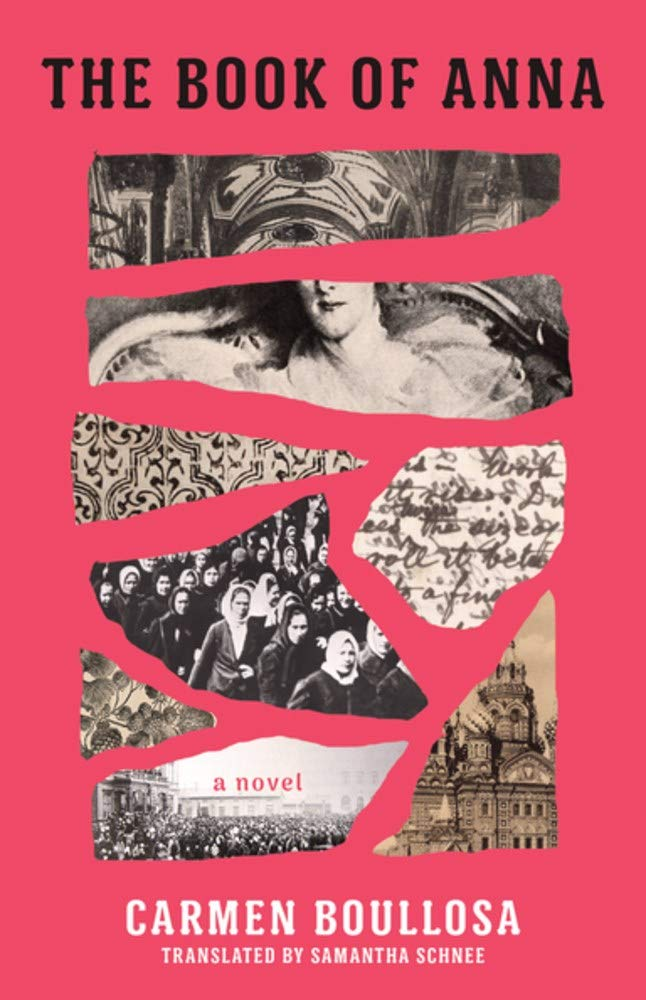
THE BOOK OF ANNA

Carmen Boullosa, translated by Samantha Schnee

Coffee House Press 2020

This novel from Mexico has such an enticing metafictional concept. The cast of Tolstoy’s great novel walk around St. Petersburg among the flesh and blood “real” or “historical” people. The effects of Anna’s scandal and suicide reach through the next generation, and it all coincides with the beginning of the first Russian revolution in 1905. The plot centers on Anna’s effects: a portrait, about which both Anna’s children, Sergei and Anya, have complicated feelings about; and a manuscript only given brief mention in Tolstoy.

To get the disappointing elements out of the way first. I found the plot to be really straightforward (a literal plot with anarchist bombs), a way to negate the entire metafictional conceit. The actual Book of Anna itself, an opium-induced fairy tale, was also better as a mystery—as with the Mesa text, the allegories were just a tad too transparent for me. In an academic way the novel wants to explore the “minor” aspects of great things (whether a great book or world historical events) the servants of the Karenin household, or the anarchist and narodnik tendencies in Russian revolutionary politics (about to wilfully marginalize themselves, since the 1905 revolution was a bourgeois democratic one, and the anarchists didn’t want to participate in it). There is nothing about the mainstream of Russian Social-Democracy or the Menshevik-Bolshevik split, and while Anna’s character and love life are explored, the discussions of class and philosophy in Tolstoy’s work are not acknowledged here. As a result, the presentation of ANNA KARENINA in this book seems one-sided and individualistic; Anna’s adultery has an entire context of a rapidly modernizing Russia, but this novel focuses on individual sexual love detached from these dimensions. (What I’m saying is this text is so determined to remove scientific socialism, as if it had been taking too much space, or as if the feminist concerns with this material will shine all the brighter; but I think the result is more impoverished.) Revisionist takes on classic literature are fine, but I get a little irked by the kind of framework that says Tolstoy failed to consider X, as these claims are almost always incorrect and made in bad faith, and seem to elide the truer purpose of fiction to lend cogency, immediacy and vividness to ideas regardless of their correctness. There is however a hidden link to V. I. Lenin: of the three Alexandras in the text (including Kollontai, who appeared in CARS ON FIRE) one of them is the sister of one of the Karenins’ servants, who happens to be named Vladimir. Her sister dies in the Bloody Sunday massacre, which in turn radicalizes him. A similar story happened to the young Lenin, whose older brother Alexander was executed for plotting to kill the tzar.

The parts of the book that were really for me were these ruminations on fictional characters given a real “ontological status,” switching ink and paper for blood and viscera.

It’s not easy to pin down dates in Sergei’s life. In 1873, when Tolstoy first wrote about him—Anna Karenina’s son appears early in the novel—and began to publish his story in the Russian Messenger, Sergei was eight years old. An eight-year-old newborn. He’s eight years old again when the first edition of the complete novel is published in 1878, but a few pages later, when the dramatic events of the novel take place, he’s two years older. So, for our purposes, he has three birthdates: 1873, when Tolstoy created him; 1865, when he was born in the novel; and 1878, when he appears in print for all posterity. For the monolingual English reader, Sergei arrives on this earth in 1886, the year the first English translation appeared; from his own point of view he was born in ‘78 (though for our purposes, he was already ten years old by then).

Nevermind how this materially happens, or how Russian society feels about it; we learned from Nabokov that being a character and being aware of it, of having been written by an author, is the most existentially dreadful thing ever. Here, it is a kind of sultry 19th century angst. Or is it that Tolstoy’s characters may as well be real, and possess a vitality literature can never achieve again?

TIME
Etel Adnan, translated by Sarah Riggs
Nightboat 2019

This collection won the BTBA for poetry, and it’s the first Adnan I’ve read. This book takes the postcard as a serious medium or poetic form, and you feel the spatial and temporal distance as well as the pining between good friends. The lines are printed here without Adnan’s correspondent or whatever the images on the postcards were. It’s tantalizing to know there was other material in this project, and you have to wonder how much meaning is lost on top of translating French verse. The lines feel super concentrated and aphoristic. These are just four separate lines from throughout the book.

if we write, it’s that we can’t sing, if we sleep, it’s that we can’t live

those who cannot leave discover the geography of the body.

and the sea is treacherous marble

The day is not made of light, but of will

Where is joy then? Chained to me, an horizon,

Objects are children of their own shadows

The collection is made of longer sequences, and I definitely loved the first one the most, perhaps because it felt the most evocative.

don’t leave the Mediterranean
without telling her that you loved her:
her daughters and her sons went
North, a day of rain, or a day
of war

as for me, I belong to the stones
thrown for lack of helicopters,
to the women locked up,
to the political prisoners;
sometimes I regret my love of
splendor

but our solar mother star,
and the lunar father, in their way,
have entrusted us with useless
objects from a forgotten century

Anal explosive

GRAVITY’S RAINBOW
Thomas Pynchon
Penguin, 2000

The title for part 2, “Un perm’ au Casino Hermann Goering,” is simple yet maybe untranslatable in the same way that Manet’s Le Dejuener sur l’herbe is. And like his radical paintings, the impossibility of the content’s structure launches Slothrop’s paranoia.

A breathless sentence captures Slothrop’s rescue of Katje from an attacking octopus that behaves like a dog. He impotently beats the animal with a bottle; visual data crams the action.

She reaches out a hand, soft-knuckled child’s hand with a man’s steel id bracelet on the wrist, and clutches Slothrop’s Hawaiian shirt, begins tightening her own grip there, and who was to know that among her last things would be vulgar-faced hula girls, ukeleles, and surfriders all in comic-book colors…oh God God please, the bottle thudding again and again wetly into octopus flesh, no fucking use, the octopus gazes at Slothrop, triumphant, while he, in the presence of certain death, can’t quit staring at her hand, cloth furrowing in tangents to her terror, a shirt button straining at a single last thread — he sees the name on the bracelet, scratched silver letters each one making no sense to him before the slimy gray stranglehold that goes tightening, liquid, stronger than he and she together, framing the poor hand its cruel tetanus is separating from Earth —

“Slothrop!” Here’s Bloat ten feet away offering him a large crab.

Ten feet away? And with a large crab ready to hand?

It’s too overworked, the whole octopus production.

Slothrop realizes the White Visitation is still keeping tabs on him, and in ways I can’t keep up on are pushing him toward researching rocketry in preparation for a field mission. There is also They, an evil military industrial cabal whose power is above and beyond even the imperialist powers driving the war. Or They are just a placeholder for the unknown, maybe unknowable, or nonexistent organ holding the conspiracy together.

More hotel hijinx, Slothrop looses his uniform and identity, and so changes costume into a white zoot suit. We get a stronger clue about the link between the polymer Imipolex G, a rocket component, and Slothrop’s mysterious hardons. In the middle of an infodump based on Slothrop’s studying, a parenthetical opens up.

The target property most often seemed to be strength — first among Plasticity’s virtuous triad of Strength, Stability, and Whiteness (Kraft, Standfestigkeit, Weiße: how often these were taken for Nazi graffiti, and indeed how indistinguishable they commonly were on the rain-brightened walls, as the busses clashed gears in the next street over, and the trams creaked of metal, and the people were mostly silent in the rain, with the early evening darkened to the texture of smoke from a pipe, and the arms of young passerby not in the sleeves of their coats but inside somewhere, as if sheltering midgets, or ecstatically drifted away from the timetable into a tactile affair with linings more seductive even than the new nylon…).

Where did we end up? Who is perceiving this rainy day transit scene? Is it Jampf, the inventor, or maybe Slothrop’s imagination? This is hearsay, but those who know/knew Pynchon best say that he said he certainly wrote stretches of GR while high on heavier stuff, and that even he may not know the meaning of certain passages. If I had to guess, the places in the text where this may be the case are precisely these syntactic marathons of images and sounds. It’s a calculated decision to overwrite: it’s like a camera that can only be aimed and opened up, to exhaustively index everything in front of its aperture that the light registers. Like a black hole, the narration picks up everything in the scene, regardless of any character’s consciousness, with only ellipses to stop it. And that unmoored quality is I think what makes it feel exhausting. And most of the stuff the narrator catalogs is literally trash, like Slothrop’s desk at ACHTUNG.

It’s off to Zurich.

The War has been reconfiguring time and space into its own image. The track runs in different networks now. What appears to be destruction is really the shaping of railroad spaces to other purposes, intentions he can only, riding through it for the first time, begin to feel the leading edges of….

The indeterminate world of the book so far is precisely this sense of being on the cusp between the old and the new, with the new coming in at a stroke. Some lines from Semyavin (a rep for the forger Blodgett Waxwing, who met Slothrop in the party scene at Raoul’s and will procure Slothrop a new identity) on the same page develops one implication.

“Life was simple before the war. You wouldn’t remember. Drugs, sex, luxury items. Currency in those days was no more than a sideline, and the term ‘industrial espionage’ was unknown. But I’ve seen it change — oh, how it’s changed. The German inflation, that should’ve been my clue right there, zeros strung end to end from here to Berlin.

One word for this situation is reification. Information has been made real, into something as exchangeable as sex and drugs, and by the same token, into something opaque and divisible.

I liked this bit about cafes and exiles.

He finds that he has drifted as far as the Odeon, one of the great world cafes, whose specialty is not listed anywhere — indeed has never been pinned down. Lenin, Trotsky, James Joyce, Dr. Einstein all sat out at these tables. Whatever it was they all had in common: whatever they’d come to this vantage to score…perhaps it had to do with the people somehow, with pedestrian mortality, restless crisscrossing of needs or desperations in one fateful piece of street…dialectics, matrices, archetypes all need to connect, once in a while, back to some of that proletarian blood, to body odors and senseless screaming across a table, to cheating and last hopes, or else all is dusty Dracularity, the West’s ancient curse….

The rapid accumulation of sensuous, material detail that makes up so much of this book’s discourse may be defended in this thought, although literature is also represented in the cafe’s patrons. Literature is usually seen as the parasite taking material off of history and philosophy, but here the bustling life world itself is “proletarian blood,” (although what’s really important are the proletariat’s correct ideas!).


GRAVITY’S RAINBOW

  1. Oh, banana!
  2. Anal explosive
  3. Pynchon is surrealist in travel
  4. I may have lost the plot

Not to be confused with The Sea, The Sea

THE SEA
John Banville
Knopf, 2005

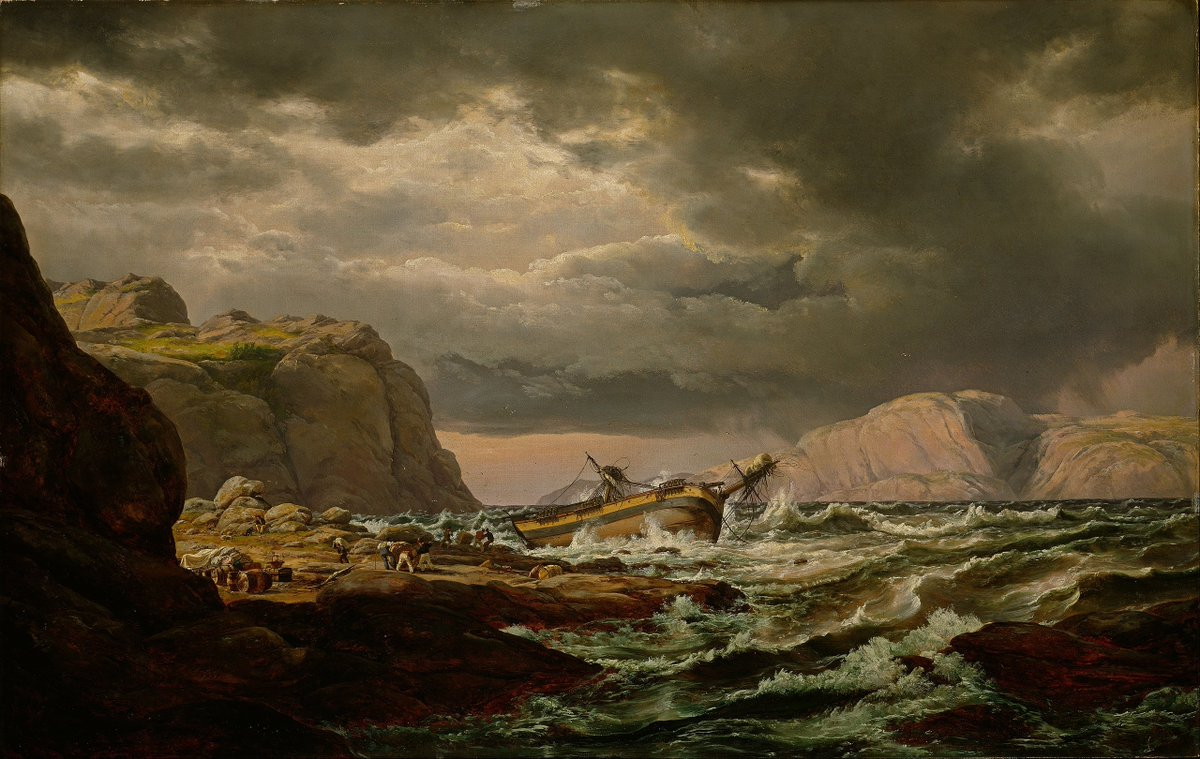
They departed, the gods, on the day of the strange tide. All morning under a milky sky the waters in the bay had swelled and swelled, rising to unheard-of heights, the small waves creeping over parched sand that for years had known no wetting save for rain and lapping the very bases of the dunes. The rusted hulk of the freighter that had run aground at the far end of the bay longer ago than any of us could remember must have thought it was being granted a relaunch. I would not swim again, after that day. The seabirds mewled and swooped, unnerved, it seemed, by the spectacle of that vast bowl of water bulging like a blister, lead-blue and malignantly agleam. They looked unnaturally white, that day, those birds. The waves were depositing a fringe of soiled yellow foam along the waterline. No sail marred the high horizon. i would not swim, no, not ever again.

Someone has just walked over my grave. Someone.

Banville’s Booker Prize winner was on my radar for years. The blurbs compare him to Nabokov, setting expectations for metafiction.

So far it strikes me as ultra-naturalist in a great way! Sure, it’s non-linear, but nothing is ontologically up for grabs.

The stylistic verve is there. The prose has a driving rhythm that approaches straight iambic pentameter: “I wonder why the house was built like that, sideways-on, turning a pebble-dashed windowless white end-wall to the road; perhaps in formal times, before the railway, the road ran in a different orientation altogether, passing directly in front of the door, anything is possible.”

And there’s the narrator’s vocabulary: a mixture of archaic, idiomatic, medical jargon, and annoyingly formal word choices.

Before Anna’s illness i had held my physical self in no more than fond disgust, as most people do — hold their selves, I mean, not mine — tolerant, necessarily, of my sadly inescapable humanity, the various effluvia, the eructations fore and aft, the gleet, the scurf, the sweat and other common leakages, and even what the Bard of Hartford [Wallace Stevens??] quaintly calls the particles of nether-do. 

Max Morden is an overread fellow. He strikes me as someone like the historical Nabokov, curmudgeony, casually snobby, not one to blame themselves. But Max is a lot more depressed than Vladimir ever was, I imagine. Also a shamelessness about their verbal resources.

This aspect annoyed the literary press a little. Would people be irritated by a painter who used obscure techniques or revived ancient ones? It’s not a great analogy, because language is still conventional, is expected to be more socially integrated. But that seems like a good approach to the dramatic material here, the grieving, the resentment, the aloofness.

Who are the gods in that opening narrative block? The wonderful seascape description, Max’s literary consciousness, and with Joyce never being far off in the constellation, we can assume it’s the Greek gods. We have an old world vacating the space. And of course the last line, announcing the work as a narrative from beyond the grave. It’s a sharp shift from the pictorialism above to a referential moment. The opening block in its entirety is something like a shifter, a way of re-inscribing the traces of the classical world in a hope to understand the present one. That salvo kicks the whole novel off, in lieu of an erudite epigraph. I guess you can have that or erudite prose, but not both!