See ya later, doppelgänger! October summed up

First things first.

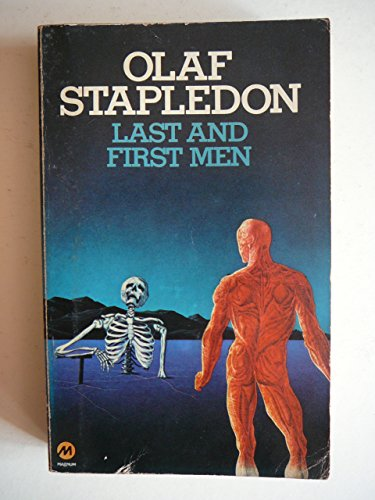
I had a new story published in Passages North at the beginning of the month, inspired by Olaf Stapledon but really more in the manner of A. E. Van Vogt. Neat! I read it out loud at the open mic in the cafe where I wrote it. There were so many stand-up comics doing sets at the show that even I got heckled. Laugh-a-minute. I put cinnamon in my coffee every day till I saw DUNE in theaters.

More reads: Anne Carson’s SHORT TALKS | Paul Curran’s LEFT HAND| Thomas Mann’s MAGIC MOUNTAIN (whew!) | Stevens’s PARTS OF A WORLD | Ashbery’s CAN YOU HEAR, BIRD | 

And a press copy of my most anticipated novel of the year, for two years in a row: WARNING TO THE CROCODILES by Antonio Lobo Antunes, translated by Karen C. Sherwood Solentino, from Dalkey Archive.
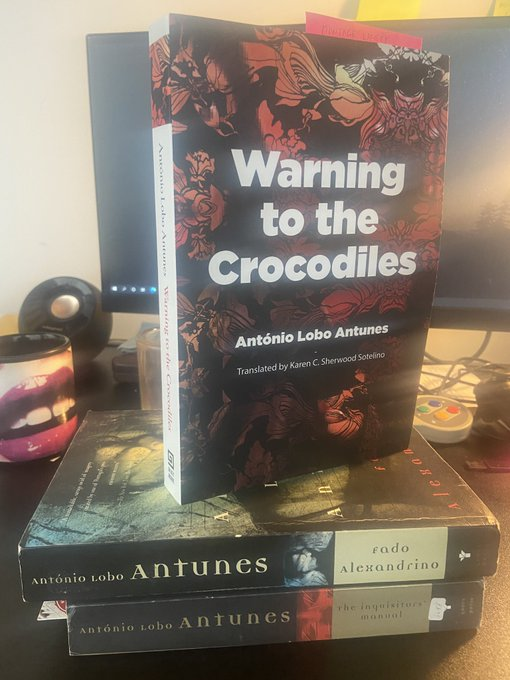
If you’re at all interested in translated literature then I urge you not to sleep on this great Portuguese novel from 1999. Lobo Antunes is a living grandmaster of literary modernism, and even all my personal hype did not prepare me to realize that this translation is very important, as this work is a summation of the tendencies in his 90s output, in the same way FADO ALEXANDRINO (perhaps his masterpiece) works as a summation of the 80s. A review to come, probably next year. As for the cover, I like the palette, and when you look past the fractal floral pattern and see that it is masking a strange image with pixelated faces, which is suggestive and fits as a depiction of the Lobo Antunes literary experience, with its ultra-subjective haziness. But my reflexive tastes definitely prefer the monochrome with red accent minimalism of Dalkey’s typical covers. Perhaps uniform covers are on their way out more generally.

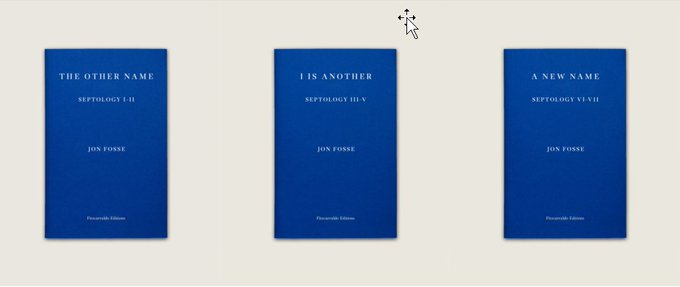
Now for my trip to Norway via Fosse.

#
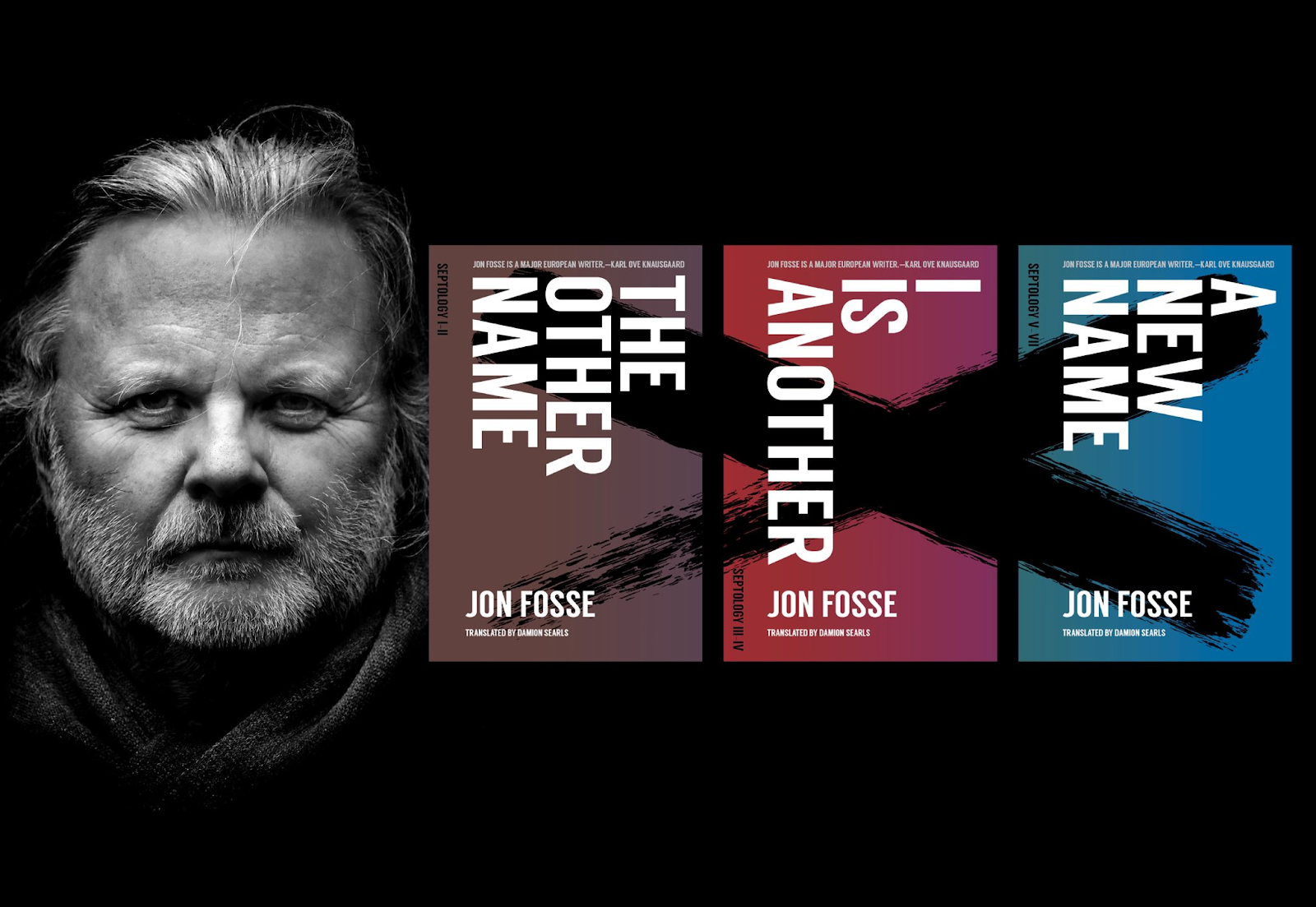
During the day I wrote the opening of Septology. I just started with my laptop on my stomach in bed. I write easily. Something comes to me when I sit down to write. I have never had writer’s block. […] What I experience when I write has as great an impact, if not greater, than what I experience in life. To write is to dream while awake, to place oneself in a controlled dreamlike state where one advances by listening.

Jon Fosse, interview in MUSIC AND LITERATURE

SEPTOLOGY follows a painter named Asle, seemingly from one day to the next. Every morning he imagines or “sees himself” looking at his latest picture, made of a purple and brown line that cross diagonally; and every night he ends the day with his rosary, reciting the Lord’s Prayer in latin, slowly, till it comes one or two words at a time as he inhales and exhales. Which encapsulates nicely the extreme down-tempo nature of this literary experience. Each day begins and ends the same way, with slight variations on what crosses Asle’s mind when he contemplates his picture, will he sell it, will he gift it to his neighbor Åsleik’s sister named Guro but is called Sister, will he stow it away in his crawl space, will he give up painting all together? And in his closing prayer sometimes he wonders if he really believes. “…then I say Ave Maria and that usually helps, I think and sitting there in my car I take my rosary out from under my pullover and I think now do I really believe in this, no, not really, I think…” (Part V) 

I fell in love with this bleak and beautiful fictional world, a world of habits, routines, grieving (for his late wife Ales), and the peculiar human sight made possible in complete darkness, which is how Asle prefers to look at his pictures to make sure they’re truly good and finished. But that’s not all. When we follow Asle heading into the town of Bjørgvin in the first book, he finds his double passed out on the snow: another Asle, also a painter. This Asle is an alcoholic, while our narrator Asle has gone sober; the narrator was devoted to Ales and it was love at first sight, while the double is twice-divorced with distant children; the double has a dog while the narrator doesn’t (though he’d like one); the double’s life is considerably more fucked up, and he spends much of the story recovering in a clinic after the narrator drops him off. Everyone takes the doppelgangers in stride (and there’s another doubling in Åsleik’s sister and a local woman of the same name who bumps into the narrator a few times). The biggest point of tension in the first book is who will take care of the dog Bragi. I found all of this to be profoundly beautiful.

Most of the novel’s space is taken up with the narrator’s almost clairvoyant visions of his life, childhood, a sexual attack by The Bald Man, attending Art School, falling in love with Asle, sneaking cigarettes in those slate roof boat houses that dot the west Norwegian coast. It read to me like he was seeing pictures in his mind not unlike what he paints, and we are reading the “language of pictures,” in the narrator’s phrase, especially since he seems to experience them as compulsive images that wash over whatever he’s doing in the present moment the same way his ideas for paintings do. “I have all these pictures inside me, yes, so many pictures that they’re a kind of agony, yes, it hurts me when they keep popping up again and again, like visions almost” (Part II?). The phrase “I see myself” that heads every part, mantra-like, so perfectly condenses Fosse’s procedures, a narrative act that arrests narrative time in the same moment of its expression.

SEPTOLOGY’s landscape is overwhelmingly darkened snow: the narration so telescoped on individual acts and objects, the pace so languid, the tone so even and gentle, it puts not a movie but a black box play in the mind’s eye. Fosse is a highly mature child of Beckett and Bernhard, but not so caustic as either, taking the former’s absurdism and the latter’s music.
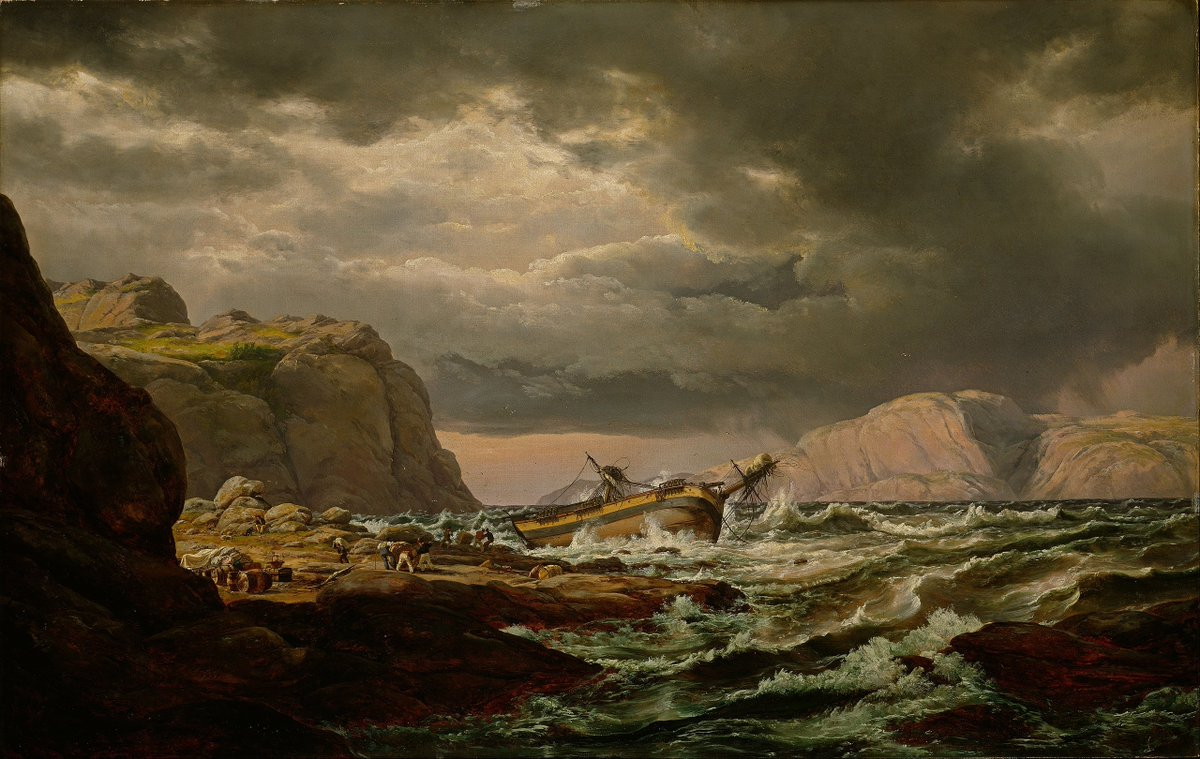
and I grip the edge of the table tight and then I look at Bragi standing there and looking at me with his dog’s eyes and I think that dogs understand so much but they can’t say anything about it, or else they can say it with their dog’s eyes, and in that way they’re like good art, because art can’t say anything either, not really, it can only say something else while keeping silent about what it actually wants to say, that’s what art is like and faith and dogs’ silent understanding too, it’s like they’re all the same, no now I’m getting in over my head with these thoughts, I think, because I’ve never been a thinker, and the only language I’ve so to speak mastered is the language of pictures, I think and I look at Bragi and maybe he’s hungry or thirsty… (Part V)

The last book really threw me in for a loop. First of all, it seems several weeks have elapsed before the beginning of Part VI. I’d thought the seven parts naturally lent themselves to a week (they’re collected in three volumes, just like LORD OF THE RINGS’s seven books, incidentally). But that’s not all, Asle’s schedule changes, as he spends most of this section at night staring out his window at some landmark in the darkness over the Sygne Sea. Asle seems to have been a gifted painter from the beginning. He’s so talented he can start Art School without finishing high school, and after that the Art School runs out of things to teach him. There’s no resistance to his artistic upbringing. It’s God’s grace. I loved the intense mixture of modes in this gentle transformation of the story at the very end.
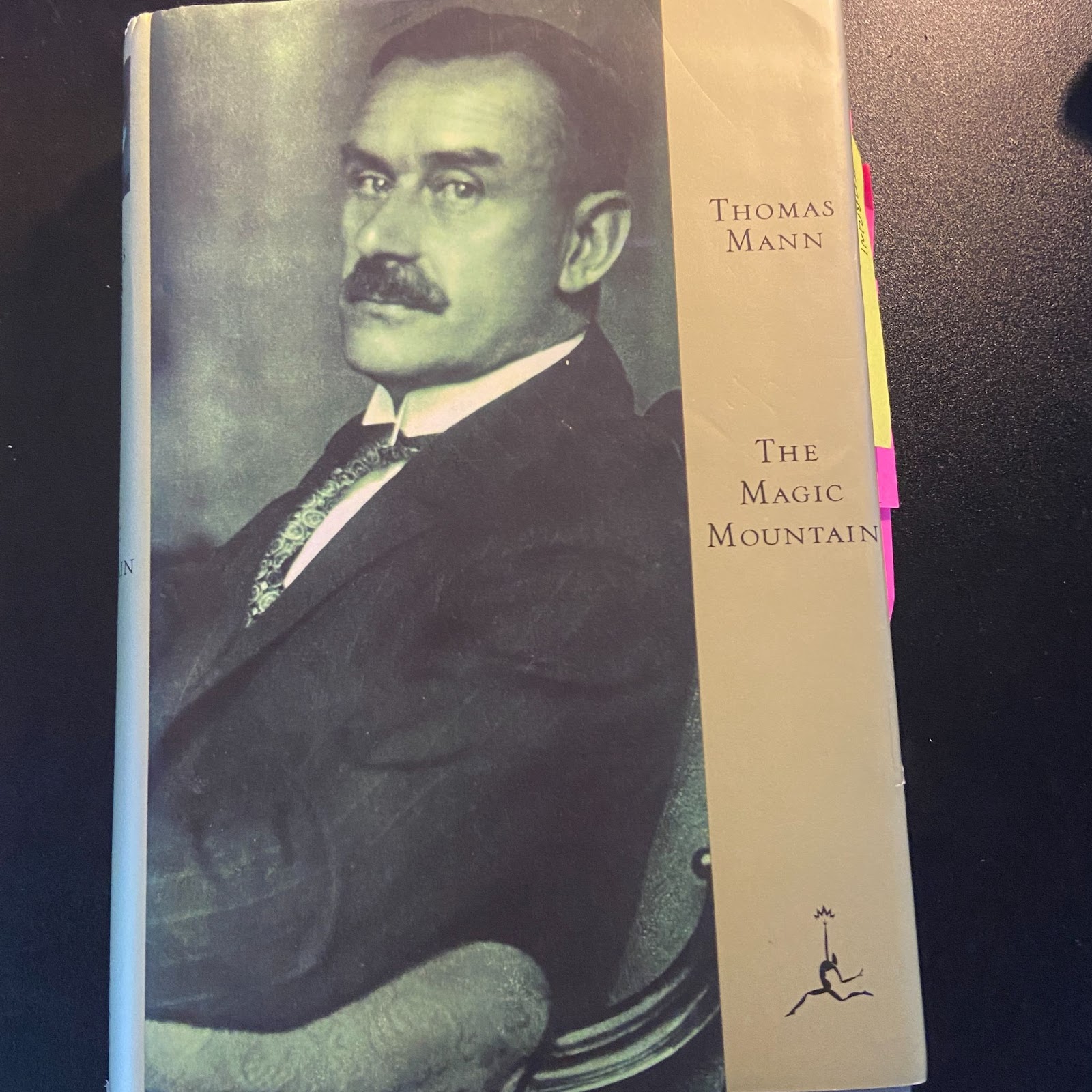
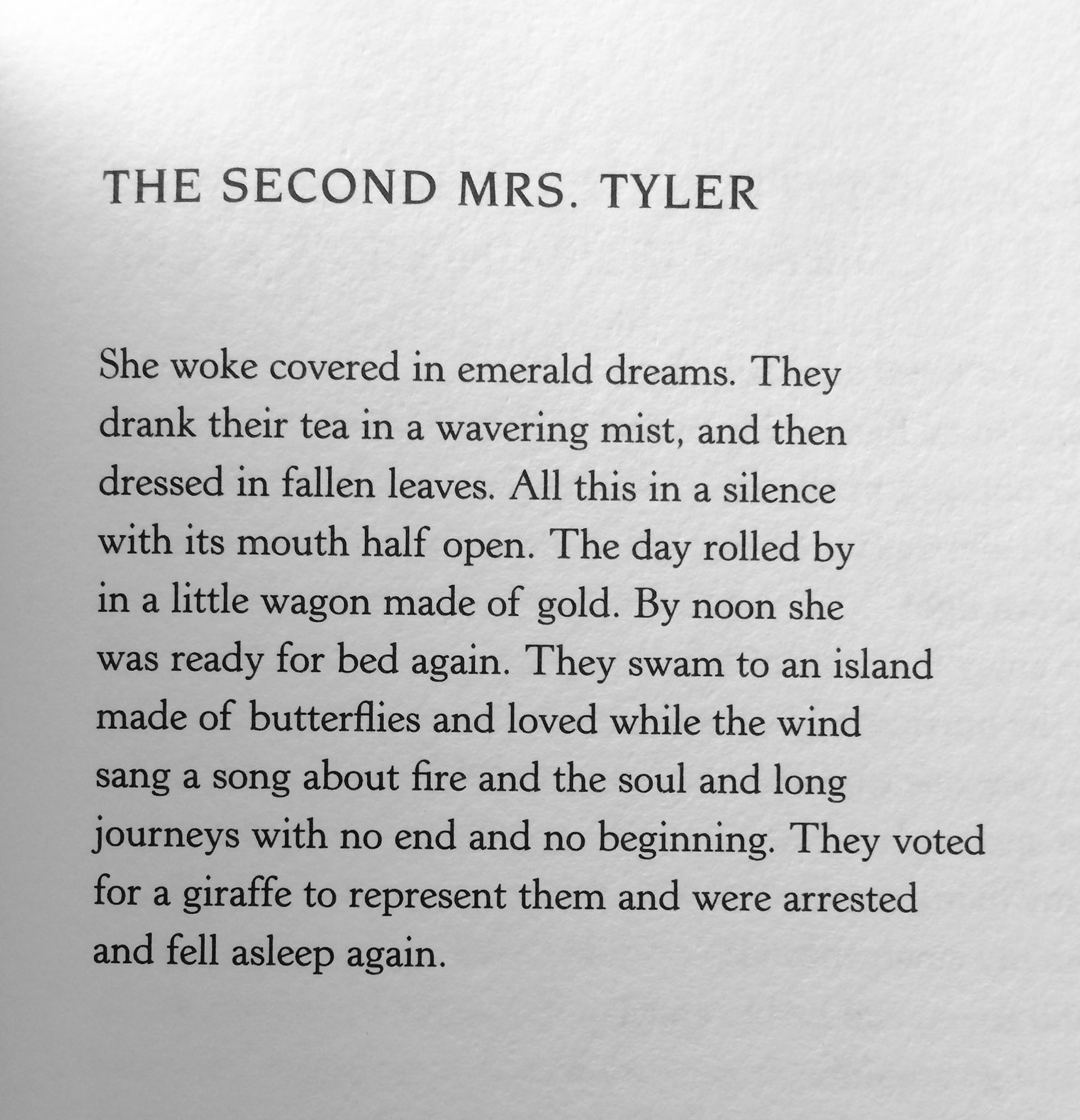
Mann’s MAGIC MOUNTAIN was three months of delectable reading. I may have enough to say about it to make a proper essay, though the didactic allegory and the ironized bildungsroman conceit Mann employed so masterfully here have been rendered transparent by scholars already. The experience itself is like climbing a mountain by stages, first unrolling slowly until around the sixth of the big chapters, things develop faster, the narrator starts summarizing more, the tone gets funnier and more deranged as we go along, and before you know it you’ve careened over the finish line in a runaway toboggan. 

I read a hard copy of the Lowe-Porter translation, pictured above, but also ended up reading large stretches of it electronically through the more recent John E. Woods translation. This was interesting if irresponsible. They are quite different, with Woods overall being very smooth to read, as I expected after his DOKTOR FAUSTUS, while Lowe-Porter goes for an antiquated pastiche with lots of idioms and untranslated French. Which approach is more faithful to the German I can’t say; the two translations read to me as trying to get to Mann’s sense of humor in different ways. In the first chapter, Hans Castorp laughs his head off at a particular word used by his cousin and asylum resident Joaquim. In Mann, the word is “Seelenzergliederung” which means psychoanalysis, but literally can mean soul dissection. Lowe-Porter translates this to “psychoanalysis” which in the scene made me laugh, while in Woods it’s “psychic dissection.” Is Wood’s more literalized choice a way to make the concept as bewildering as it might be to Castorp’s perspective?

It’s probably because I’m still high from finishing it, but the very best comparison sentence for me is the very last one. 

Lowe-Porter:

Out of this universal feast of death, out of this extremity of fever, kindling the rain-washed evening sky to a fiery glow, may it be that Love one day shall mount?

And Woods:

And out of this worldwide festival of death, this ugly rutting fever that inflames the rainy evening sky all around—will love someday rise up out of this, too?

I originally went to Lowe-Porter because, being a hopeless aesthete, I’d previously found Woods suspiciously accessible, but I prefer the Woods formulation here. The fever is more concrete with its “ugly rutting,” and while “feast of death” and “kindling the rain-washed evening sky” have an old macabre ring, “festival” and “inflames” seem more precise. And Woods adds some structural redundancy with the repeated prepositional phrase “out of this” while Lowe-Porter’s sentences are much of the time extremely heavy on either the front or the back end in terms of what you have to keep in mind about the subject while reading through these long sentences. Putting the main verb mount at the very end felt awkward, no doubt because of my modern American ears.

So if I had to recommend the best translation on the market, I don’t know, I’d probably say go with Woods then Lowe-Porter on a possible reread.

Next read: a trip with Mr. Lowry to Mexico, on All Saints’ Day, and something about a dead dog?
From Jack K to James T // September summation

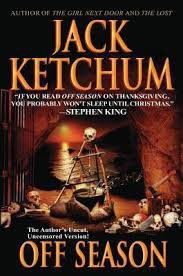
Even though it’s mid-October. September’s reading contained both the pulpiest of pulp and an important encounter in big L Literature. First, I ran through a few Jack Ketchum titles. I haven’t gotten to his masterpiece GIRL NEXT DOOR yet, but tore through and reasonably enjoyed RED and OFF SEASON and OFFSPRING, the first two entries in the Dead River sequence. This is no-frills formulaic writing with extreme grisly violence, and I must say I prefer this kind of lean storytelling over Stephen King doorstops, if we had to choose between horror writers steeped in the Northeast. Ketchum just has a clean, hard, clause-by-clause style that I never tire of. But a peculiar technique in each book is the reference to a story in the news.

Early in OFF SEASON, for example, Marjorie reads the New York Post in her Manhattan apartment. “There were two stories in particular that she read, so odd that in spite of herself they commanded her attention. In one a 45-year-old laborer in Paramus had tried to set his wife afire, having gone out to the garage after a drunken squabble to fill his glass with his glass with gasoline. He’d doused her with the gas but then, police said, was too drunk to light a match properly. In the other story a man in Virginia had hanged his beagle puppy from a tree in the backyard because it wouldn’t obey him.” Sure these vignettes lend the impression of a mad and violent world just like the real life news. But what’s interesting is how precisely off-set these stories are: the first one acts as a foil for the novel’s plot about straight couples under external threat, and the second is like a reflection of the horrendous act that kicks off RED. Speaking of which, the protagonist in that book (which otherwise doesn’t trade on sexual violence) also remembers “reading in the paper not so long ago about a woman in Florida who had orchestrated a strip-show in her home for some of the local teenage boys, with her fourteen-year-old daughter as the star attraction. She’d turn down the lights and turn on some music and her daughter would take off her clothes and then the woman would leave the room and her daughter would have sex with the boys on a first-come, first-served basis. There didn’t even appear to be money involved.

Why anyone would want to do that he didn’t know. But then he didn’t necessarily believe that age brought wisdom. He didn’t understand a lot of things. Figured he never would.

And Ketchum wasn’t the only splatterpunk read last month. I dabbled in the stories of BONDING, Maggie Seibert’s collection with Expat Press, which are wonderful and punchy. And even Jo Nesbo’s THE SNOWMAN might qualify, given how the titular Norwegian serial killer chops up and poses the corpses of his victims in theatrical ways, making him a Nordic Jack the Ripper meets Michael Meyers–though this fellow has plenty of psychological motivation, explained after the fact a la PSYCHO. Formulaic once again, but this sadistic noir is addictive reading. I consider it the segue into my sudden interest in Norwegian literature, ignited by Jon Fosse.

###

Feeling the fatigue of reading only novels the last few months, I restarted my poetry reading with some later Tate. What a tricky poet. His absurd anecdotes are delightful, though people are wrong to call it prose poetry or flash fiction. The are still definitely lineated. The photograph of the last poem in his typewriter included in GOVERNMENT LAKE shows how he set up his margins in such a way that they almost run flush to the right edge. But his actual prose is recognizably that. His situations undermine themselves often at the last second. They incorporate mundanity and genre tropes. They’re deadpan lyrical poems, usually just a page long, that can get a laugh a minute sometimes, like stand-up. Tate is so appealing on the surface but it’s hard to “get into” the enjoyment of the work in a practical-critical way; the meaning gets lost in the ironic absurdities, and the closer you look at the text the more weird things you notice, like sudden changes in tense or a possible missing sentence. The ending of “The Photograph of Lincoln” from DOME OF THE HIDDEN PAVILION, is a perfect example of his bathos and laugh-out-loud humor.

I headed
back the way I had come. On the mountain a man with a rifle
in his hand standing in the middle of the road stopped me. He
came over to my door and said, “My five-year-old son has been
captured by bears, or at least I think he has. I was up on
the mountain hunting with him by my side. The next thing

I know he’s gone. You’ve got to help me. When you get down
the mountain go directly to the police and tell them. They’re
the only chance I’ve got.” I looked behind him. The boy was
running down the mountain yelling, “Daddy, Daddy, why did you

leave me?”

People online are so quick to miscategorize Tate’s poetry since his use of storytelling seems to run counter to the rest of American poetry, even if he uses the same kind of diction and starkness. The lyric is the hegemonic form, similar to how stand-up comics don’t really tell jokes anymore, since it’s all observational humor. The focus on everydayness is as big a part of modern American poetry as the “visionary” aspect to it, which comes through in these lines by Stevens from “Of Modern Poetry” in PARTS OF A WORLD

It must
Be the finding of a satisfaction, and may
Be of a man skating, a woman dancing, a woman
Combing. The poem of the act of the mind.

In Ashbery’s “Dangerous Moonlight” from CAN YOU HEAR, BIRD we get these lines from a professor speaking that are even more specific, and suggests an idea of the poet who can concentrate something out of common human experiences (sees and breeds) in a precise way (unlike enharmonics in music where you can call a C-sharp a D-flat if you want) 

There is a poetry in mere existence,
the kind that shopkeepers and people walking along the street lead,
you know, and evenness, that fills them up to whatever brim
is there, and stays, transient, all the days of their lives.
Such enharmonics are not for your poet-person. He sees, and breeds:
Otherwise the game isn’t worth the candle to him. He’d as soon rhyme breeze
with breathes, as walk over to that fire hydrant in the grass
to examine it, see what it’s made of, make sure it’s not an idea in some
philosopher’s mind, that will bruise and cloud over once the mind’s
removed, leaving but a dubious trace of itself, like a ring of puffball dust…”

It’s not all spontaneous creation, since the poet should still avoid clumsy language and trite expression. Lastly it seems the poet is searching for that which hasn’t been fully rationalized by society yet, and make sure their content is not already the speculative product of a philosopher, something which the imaginative space of poetry may refuse to sustain.

But the fact that these difficult and canonical modernists have suddenly lit up for me may prove that Tate is the accessible poet (or anti-poet) who makes the other great poets a little more accessible. 

Source

Cultivated Good-for-nothing

Translated by Paul Wilson

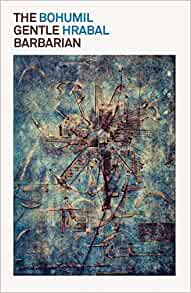
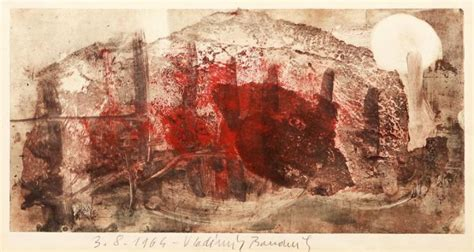
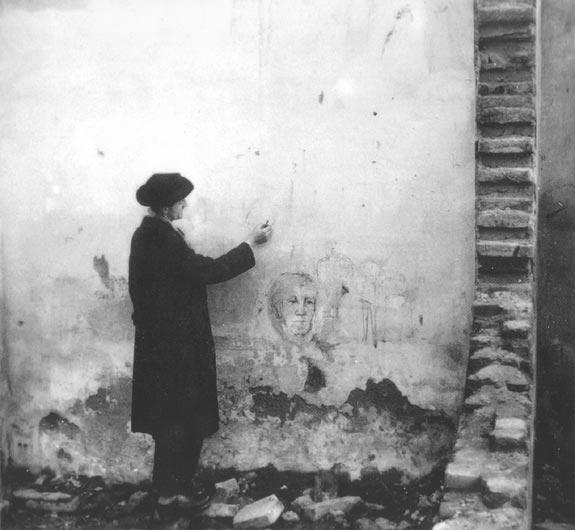
THE GENTLE BARBARIAN is Bohumil Hrabal’s drifting collection of anecdotes about his friend the graphic artist Vladimír Boudník, known for his “Explosionalism,” applying abstract expressionist techniques to metals and other raw materials, a meeting place of aestheticism and industrial production. It’s a true hangout narrative, depicting a bohemian lifestyle in mid-century Prague. Jaroslav Hasek is mentioned at one point, and the adventures of the two men, along with the ornery poet/”left wing Marxist” philosopher Egon Bondy, have a Svejkian good-for-nothing quality that makes them lovable.

In one episode, the narrator and Vladimír start collecting graffiti from public restrooms, and despite being caught in a women’s room and taken to be gay lovers, the project is considered a resounding success by the artist. Egon Bondy learns of this and caps off the section as he often does, with a jealous rant: “Jesus, you two miscreants are stealing my thunder and you don’t even know you’re doing it. Just now I’ve been sweating out a sentence: Sexus is anonymous; Eros has an addressee. We’re all in the same sexual boat, but everyone sails under his own erotic flag. Goddamn it! I’ll have to swallow a kilo of pills again tonight, just to get a little sleep!”

After the long middle part full of anecdotes of carousing, art-making, factory work (with lesbian proletarians), meandering conversations in the streets at night, and the small town aspects of big city living, the final third part, a short text Hrabal read at an exhibition, is one of the best artist pep talks I’ve ever read. Here is a statement for the artist’s ethos.

Think about Vladimír, who felt at home wherever he was. Think of how his studio was always where he happened to be at the moment. Think of how he had the eyes of a child and those of a scientist as well, eyes that looked closely at what was around him, so that he imbued things of little apparent worth and meaning, things people scorn, with nobility and great beauty, though it may have been on a surface no larger than a handkerchief.

And while Hrabal sees an aristocratic sensibility in the proletarian Vladimír, these lines to me speak to the materialist line of knowledge that art, when it’s in touch with life, can’t seem to help but validate.

You who are simply observers should try, as Vladimír did, to peel back the skin of matter, to get inside the membranes that cover animate and inanimate forms. Don’t be afraid to perform a vivisection, not just on yourself but on all things, because that is the only way you can find lifelong pleasure and rejoice in the knowledge that human eyes have evolved so that, through them, matter might see itself and recognize its own million-faceted beauty.

Matter pondering matter. Well, what else are we?

Quote: The two traps for the artist, The Big Glass by Josipovici

The Big Glass: Josipovici, Gabriel: 9780856359057: Amazon.com: Books

p. 48

How to avoid the traps of both Genius and Whimsy? wrote Harsnet (typed Goldberg). How to move between pretentiousness and cynicism? There are two things fatal to the development of any artist, Leiris said, one is success and the other is failure. But he could equally well have said one is enthusiasm and the other is cynicism, one is facility and the other is aridity, one is gregariousness and the other is solitude, one is the belief that no one has ever done anything of value before and the other is the belief that everything has already been done, one is spontaneity and the other is cerebration, one is joy and the other is despair, one is heart and the other is mind, one is the garret and the other is the penthouse, one is sincerity and the other is irony, one is Jung and the other is Freud, one is Rimbaud and the other is Mallarme, one is wine and the other is coffee, one is rags and the other is riches, one is women and the other is celibacy, one is health and the other is disease, one is meat and the other is vegetables, one is life and the other is death, one is everything in upper case and the other is everything in lower case, one is everything in roman and the other is everything in italics. So Harsnet. Fatal, he wrote (and Goldberg typed). Both are fatal.

The Economy: Navigating Scylla & Charybdis