The utterly scuppered summation for November

Image
(Source)

Read in November: Nesbo’s THE LEOPARD (much more violent, and more of a whodunnit than the dark motive-searching of Snowman; I’m glad Nesbo is willing to mix it up in this series) | Ashbery’s WAKEFULNESS.

António Lobo Antunes’s THE LAND AT THE END OF THE WORLD

An early book that has Lobo Antunes channeling Malcolm Lowry—and to better effect, since unfortunately I find UNDER THE VOLCANO disappointing in some respects (haven’t finished it yet). It’s hard to put a word on the fault I find with it, but it’s obscure. Even though the writing is clear for the most part, though it does slur in its rhythm. The novel’s landscape and characters remain shadowy from start to finish. Whenever we’re in the Consul’s point of view a kind of deranged yet pure-hearted and idle wordplay takes up the foreground, a semantic drift that serves as a kind of touchstone of the shitfaced: katzenjammer becomes cat’s pajamas, katabasis into cat’s abysses, then Cathartes atratus and so on.

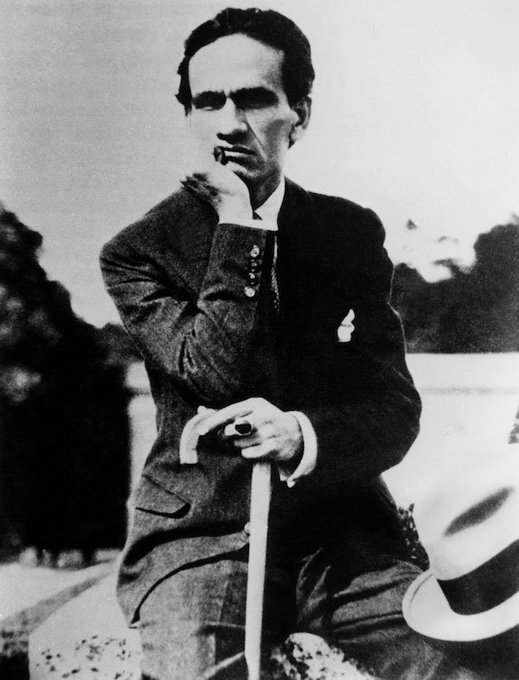
Vallejo’s AGAINST PROFESSIONAL SECRETS 

This is a wonderful collection of prose pieces and notes. There’s such whimsy coming round the edges of these aphoristic constructions.

Cuando un órgano ejerce su función con plenitud, no hay malicia posible en el cuerpo. En el momento en que el tenista lanza magistralmente su bola, le posee una inocencia totalmente animal.

Lo mismo ocurre con el cerebro. En el momento en que el filósofo sorprende una nueva verdad, es una bestia completa. Anatole France decía que el sentimiento religioso es la función de un órgano especial del cuerpo humano, hasta ahora desconocido. Podría también afirmarse que, en el momento preciso en que este órgano de la funciona con plenitud, el creyente es también un ser desprovisto a tal punto de malicia que se diría un perfecto animal.

(When an organ carries out its function fully, there is no possible malice in the body. At the moment a tennis player masterfully tosses the ball, he is possessed by animal innocence.

The same occurs within the brain. At the moment the philosopher discovers a new truth, he is a complete beast. Anatole France said that religious sentiment is the function of a special organ of the human body, yet to be discovered. One could also affirm that, at the precise moment that this organ of faith functions at its peak, the believer is also a being so devoid of malice that he could be called utterly animal.) 

I had a reading of these lines, but my booster shot for the Covid vaccine obliterated it, so that I can no longer understand what I had thought.

Vallejo is someone you want to follow as a disciple, what a scary authoritative presence. This book includes fragments from his notebooks, and just the single mention of Knut Hamsun compels me to put him at the top of the TBR. Also: “El arte según Marx: reflejo de la economía (Art according to Marx: reflection of the economy).” And “Poetas según Marx, que deben ser políticos militantes y conocerlo y vivirlo todo (Poets according to Marx, should be militant politicians who know it all and live it all).

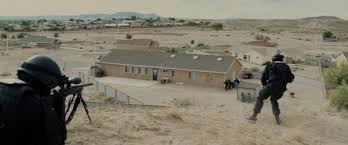
Lately I’ve been thinking about the opening shot of SICARIO, where the federal troops creep into a view of suburban America. A story I once read in PLOUGHSHARES (I can’t seem to locate it) opens with a similar image, armed cops on the rooftop of a family home to stop a mass shooter. The same vibe is achieved in THE GHOST SOLDIERS by James Tate, a poetry collection that creates the impression that all these pieces take place in the same small town in the Midwest that is constantly disrupted by warfare, with bombs landing in cow pastures and tanks blowing away farm houses. I’m increasingly drawn to this conceit of massive, mechanized violence brought to bear on safe and idyllic places where such things aren’t supposed to happen, but of course the comfort of the latter rests on the former taking place elsewhere.
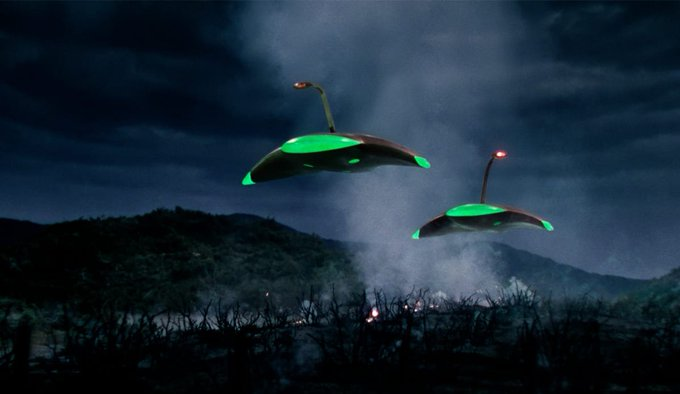
The first 30 pages of WAR OF THE WORLDS makes this point again, as ground zero for the Martian invasion is the peaceful northern London suburb of Barnet. A Sci-fi war bursts into a scene of bourgeois domestic bliss:

About six in the evening, as I sat at tea with my wife in the summerhouse talking vigorously about the battle that was lowering upon us, I heard a muffled detonation from the common, and immediately after a gust of firing. Close on the heels of that came a violent rattling crash, quite close to us, that shook the ground; and, starting out upon the lawn, I saw the tops of the trees about the Oriental College burst into smoky red flame, and the tower of the little church beside it slide down into ruin. The pinnacle of the mosque had vanished, and the roof line of the college itself looked as if a hundred-ton gun had been at work upon it. One of our chimneys cracked as if a shot had hit it, flew, and a piece of it came clattering down the tiles and made a heap of broken red fragments upon the flower bed by my study window.

I’m pretty sure the first time I read this book was shortly before 9/11, and perhaps the longer you wait before a reread, the more empowering it may feel. It goes by fast. I was moved to revisit it by the 83rd anniversary of Welles’s radio broadcast last Halloween weekend. And to my surprise the modern film and TV adaptations are pretty faithful to Wells’s original plot, but with faster pacing and other adornments.

Unfortunately I seemed to have entered a trough toward the end of November, and in the middle of producing this post, I have forgotten how to read and write.

SF is a bit more pessimistic than I remember

I recently enjoyed two famous works: THE STARS MY DESTINATION by Alfred Bester from 1958, and THE THREE BODY PROBLEM by Cixin Liu from 2006. This post has some loose thoughts without quotes; the texts are not at my disposal anymore.

I admire Bester’s punchy, no-nonsense sensibility, and you can tell he observed the urban counter cultural circles of his day, much as Delaney did for his own “heterotopian” depictions. STARS is also a progenitor of cyberpunk, focusing on the administrative society, gifted old children with ESP, a flaming vision with an explanation in time travel—all things that find a new articulation in AKIRA (those six volumes from Dark Horse were my LORD OF THE RINGS in middle school).

But most striking to me was where we end up philosophically. The anti-hero’s revenge quest concludes on a note of classical pessimism. We are not causes but effects, vessels of the will, a blind drive to exist, with no purpose. However, the gifts that Gulliver (!) Foyle unlocks also make him into a philosopher of the future or a free spirit that Nietzsche spoke of.

What makes SF stand out to me compared to other speculative genres or paraliterature is its mooring in historical totality as the Marxist tradition has described it. (It’s in this sense that Jameson has argued consistently that SF is a continuation of 19th century realism, up to ANTINOMIES OF REALISM.) Leigh Brackett’s planetary romances show an amazing sensitivity to those contradictions in the economic base that motivate the growth and movement of production, with THE LONG TOMORROW offering that analysis without the ideologically backward conceit of imperialism in space.

But Bester reminds me that even the so-called golden age of the pulps of course had a streak of mysticism running through it, and a increasing skepticism or hostility toward science as it is practiced in our society. This skepticism goes back to the immediate postwar period. The New Wave authors systematized this tendency, perhaps, through Le Guin’s Taoism, but by no means started it.

Liu’s novel is contemporary but is clearly a throwback to the Anglo-American early 20th century. It’s committed to hard SF concepts, to the use of the mystery structure, and its representations of an alien society evoke the satirical parables from the French enlightenment.

But here too is a pessimistic view, with a gothic dimension to it. The novel talks about the cultural revolution in the same way early 19th century gothic tales spoke of the French terror as ground zero for ghosts and monsters. Our fundamental understanding of physics is put to doubt in a familiar experience of postmodern demolition: the grid of rationalism swept off to make way for supernatural chaos—but like the gothic tales there is a rational explanation. The implications of this story about contact across interstellar cultures and civilizations, however, are rather dark, even tending to social Darwinism.

Perhaps SF as I’ve understood it only survives as “Hard SF,” and it is the fantastic tale (now called fabulism) that is on the order of the day in the genre scene. Or these distinctions are ancillary to a post-subgenre attitude. I only wish for more optimism in SFF, not merely in the sense of tropes and conventions, but the undergirding philosophical assumptions and structures that SF has articulated unlike any other form of fiction. We have enough modernist and late modernist stories that tell us a better world is not possible.

Celebrate good type

Back in August, my review for a new work of criticism by Barbara Foley went live on Full Stop Magazine.

It’s a celebratory review, as it was an exciting book to read. I could have found more faults—maybe I should have? I had differences with some of the Marxist formulations on capitalism, but they seemed to pedantic for a literary review. I mentioned Foley’s previous work, but I did not mention her politics, like her work with the Progressive Labor Party. That is, while I celebrated her push-back against idealist forms of politics and criticism, I did not emphasize that they generally come from a mechanical-leaning materialism, one that leads to class reductionism (though I do not think that is the case in this text).

Ultimately, however, I think it works out. The nature of polemic involves bending the stick too far the other way in the effort to correct a deviation. It is as Engels said in an important letter from September 1890:

Marx and I are ourselves partly to blame for the fact that the younger people sometimes lay more stress on the economic side than is due to it. We had to emphasize the main principle vis-à-vis our adversaries, who denied it, and we had not always the time, the place or the opportunity to give their due to the other elements involved in the interaction.

Life after the dinosaur

THE PHYSICS OF SORROW
Georgi Gospodinov, tr Angela Rodel
Open Letter, 2015

As every schoolchild will know under full communism, the ways you think and behave are in large part determined by the conditions of your existence. Approaching my third year in NYC, these days I’m constantly reading something off of two outfits: NYRB Classics and Open Letter.

With the exception of Merce Rodoreda, a class unto herself, the Open Letter novels I’ve read all share by chance a similar vibe.

So PHYSICS OF SORROW seems at a glance like Fresan-lite. Subjective, fragmented, wistful boyhood memories, limpid prose style, keystones from literary history. Their structures are on the same road: novels made of self-contained novellas that nevertheless posit a total work linked by motifs. Gospodinov’s touchstone is the Minotaur myth, a monster who was abandoned as a child, locked away in a labyrinthine dungeon until his slaughter. A ghastly childhood experience, and one that pulls and pushes itself away from the other theme, the socialist experience of Bulgaria, similarly abandoned by history. Bulgaria has been through a lot, like any other Eastern European nation that found itself to be a buffer state between the Ottoman Empire and tsarist Russia, and later Nazi Europe and the USSR. The 1980s are presented in this text as a “History of Boredom.” The pall of quietude that settles after the restoration of reactionaries, a lull in the inter-imperialist train wrecks that write the history of modern capitalism, finds a reflection and a quiet pathos in these wistful titled fragments, accumulated in different chapters that work like thematic folders.

It’s a lean novel because its structure is more rigorous. For all of its constellations it is decisively linear, which is more accurate to the archetypal labyrinth designs, less about being lost and more about a circuitous line that provokes contemplation.

It is also as I read it extremely self-reflective, so that the I pronoun, an empathetic boy who grows up to be a writer, the speaker, is the trajectory of the modern novel. It starts in a carnival, which like a section on Dziga Vertov’s documentary in later chapter, embodies these fragmented and concept-driven contemporary narratives, becoming montages of attraction, a root in surrealism and the Arcades. As a boy, the narrator could embody the lives of others, even a slug as it’s being swallowed by the boy’s grandfather. Likewise, the realist novels of the great tradition, with their omniscient narrators, could embody all figures that appear in a novel’s landscape. But this capacity dissipates along with childhood, and it’s interesting to track the change in material and form in each chapter; the relative coherency of the early parts becomes more and more unworkable,  Every chapter might have a different hint to the text’s function. It’s like a time capsule for memories, to be opened in the future after humankind has reset after an apocalypse. Or it’s like an ark (a nod to MOBY-DICK, which has a good joke about Noah Webster’s ark), where the fragments are like beasts safeguarded from annihilation and the slaughterhouse.

There are a lot of cute ideas. Forget storytellers; there is a chapter on the story buyer (with story sellers), where immaterial narratives are traded about, their exchange value expressed in flower petals and other ephemera. Or what if, following quantum physics, “the lack of an observer presupposes all manner of combinations,” and therefore a novel is not an inert “work” without the reader, but existing in a totally different way?

The fun of this formal arrangement for novels is that montage of attractions mentioned above, the diverse range of material arranged in little bits. Who knows which ones will strike you most? For me it was a fragment in the chapter “Time Bomb (To Be Opened After the End of the World)” called “Future Number 73.”

Many years after the apocalypse, life springs up again and after several millennial man makes a reappearance. These new post-apocapytites develop more or less the same as earlier people did, not counting a few insignificant deviations (mutations), for example, the fact that they are incapable of abstract thought. Clearly, nature or God learned a lesson from the previous, less-than-smashingly successful experiment and has made some healthy adjustments.

Looking it over now, there’s lot of implicit points here about how PHYSICS OF SORROW is a post-Marxist novel both historically and ideologically. The sarcasm regarding ideological struggle is hard to miss. Nevertheless, Marxist principles and methodology (its forms, at the very least) endure as indelible memories or vestigial structures. It remembers the vulgar Marxist view of history as an “evolution.” But it’s a touch Romantic: if only we didn’t have abstract thought, we wouldn’t be so willing to kill and die for ideas. Romanticism holds capitalism in contempt because capitalism, in its scientistic arrogance, tries to illuminate the mysteries of the world by illuminating it through the same measure (exchange value, price). It instrumentalizes the world by making everything in it part of a market of exchangeable commodities. Similarly, the Enlightenment, which postmodernism attacks mainly to liquidate Marxism, articulates a colonial philosophy in which reality can be apprehended an assimilated into a perspectival representational space — everything can be mapped out. These attitudes are damningly close to the premise of dialectical materialism, that everything unknown in nature can be disclosed. And that mediations, not necessarily untrustworthy for the same reasons that Romantics attacked commodity logic, language, map-for-the-territory, is precisely the explanation that your consciousness is determined by the conditions of your social being.

Notice that it’s either “nature or God.” Historical materialism did no better than religious or metaphysical master narratives, imbuing its sequence with a transcendental purpose, a teleology. And it’s  true that the revisionists at the time of the second international presented Marxism in this way. The more existential wing of modernist writers seem to merge together the fundamental human-nature contradiction into a more metaphysical kind of angst.

The “New Ones,” this post-apocalyptic race who do not think abstractly, find a time capsule, including three phrases from Bulgarian socialist propaganda. They change their organization to meet the ways of the fore-fathers. Prepared and trained for the sea of life. They open schools in the oceans. “On land they started to feel like beached whales. And life gradually returned to the sea. (What an evolutionary step backward.)

The socialist family — the basic cell of our society. “And that, true to the second line of the Testament, they filled the sea with wooden cells. Every newly married couple received one as a wedding present and lounged in it of their own free will.”

To spill your blood for the homeland. “Three times a year they celebrated the Day of Greaet Bloodletting, on which they injured themselves, so as to offer up spilled blood to the Homeland.

Future 73 is a doomed civilization. They hilariously interpreted an alien text literally. But it’s not unlike how socialism did get exported, or xeroxed, in a mechanical way in Eastern Europe which led to a great deal of contradictions. Lenin in STATE AND REVOLUTION recognized that there ought to be multiple types of proletarian dictatorships, since bourgeois dictatorships obviously take on different forms depending on ideological and national characteristics.

So like Fresan’s THE INVENTED PART, and probably FOX by Dubravka Ugresic, which is next, PHYSICS mixes fiction and essay, stories and concepts of all types, into an indeterminate subjective space. And the novel suggests (as Fredric Jameson suggested in the 70s) that this indeterminate space is not unlike the space of legends, of the classical world. Gaspodinov makes an interesting remark in the second chapter that the ancient world is modern human’s childhood (a riff on a famous or infamous point by Marx), it’s odd that their mythology contains few kids as we know them.  Later on, in the Time Bomb chapter, we read:

The unlikeliest things can turn out to be… Hexameter, for example. If something is said in hexameter, then historically and practically speaking, it has an infinite expiration date. The whole of the Trojan War is preserved in the capsule of hexameter. If that story had been stuffed into any other form whatsoever, it would have given out, gone sour, gotten torn up, crumbled…Hexameter turned out to be the longest-lasting material.

Hesiod, in his Works and Days, has left behind a true survival kit with instructions. If something happens to the world and people come who don’t know anything, thanks to this book they will learn which month is good for sowing, which for plowing, when a boar or a bellowing bullock or hardworking donkey should be castrated.

It also includes these favorite instructions:

One should not urinate facing the sun while standing erect, but
One should remember always to do it at sunset and sunrise.
Nor should you piss on the path  or next to the path when out walking;
Nor should you do it when naked; nighttime belongs to the blessed.

After humankind has destroyed itself and begins once again as children, they’ll have to be potty trained.