Fingering:
Arms disarmed and explaining themselves
—Brenda Shaughnessy
That was quite a hiatus. I ended up putting most of my energy in the April/May to finishing my thesis for my masters program, which centered on Jameson’s ideas about allegory—and “national allegory”—and Althusser. I’ve talked about the connection here before. Then immediately after, the George Floyd protests and urban rebellions directed my activities elsewhere (including writing activities).
I read a lot of great literature in this period, including Baldwin, O’Connor, Anne Carson, and a full catch up is beyond me, but I can share notes on a few texts recently finished. I am also eager to blog through THE TUNNEL by William H. Gass. I haven’t dug into this great writer on this platform yet, and after another two years of graduate (over)education I think I have more of the tools needed to crack into the concepts that manifest themselves “behind” the dazzling and terrible prose style.
For the lightning round of this post I’ll start with the SF.
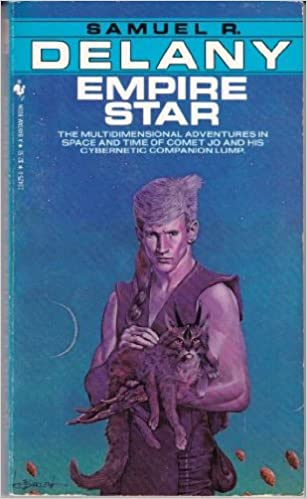
I gotta admit, this is the first Delany fiction that I actually finished. It helped that this a nice novella that basically reimagines Goethe’s WILHELM MEISTER’S APPRENTICESHIP, transposing the bildungsroman formula onto a planetary opera with metafictional anagrams and time manipulation. I found this early 60s work enjoyable and compelling in ways that the post-DHALGREN novels I’ve attempted (STARS IN MY POCKET and TRITON) were not.
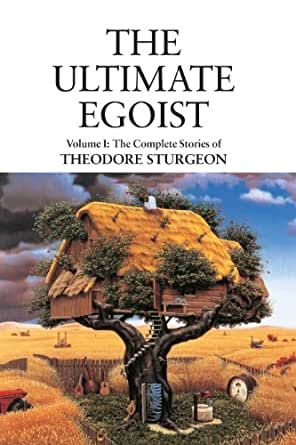
Delany also mentions Theodore Sturgeon in EMPIRE STAR. A Sturgeon story is also talked about at length in Bolano’s SAVAGE DETECTIVES. Sturgeon has commanded so much respect–I liked the tributes to him in this book from Bradbury and Wolfe. I’ve been an intense admirer ever since I read those brilliant opening lines of MORE THAN HUMAN.
I rooted around through this first volume of the collected stories, from North Atlantic Books. Most of these are short newspaper syndicate and pulpy stories, pretty hacky, but well written. It turns out Sturgeon doesn’t hit his stride till 1940, and I love his account of bashing out “Brianna’s Hands” in one of those urgent situations that distract a writer from assigned work–I know the feeling well, and there’s a parallel dynamic with reading books too, perhaps. That story is dark and twisted, in a kind of timeless setting, like Shirley Jackson or some of Robert Aichman. Brianna is a woman with no consciousness or volition except in her hands, which literally drag her body around the house. There is a gothic pulp formula here, but all it does is support really fucked up situations and a great style.
Then there’s “It,” which is a solid monster thriller, also apparently written in a white heat of inspiration on the writer’s honeymoon. But it’s an important work–the elements for Swamp Thing, Incredible Hulk, and other giants without emotion, or a surplus of only one emotion, in comics.
An honorable mention is “Helix the Cat,” which goes on for a little while, but is a diverting exercise in rationalizing the idea of the immortal soul (with a lot of mechanics introduced).
What opens up Sturgeon’s work is not only a new market for those weird tales that can surpass the rigid conventions and cheap O. Henry twists of the newspaper story, and allow him to stretch out his prose style beyond hard boiled narrators and 30s dialog, but also these kind of basic philosophical concerns about perception and being in the world: A moldy mud golem that investigates and analyzes things (quite literally, to grisly effect); it has perception and interests, without any feeling. “Helix” has some early discussions about the sense perception of “souls” too. (I’m afraid this will be an obsession of mine for a little while as I’m going through classical subjective idealism, like Berkeley and Avenarius and all that; it will also be very useful for Gass!)
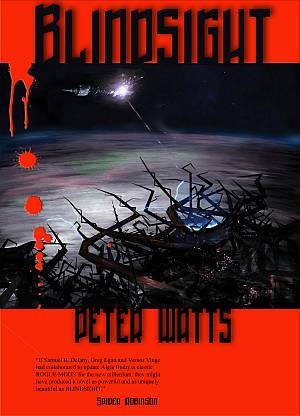
Just as useful will be this hard SF Cartesian fable from hell, available for free.
I remember being terrified by this episode of LOST IN SPACE, which my dad taped off the Sci-Fi channel in the 90s.
Consciousness, the realm of the thought, the mind, that’s the thing that creates our mental images of the world, our ideas and feelings and reflections, what would we be without it? Well, what if consciousness and self-awareness is just a vestigial object, an evolutionary glitch, a burden on our capabilities to survive, an energy sink. Maybe we’d be better off without it, and maybe the “intelligent” life that exists out there is far more likely to be without it. The aliens of this novel can do higher logic and mathematics as instantaneous reflexes, but without any thought for themselves. They operate in a vessel giving off insane electromagnetic fields that completely disturb the human astronauts, like convincing you to the core that you are in fact dead. It’s a very classical idealist notion, that you are only your perceptions, that the world you experience is something modeled from sensory inputs, the permeable membrane between self and matter. The novel explores other aspects of consciousness in a fun way: half of the narrator’s brain is cybernetic, leading to trouble with relationships, and a generally isolated kind of life.
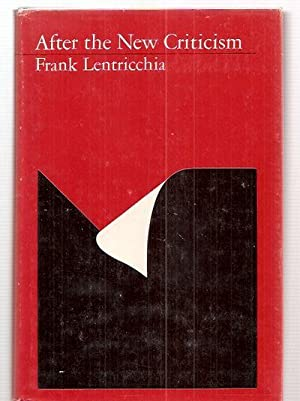
This is an amazing book. Frank Lentricchia in the 80s produced a solid, astoundingly well-written survey of American literary theory in the second half of the 20th century. He portrays this sequence—so convincingly—as a series of formalist polemics against the New Criticism, from Frye to existentialism to the American phenomenologists to the structuralists and post structuralists. Harold Bloom along with Hirsch and others get individual chapters, and even Bloom is so busy countering the NC’s attack on Romanticism that the multicultural interventions and the canon wars must have struck him as an attack on the rear. Here is Lentricchia on Heidegger’s language of earth and world:
The work of art “sets up” a world, but it “sets forth” the earth: “The work lets the earth be an earth” is the way Heidegger phrases it. What he means by this is not that the work is realistic in its portrayal of nature, but something far more familiar to readers of neo-Kantian aesthetics. In “The Origin of the Work of Art” earth is a reference to the aesthetic medium: the sculptor’s stone, the painter’s pigment, the poet’s language, the architect’s rock and wood. The aesthetic handling of medium is in brilliant contrast to the handling of medium as equipment: “Because it is determined by usefulness and serviceability, equipment takes into its service that of which it consists: the matter. In fabricating equipment-e.g. an axe-stone is used, and used up. It disappears into usefulness …. By contrast the temple-work, in setting up a world, does not cause the material to disappear, but rather it causes it to come forth for the very first time and to come into the Open of the work’s world.”
So we have the familiar formalist distinction of utilitarian and aesthetic values, of a medium which must remain unobtrusive if it is to be useful, if it is to mediate, and of a medium cherished for its own sake, set forth in its irreducible sensuous reality, as good in itself, thrusting itself upon our attention.
The whole book holds to this level of solidity, of careful argumentation and quotation. The type and design of the book is so nice too. One of those rare experiences of a theoretical text that is also just really delightful to read.
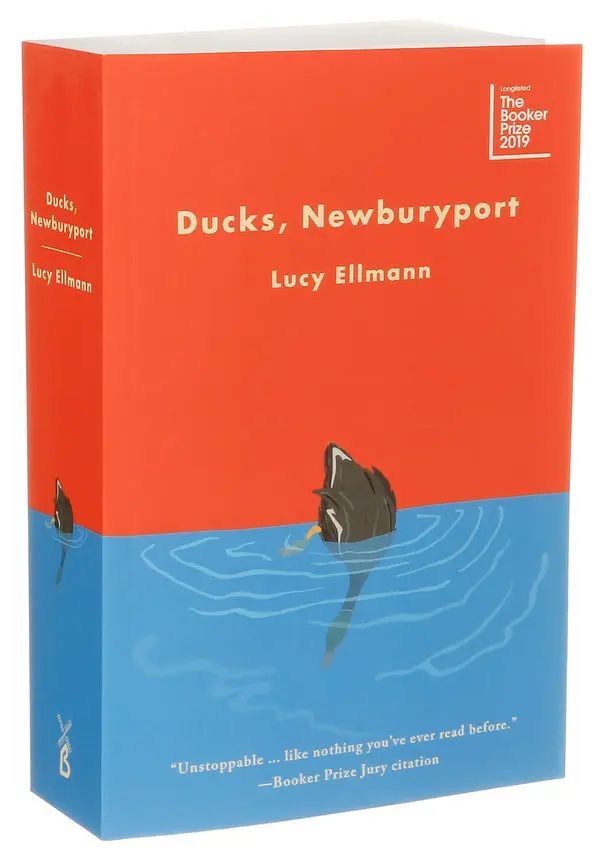
Somewhere along my insane drive to finish school I also finished up the new novel by Ellmann. I heard a lot of excitement about it toward the end of last year (plus it took home the Goldsmiths prize). Among the more core vanguard crowd of readers it might be getting a slight backlash now. I admired what this book was doing. It’s not at that supreme level of innovative fiction, but it draws on that tradition, on Stein, Lessing, Richardson, Young. It’s not that experimental or demanding, despite the form. I don’t think it’s a “river book” in the “stream of consciousness” sense (though Ohio’s rivers are important), but a spiral book, both a mental downward spiral and a compulsive circling of recurring thoughts around some absent center with no end in sight…till one reaches the unthinkable.
Basically, the form of the book is a single sentence that expresses the inner monologue of a white middle aged suburban housewife making baked goods for some extra income. She has a loving second husband and a few kids. The monologue is broken up with the lyrical story of a mountain lioness in the greater area who embarks on a quest to find her lost cubs–this is actually the A plot. There is something of a writing constraint. The Oulipo had an exercise called “Starter Text,” where every sentence of a work has to begin the same way. George Perec’s “I Remember” is the classic example, and there’s also le Tellier’s book A THOUSAND PEARLS where every sentence starts with “I’m thinking about…” DUCKS, NEWBURYPORT is driven by “the fact that.”
That idiomatic phrase is meant to point to the significance of something. But when it’s used as the main connecting points for wall-to-wall language, containing almost everything the middle classes have been worried about in the pre-Covid society, then the problem becomes the pure lack of significance or the ability to draw out significance in this flattened landscape of thought (Ellmann runs a risk in making historical tragedies seem trivial when they poke out among a collage of pop lyrics and clickbait article titles, though perhaps that is the point made about our daily lives now). Sometimes the “fact” is definitely an opinion, or a memory, or a question–”the fact that why do I remember that Amish woodshop and not my mother…” As a result a lot of the language is generic in that classically novelistic way (the fact that a single man in possession of a large fortune must be in want of a wife).
And the details of her life and history come through, her concerns with her eldest daughter, her ex-husband, the daily chores, skeevy neighbors, financial worries, family history, US politics, etc. There’s still plenty of plot, maybe even too much. I admit I found the ending disappointing for this reason, though I liked the story with the lioness very much.
 Second Slope