Nothing like the condensed elegance of the haiku to clear our heads for the new year. Below are mini reflections on some great books read toward the end of 2020.
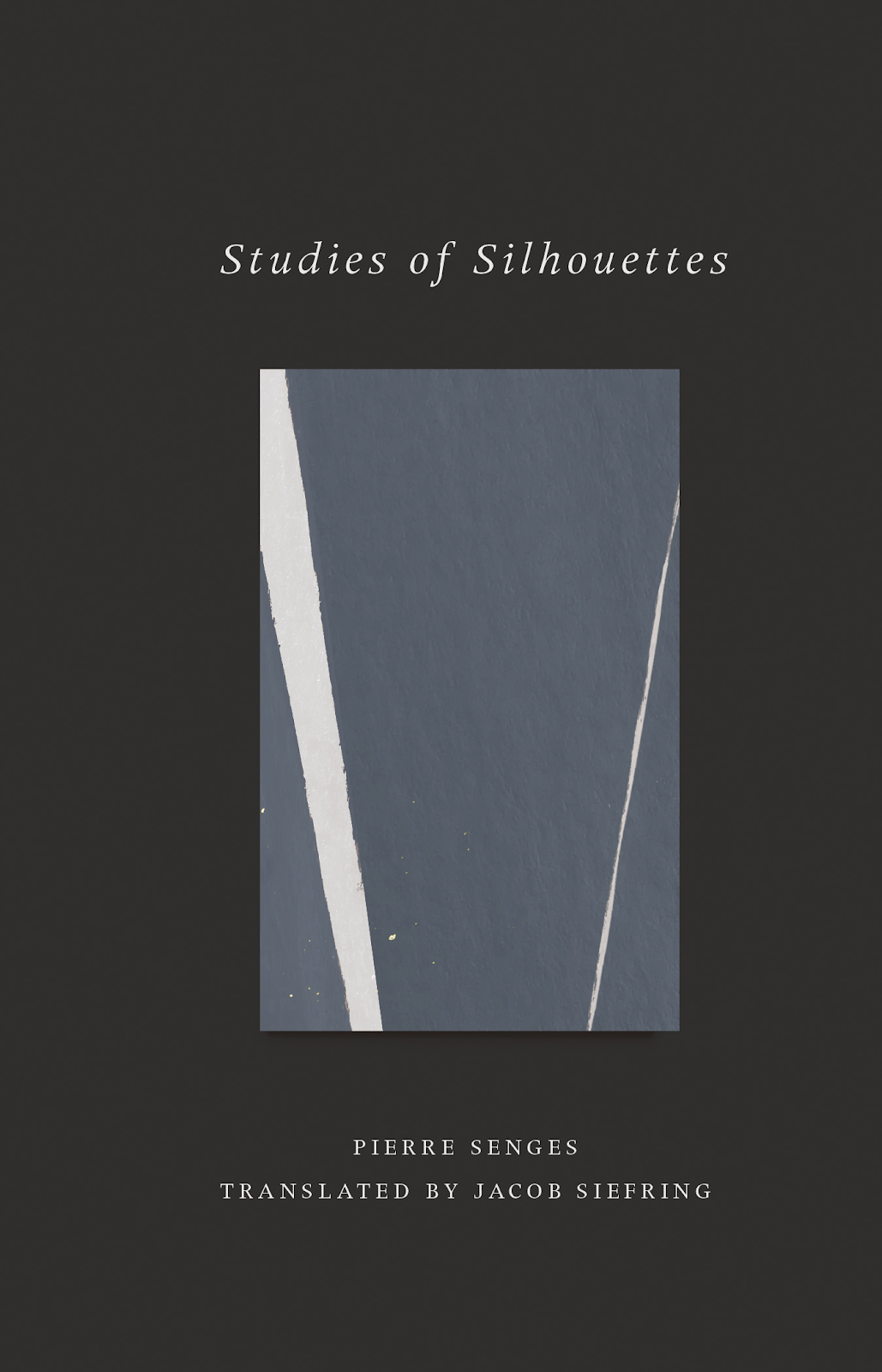
STUDIES OF SILHOUETTES Pierre Senges, tr. Jacob Siefring Sublunary Editions 2020
More Kafka-esque than the man himself. Here is a master of self-strife.
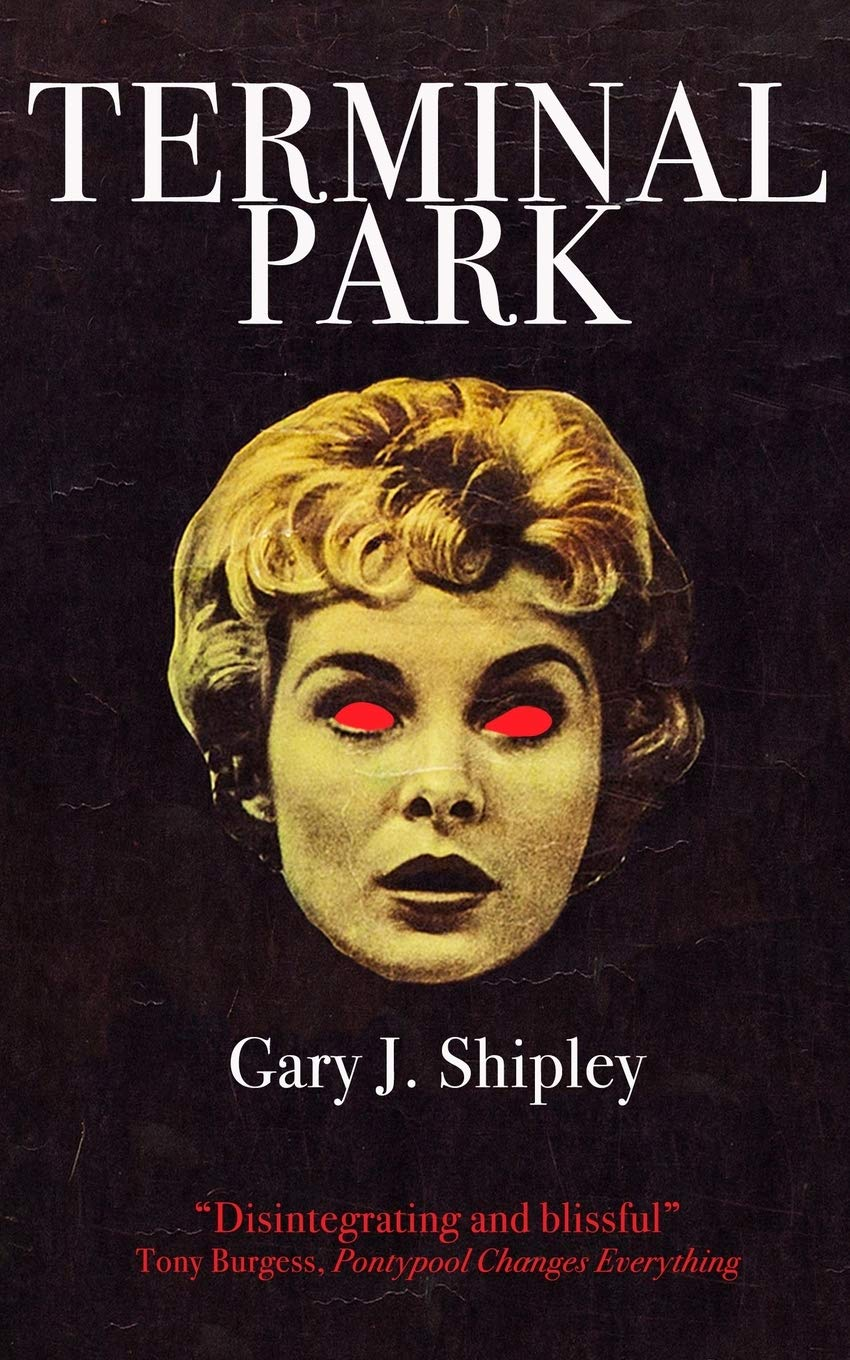
TERMINAL PARK Gary J. Shipley Apocalypse Party 2020
Psycho plus British SF on PCP is my negative muse.
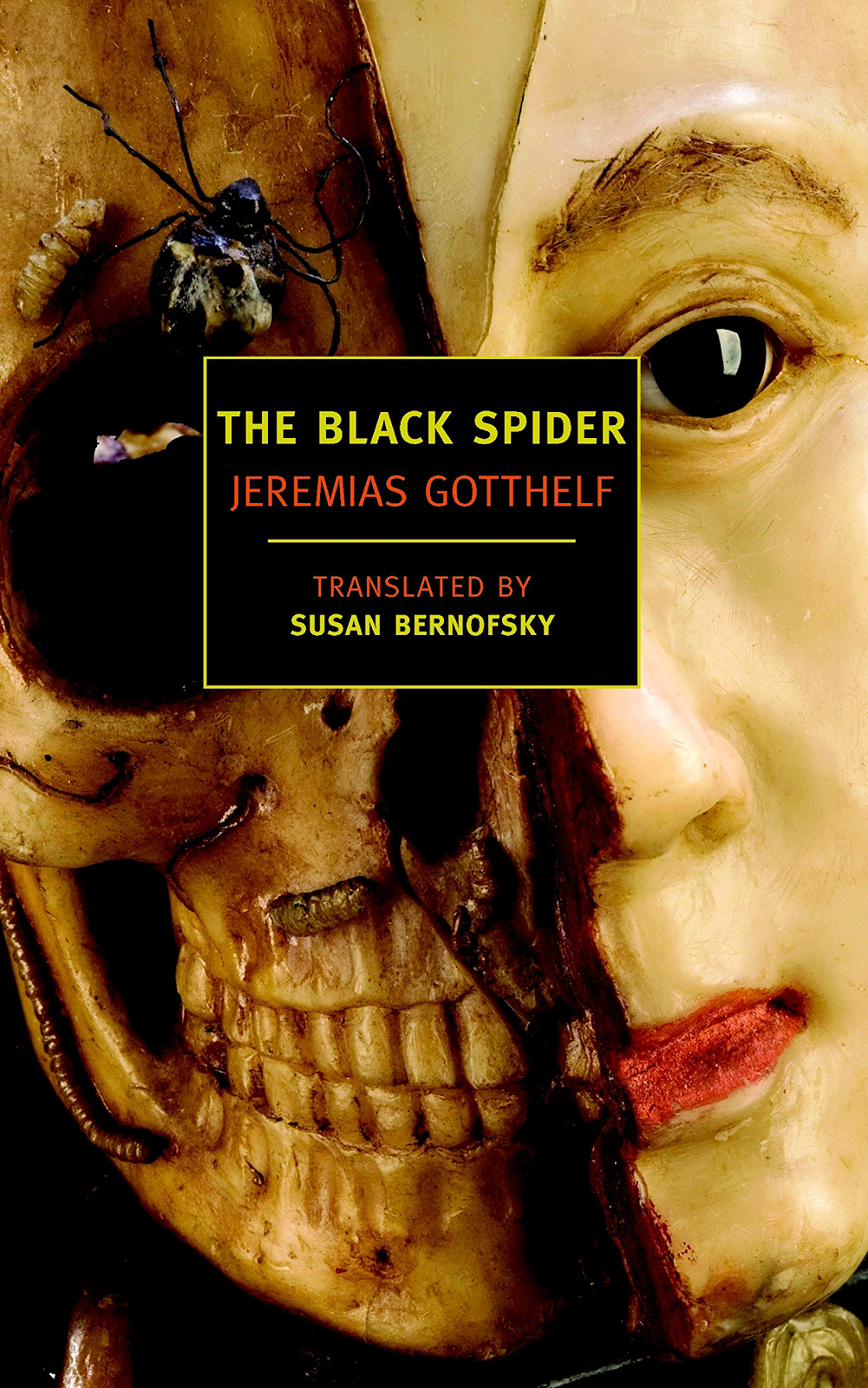
THE BLACK SPIDER Jeremias Gotthelf, tr. Susan Bernofksy NYRB Classics 2013 [1842]
God punishes us for dissing feudalism. This is “Dark Pushkin.”
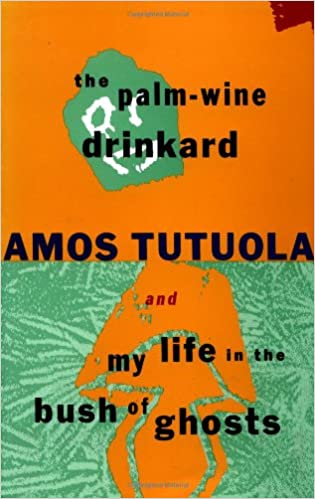
THE PALM-WINE DRINKARD and MY LIFE IN THE BUSH OF GHOSTS Amos Tutuola Grove Press 1994 [1954]
You had to English your unlettered culture thru this masterpiece.
FEVER DREAM Samanta Schweblin, tr. Megan McDowell Riverhead 2017 [2014]
Don’t drink the water in which the horses have perished. Meh, I’ve forgotten.
MAC’S PROBLEM Enrique Vila-Matas, tr. Margaret Jull Costa and Sophie Hughes New Directions 2019
What if I reviewed my older shitty novel as my new novel?
We live in a camp … Stanzas of final peace Lie in the heart’s residuum … Amen. But would it be amen, in choirs, if once in total war we died and after death Returned, unable to die again, fated To endure thereafter every mortal wound, Beyond a second death, as evil’s end?
Wallace Stevens, “Extracts From Addresses to the Academy of Fine Ideas”
Why yes, it was creepy to re-read THE PLAGUE by Camus while COVID-19 swept through Eurasia. But Camus’s novel is not a procedural drama; one notices what little interest the narration takes in the finer logistics of the quarantine, like where and how does the food and “serum” get shipped in. It leans toward the allegorical, and the main cast represent different philosophical stances toward the suffering and enclosure.
On re-reading I enjoyed the crackling dialogue. The sequence with Rambert the journalist attempting to break out of Oran under quarantine early in the novel plays out in public meetings where characters and authority figures keep crossing paths and bumping into each other. It could be staged like a play, and it emphasizes the lack of privacy.
Spoilers. The unknown narrator reveals himself in the end to be the doctor Rieux. Not that it was a difficult guess; he is the first character introduced after the descriptions of Oran during normal times, with its citizens living their lives in the way the existentialists lovingly called stupid humanism.
Why have the Doctor the narrator of the book at all? As a character he’s even tempered and stoic, noncommittal in his conjectures, almost like Jacques the Fatalist, really. His judgements come out more so in his record of events:
In this respect our townsfolk were like everybody else, wrapped up in themselves; in other words they were humanists: they disbelieved in pestilences. A pestilence isn’t a thing made to man’s measure; therefore we tell ourselves that pestilence is a mere bogy of the mind, a bad dream that will pass away. But it doesn’t always pass away and, from one bad dream to another, it is men who pass away, and the humanists first of all, because they haven’t taken their precautions. Our townsfolk were not more to blame than others; they forgot to be modest, that was all, and thought that everything still was possible for them; which presupposed that pestilences were impossible. They went on doing business, arranged for journeys, and formed views. How should they have given a thought to anything like plague, which rules out any future, cancels journeys, silences the exchange of views. They fancied themselves free, and no one will ever be free so long as there are pestilences.
The first person does make the middle section more impactful with its switch to the collective “We” pronoun. You could argue that the narrative’s ultimately affirming stance is based on how the story is commemorated by a witness.
Between Rieux’s stoic resistance to the absurdity of the plague and the repentant Communist Tarrou’s belief that humankind is at bottom good, or at least “better than they seem,” and that it’s a matter of comprehending people in all their aspects and reaching understanding, is Camus’s ideal way to exist. They’re the two ethical saints of the narrative, with Tarrou meeting his end as a martyr to the plague. Rieux is the confessor.
The book is so well paced; not a single part of it drags. The wave of dead and dying rats that wells up into the town is described in the creepiest ways.
I had thought that THE FIRST MAN, his unfinished autofiction was my favorite work mainly for its style. But the architecture of PLAGUE is something to behold. I’ll always admire Camus for his style above all else, certainly over his philosophy and politics. The argumentative skeleton of THE REBEL is not so great, let’s be honest. And the heroic non-committal stance of the absurdist, this absolute refusal of absolutism, didn’t look so great when it came to the question of Algerian liberation and independence. The instincts he did have was for representation, for literary flair and flow. When I think of “Myth of Sisyphus” I don’t give “One must imagine Sisyphus happy” much weight. No, what I will always remember is his description of Sisyphus’s plight itself, plied out in sensuous detail.
As for this myth, one sees merely the whole effort of a body straining to raise the huge stone, to roll it, and push it up a slope a hundred times over; one sees the face screwed up, the cheek tight against the stone, the shoulder bracing the clay-covered mass, the foot wedging it, the fresh start with arms outstretched, the wholly human security of two earthclotted hands. At the very end of his long effort measured by skyless space and time without depth,the purpose is achieved. Then Sisyphus watches the stone rush down in a few moments toward that lower world whence he will have to push it up again toward the summit. He goes back down to the plain.
#
I’m sure I don’t know.
The pandemic status of the coronavirus crisis renewed interest in Soderbergh’s 2011 movie CONTAGION. This is much more of a procedural, naturalistically acted, and terrifying for all of its plausibility.
That is decisively not the experience with NIGHT OF CAMP DAVID. This 1965 political thriller by Fletcher Knebel shares in the Cold War anxieties of privacy and authoritarianism. The madness of the POTUS is signaled by his grand wiretapping scheme. (The Nero Wolfe novel THE DOORBELL RANG is similar in this regard.)
With the US ruling class about to replace one doddering old fool with another in the presidency, it may also be a good time to reflect on presidents who lost their touch while serving in US history, from Reagan and Johnson. And in fiction, as the marketing at Vintage hoped, we can read about Mark Hollenbach, whose paranoia, unfortunate outbursts, and delusional ambitions of a new world order triggers an investigation by senator Jim McVeigh who then tries to round up a posse to pull a civilian coup.
The scenario is not exaggerated in order to keep it plausible, but it only makes the suspenseful parts underwhelming. The male characters are so boring and their dialog, while crisp, is full of boys club ribaldry. The two women, the protagonist’s wife and lover, are patchworks of cliches of course. Rather everyone just stay focused and talk about work!
The plot sadly drags on in the early moments; elements are set up and left hanging till the final four chapters where everything culminates, dissolves and re-culminates thanks to these elements swooping right in time. But that means there’s a lot of backfill through investigations while we wait. And the material is drab, in keeping with the grounded realism.
The actual historical mad kings of America were much more vivid in their madness than what Fletcher paints here.
#
For something different, the delightful “Tale of Ivan the Fool” by Tolstoy. Apparently Thomas Mann adored this story.
The petty-bourgeois work ethic of the Russian peasantry is on display here. No need to worry about the hard work that needs to be done; enchantment helps you out. Devils and imps are not so profoundly evil here; their tricks bring to mind the line in Wallace Stevens that “good is evil’s last invention.” Ivan is a fool because he does nothing for himself. His sister Martha is also a fool but only in the way that she’s mute (but why?). Yet by doing nothing Ivan eventually ends up the tzar of his own kingdom.
For the modern urban petty bourgeoisie currently self-isolating in their rooms, as I currently am at the time of writing, we can consider ourselves our own foolish lords.
MADAME BOVARY
Gustave Flaubert, tr Margarate Mauldon Oxford UP 2008
In scene 2 of THE ROBBERS (1781) by Schiller, the hero Charles says this:
CHARLES VON M. The glowing spark of Prometheus is burnt out, and now they substitute it for the flash of lycopodium, a stage-fire that will not so much as light a pipe. The present generation may be compared to rats crawling about the club of Hercules.
There’s a Romanticist yearning for the lost heroism of the past. Lycopodium was a species of moss they used for pyrotechnics: Prometheus of the old age has devolved into mass spectacle, of which theater is the emblem.
It’s an impossible dream to be Charles Dickens — or maybe Thomas Pynchon — to write best sellers that are also of artistic merit. Can a narrative work be worth the money you spend on a book or admission ticket, as well has bear that elusive value of art, or beauty? Was Shakespeare the last instance? Balzac?
It’s one thing to signal the rise of mass culture and of the masses themselves in modernity, as Schiller’s play does, and another to view literary texts as various seizures of this high and low split at different moments. There was Balzac, but then there is a fork in the road, between Flaubert/Zola and Dumas.
MADAME BOVARY of course has high and low baked right into the texture. On one hand it’s a, or the 19th century adultery novel, along with SCARLET LETTER and ANNA KARENINA. On the other it is an autonomous work of sentence production. For the first time maybe the idea of the artistic writer is posed, and that what the writer does is not principally tell a gripping story, but offer good sentences. Those conspicuous details, young Charles’s cap being the most infamous example, seem to get lifted by the narrator into a realm of greater agency. So too with the thoughts of otherwise philistine characters, everything you’d hate about the bourgeois mentality. As Emma and Rodolphe carry on their affair, she offers, we’re told, all manner of protestations of love “You’re my king, I’m your concubine, etc.” And Rodolphe?
He had heard these things said to him so many times, that they no longer held any surprises for him. Emma was just like all his mistresses, and the charm of novelty, gradually falling away like a garment, laid bare the eternal monotony of passion, which never varies in its forms and its expression. He could not see — this man of such broad experience — the difference of feeling, beneath the similarity of expression.
And here, mid paragraph, the free indirect discourse breaks in, I take it.
Because wanton or venal lips had murmured the same words to him, he only half believed in the sincerity of those he was hearing now; to a large extent they should be disregarded, he believed, because such exaggerated language must surely mask commonplace feelings:
After the colon comes a beautiful sentence that works like a supplementary step in this argument, which has already excelled the expressive powers of Rodolphe, that bore, and now pushes back.
as if the soul in its fullness did not sometimes overflow into the most barren metaphors, since no one can ever tell the precise measure of his own needs, of his own ideas, of his own pain, and human language is like a cracked kettle on which we beat out tunes for bears to dance to, when what we long to do is make music that will move the stars to pity. (170)
What if stale language indicated not lack of feeling but the opposite? And the closing images focus on the high and low metaphor where I least expected it. The dancing bears are the mass spectacle (the kind that took place right outside the Globe theater), and the music for the stars that aspiration for aesthetic greatness. The latter, Flaubert suggests here, now entails a choice. Demotic or heiratic culture. Reach the masses, or an elite circle of asthetes.
I still agree with the part of my postmodernist rant that this split has transformed itself into expensive and cheap. I still don’t know what keeping the faith with radical modernism today actually entails.


 Second Slope