How to avoid the traps of both Genius and Whimsy? wrote Harsnet (typed Goldberg). How to move between pretentiousness and cynicism? There are two things fatal to the development of any artist, Leiris said, one is success and the other is failure. But he could equally well have said one is enthusiasm and the other is cynicism, one is facility and the other is aridity, one is gregariousness and the other is solitude, one is the belief that no one has ever done anything of value before and the other is the belief that everything has already been done, one is spontaneity and the other is cerebration, one is joy and the other is despair, one is heart and the other is mind, one is the garret and the other is the penthouse, one is sincerity and the other is irony, one is Jung and the other is Freud, one is Rimbaud and the other is Mallarme, one is wine and the other is coffee, one is rags and the other is riches, one is women and the other is celibacy, one is health and the other is disease, one is meat and the other is vegetables, one is life and the other is death, one is everything in upper case and the other is everything in lower case, one is everything in roman and the other is everything in italics. So Harsnet. Fatal, he wrote (and Goldberg typed). Both are fatal.
Nothing like the condensed elegance of the haiku to clear our heads for the new year. Below are mini reflections on some great books read toward the end of 2020.
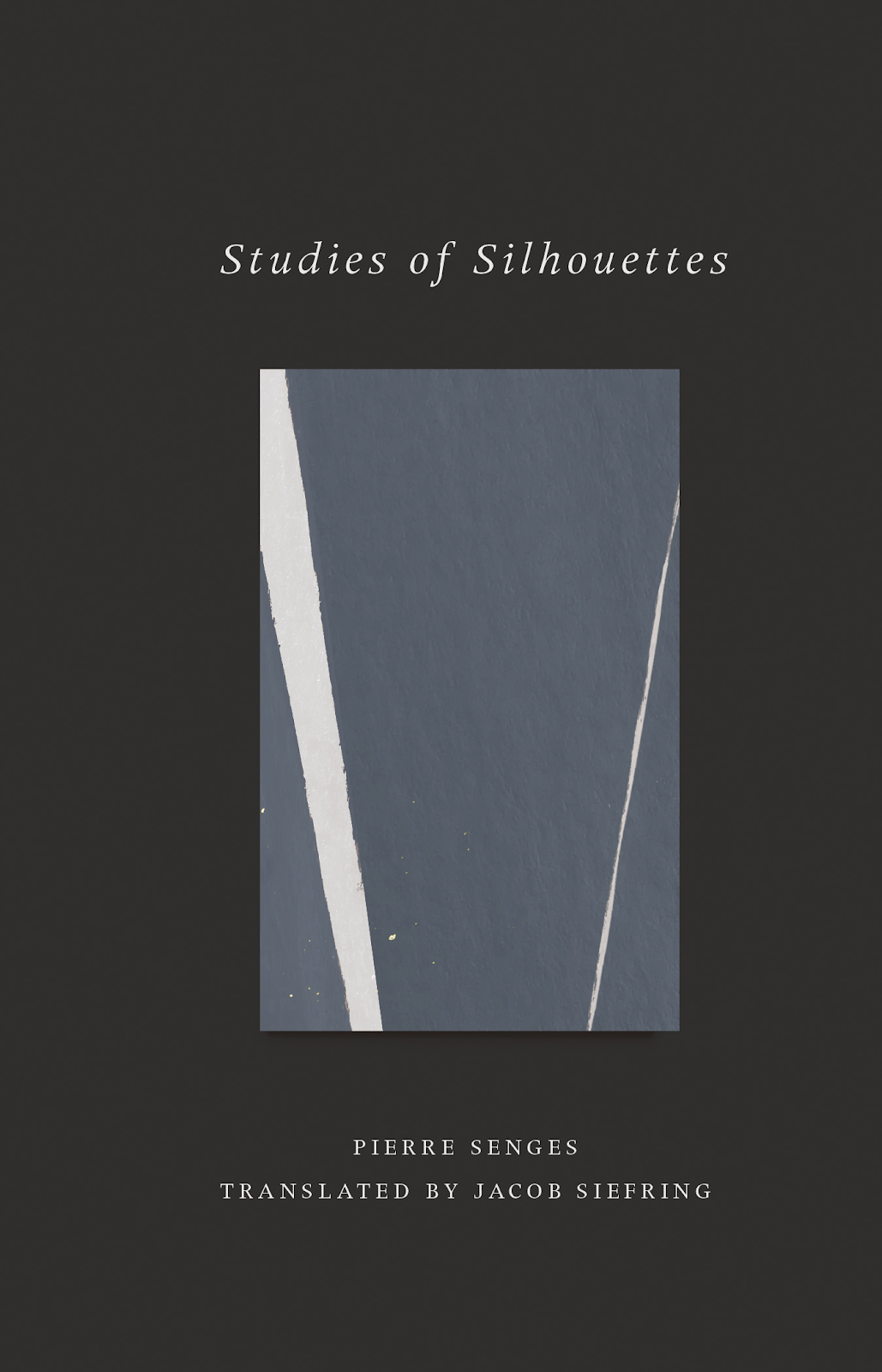
STUDIES OF SILHOUETTES Pierre Senges, tr. Jacob Siefring Sublunary Editions 2020
More Kafka-esque than the man himself. Here is a master of self-strife.
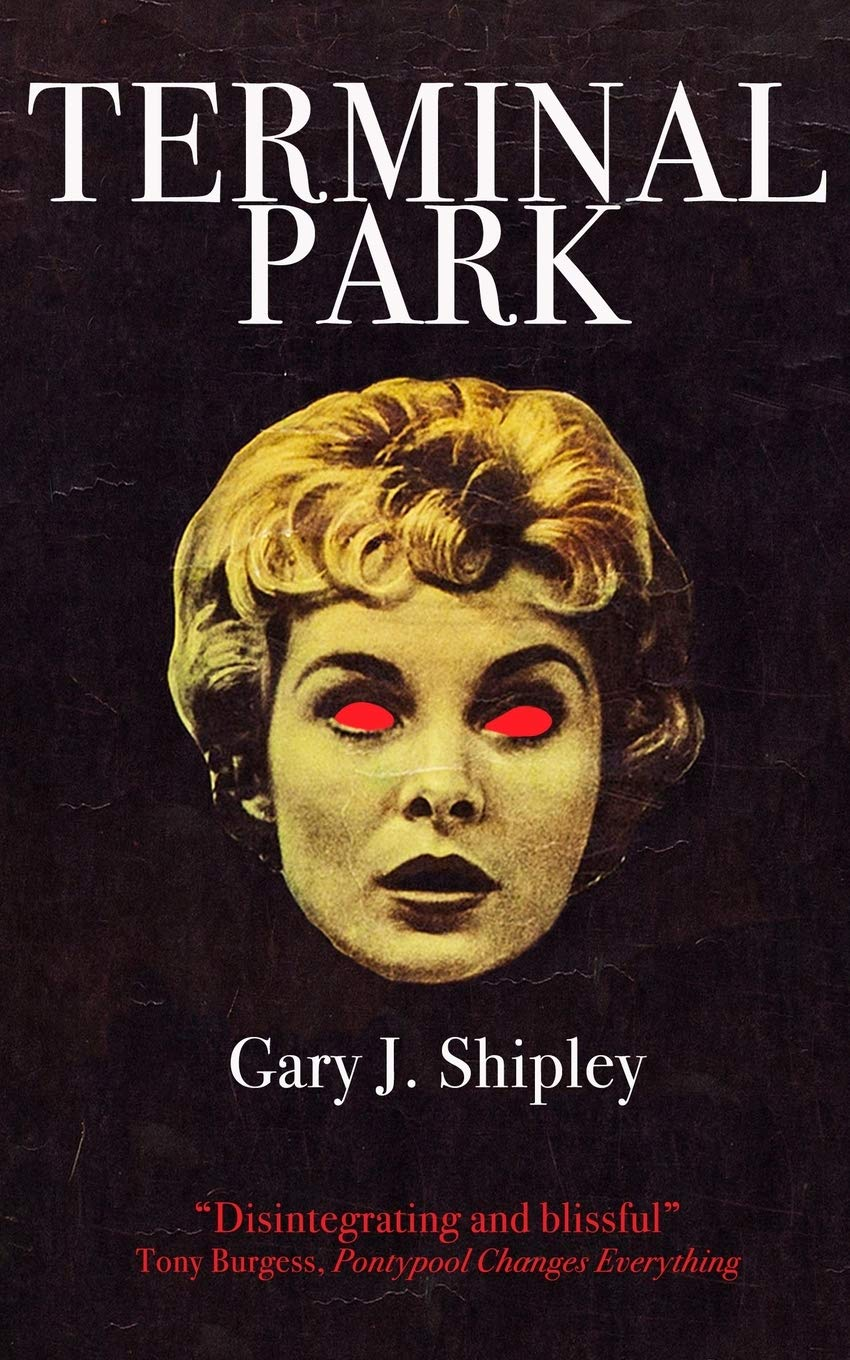
TERMINAL PARK Gary J. Shipley Apocalypse Party 2020
Psycho plus British SF on PCP is my negative muse.
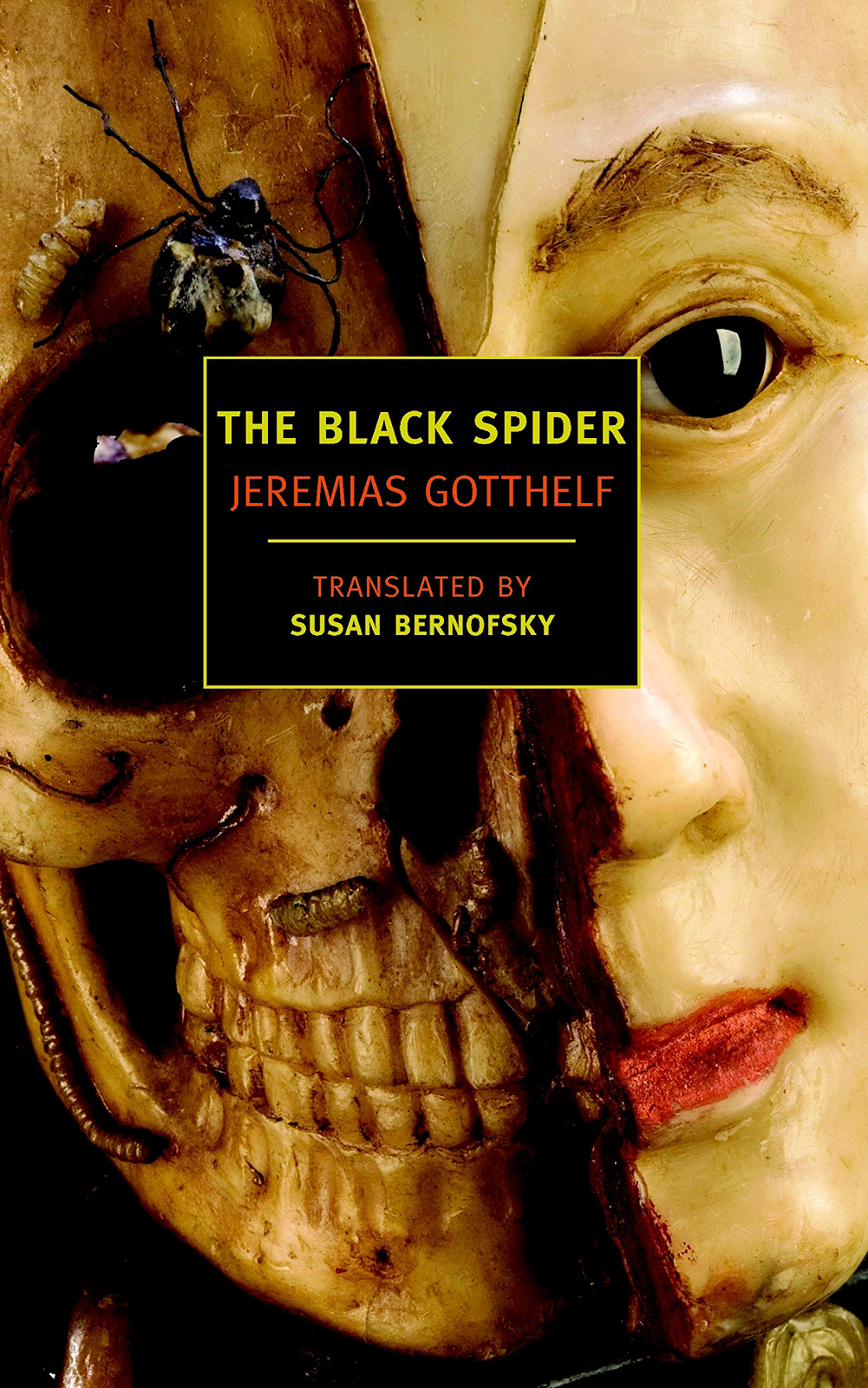
THE BLACK SPIDER Jeremias Gotthelf, tr. Susan Bernofksy NYRB Classics 2013 [1842]
God punishes us for dissing feudalism. This is “Dark Pushkin.”
THE PALM-WINE DRINKARD and MY LIFE IN THE BUSH OF GHOSTS Amos Tutuola Grove Press 1994 [1954]
You had to English your unlettered culture thru this masterpiece.
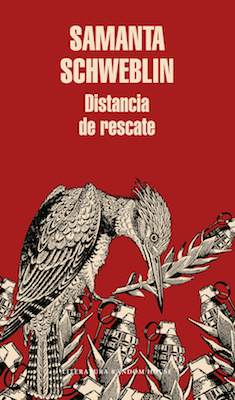
FEVER DREAM Samanta Schweblin, tr. Megan McDowell Riverhead 2017 [2014]
Don’t drink the water in which the horses have perished. Meh, I’ve forgotten.
MAC’S PROBLEM Enrique Vila-Matas, tr. Margaret Jull Costa and Sophie Hughes New Directions 2019
What if I reviewed my older shitty novel as my new novel?
ALONE: A NOVEL by Thomas Moore, Amphetamine Sulphate 2020
I feel like I was hardwired for abandonment. It’s not as tragic as it might sound. If a person understands things about themselves and can be honest with themselves about it, then a lot of life’s pain is much more easily dealt with–pain, no matter how people try to fool themselves, or no matter how other people try and fool them–is never going to leave. The idea of happiness as a goal rather than a transitional state is a dangerous and much more damaging notion for a person to carry around than just knowing that each and everyone is fucked in some way or other. If you can admit that, then at least you’re able to recognise when you’re outside of the worst of it, those moments when you’re able to dance amidst the ashes.
What hit me repeatedly with this breathtaking short book by Thomas Moore is its agonizing clarity. These thoughts are so raw, so painful, and perfectly formulated.
The type is set so that there are hardly more than ten syllables per line of text–like a poem, practically. The rhythm is pounding in a fantastic way. I read this in one day.
There is no belief in love or lasting happiness; this is beyond cynicism about love (“I’ve never seen a relationship that I have envied”), but pessimism (Schopenhauer, also Nietzsche and Bataille) that is so present in this trend of gay literature:
I sometimes feel like I really hate language. As in I detest it. Language is a lie that we are all guilty of and have told so many times that most of the time we either believe it or are too tired to be able to fight off–I think it’s the latter.
As the narrator points out, “It’s drilled into people’s beliefs that they need to be with someone It’s the goal in children’s fairy tales, it’s encouraged by the state, it’s portrayed as the norm in the arts in the majority of places that you look.” So here is one place to talk about being alone, powerless, and suicidal, without fear. Loved it.
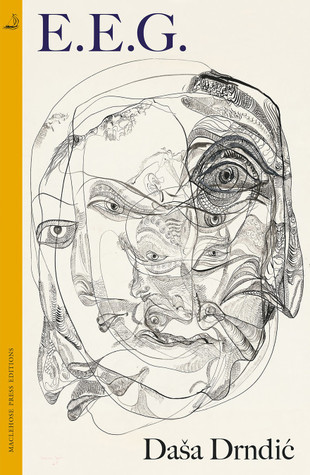
EEG by Daša Drndić, tr. Celia Hawkensworth, New Directions 2019
Ok, the comparisons between Drndić and Bolaño made regarding this novel are apt, I must say. In fact, EEG read to me as a conscious fusion of Bolaño and Sebald–a sure winner for international publishing. While I wasn’t blown away enough to want to check out the prequel to this work or the rest of the late Drndić’s corpus right away, this is definitely a vibe: B’s political nihilism, dread and despair; plus S’s generous inclusion of multiple individual narratives (though here coming through a prickly first person narrator).
It begins with a failed suicide on the surface, and it also launches this recurring image of congealing and concentration, of the horrific history of 20th century central Europe (one of its many long-standing conflicts suddenly and violently erupting at the end of September) into something formless.
I moved away to study small dead things, to observe close-up dead things that refuse to die. Arranged in impenetrable cages of milky glass, seen from outside, those dead things appear like quivering figures, opaque and inaudible. So, on my short journeys, I observed those huge cages, approached them, tapped on them, placed my hand on them to summon those imprisoned within, in case they came close to me, so I could speak to them through that thick milky-white glass, tell them I knew them, those imprisoned people, that I remembered their stories, that I was guarding their lives, but they just danced blissfully, disembodied in the silent vacuum. I remained invisible to them, external.
The book is a loosely structured album of these “short journeys” through Europe, documenting historical crimes at the ground level. It’s a grim diary of classical fascism. Genocide, racism, anti-Semitism, small national chauvinisms, as well as an angst over globalization. It is a petty-bourgeois intellectual’s cry against authority as such, against the philistinism of the middle classes.
Like Sebald, there is a ton of historical reporting that reads as non-fiction, as well as some photographs and a huge spreadsheet. The major highlight for me is the long passage on chess grandmasters who had all gone mad, which had a wonderful Lovecraftian feel.
What strikes me about this novel now is that the narrator, by piecing the story together this way for us, is committed, perhaps in a cynical or resigned way, to the Hegelian and even Marxist-Leninist idea of the absolute truth as a compound of many relative truths (the many stories of victims of multiple Nazi holocausts and national wars). The anti-fascist left in academia here in West, seems to me, would be more eager to reject Hegel and the dialectic out of hand as totalitarian or, more fashionable these days, a will to transparency. Not that EEG is a totality, even in the conscious design of its form, but it reads like an articulated attempt, out of a generosity to the victims of fascims and imperialism. The contemporary middle European writers, like Dubravka Ugrešić and Gaspodinov, just have a refreshing and infinitely nuanced view of this subject matter. These kinds of experiences, the collectively endured trauma, makes history seem to hang over everything, and it weighs heavy.
…the previous century and this one had coalesced, adhered in a squashy mass, which, like a half-dead, distended wild beast, at times powerful, at times in a state of decay, wafts around itself the stench of death and madness.
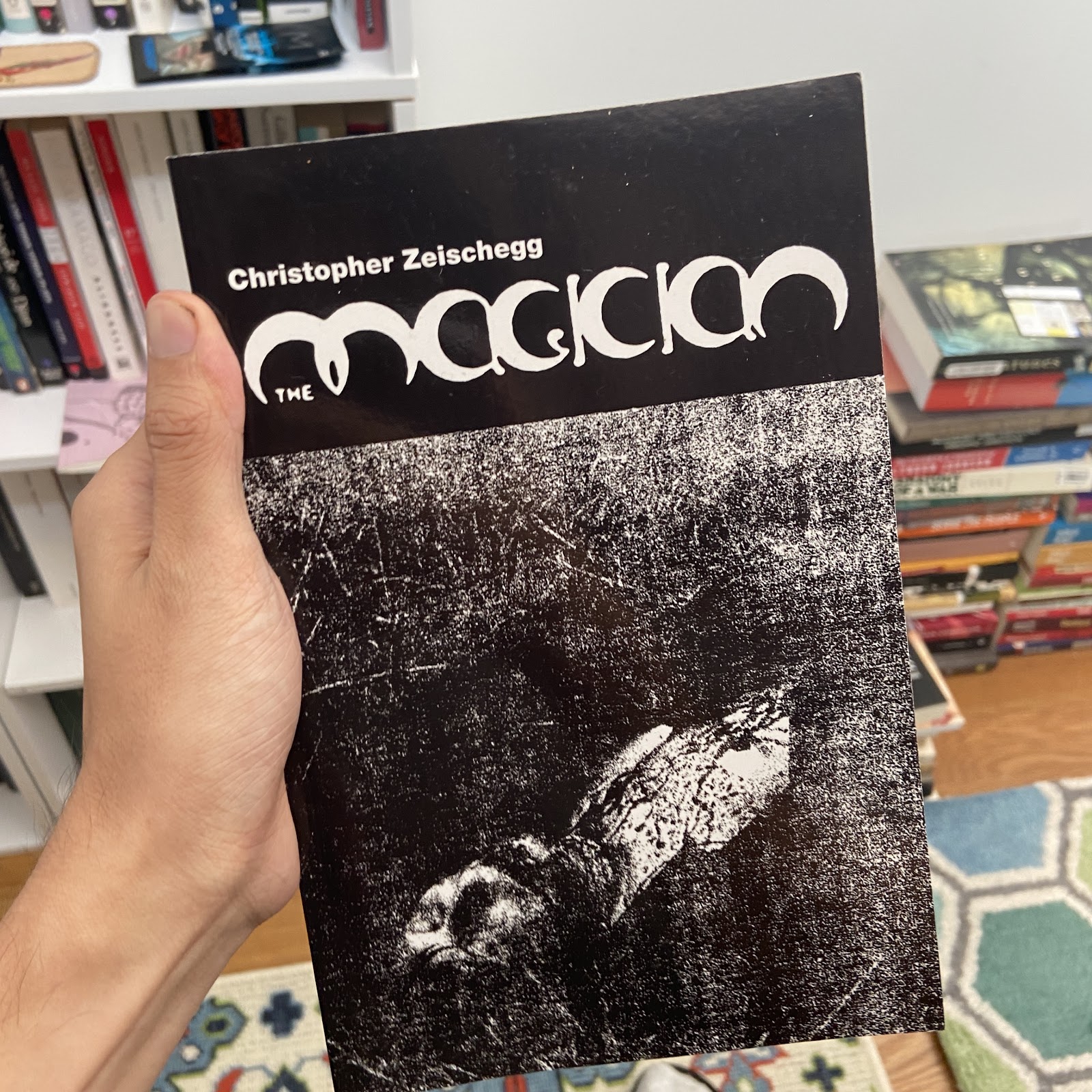
THE MAGICIAN by Christopher Zeischegg, Amphetamine Sulphate 2020
The best American novel of 2020 may be this beautiful and thrilling piece of transgressive literature from Zeischegg. I want to order everything else he’s written. THE MAGICIAN is a multimedia project with an awesome crescent-based logo (kind of like the one for DUNE), including a film—and to think that some of the events in this story will be staged is mind-shattering. The first 100 pages are raw and brutal, like 21st century Marquis de Sade. There’s a sequence that I can’t think of anything to compare with other than A SERBIAN FILM, except of course this is a prose novel so it goes directly into the mind. Then the supernatural elements and surrealism build up, layer by layer. There’s quietude and dread, adn a rhythmic prose that just rips you through the narrative. “I’d run out of small distractions. There was only the sound of crickets and whatever my body conjured up.” I’m going to be vague here. But the slogan I gave my IG post was that this experience is like an LA noir on benzos, unsparing yet deeply sensitive. The ending is devastating, and not in the way I was expecting.
Research has shown that ballads were produced by all of society working as a team. They didn’t just happen. There was no guesswork.
–John Ashbery, “Hotel Lautréamont”
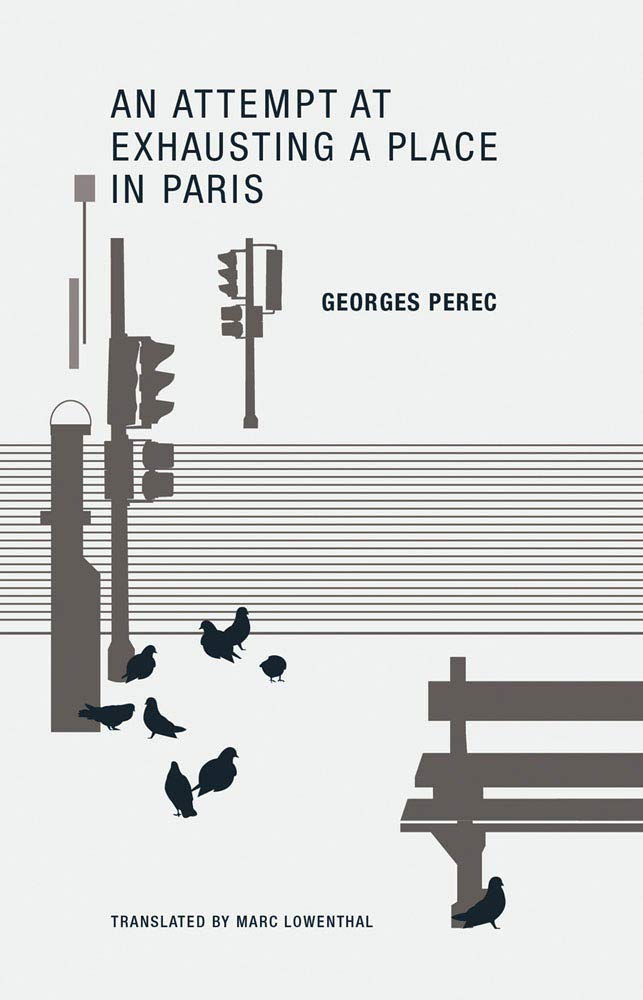
AN ATTEMPT AT EXHAUSTING A PLACE IN PARIS. Georges Perec, translated by Marc Lowenthal, Wakefield Press 2010
Over a weekend in 1974 Perec notated everything he noticed while sitting at certain locales in place Saint-Sulpice, with the aim of capturing “that which has no importance: what happens when nothing happens other than the weather, people, cars, and clouds.”
The translator’s afterword provides an interesting thought about this short book as a “prelude” or “inverted version” of Perec’s magnum opus LIFE A USER’S MANUAL. That great book was written shortly after this exercise, and Perec hinted at an important link between these projects in SPECIES OF SPACES if I remember correctly.
I had read a lot of Jameson for my masters recently and I happened to learn that he thinks about contemporary literature as being made of minimalism and maximalism, two opposite categories based on quantitative difference. They are antithetical techniques but ultimately “one and the same.” Both minimalism and maximalism, he says in ALLEGORY AND IDEOLOGY,
demonstrate the absence at the heart of modern late-capitalist social reality, a hollowness that cannot be the object any longer of mimesis but must now be sought either by the micrological search for the ultimate elements and atomic building blocks of being itself or by the Hegelian bad infinity of a piling on of parts that reaches to the cosmos itself. Both searches are vain, and they mark a profoundly historical opposition that must be read alongside the parallel declarations of simulation and the derealization of the image as yet another variant on our current “peu de realité.”
There are more intricate implications of this antithesis in Jameson’s current allegorical system that is by now a truly unmoored constructivist (in a vaguely Deleuzian sense) method of interpretation—whether the base unit of the text is the sentence or some larger framework, etc.
But it’s interesting to think of ATTEMPT TO EXHAUST and LIFE A USER’S MANUAL as two sides of the same aesthetic effort.
It’s hypnotic to read, putting you in an intensely monotrack mood. You can track which kinds of things impress on his attention across the three days, like bus lines. Of course everydayness and blurring the boundary between art and life has been an important concern in all the avant-garde sequences, and as the translator points out, all this hyper-realism in presentation ultimately reveals an underlying surrealism that may be the result of our own focussing cognition, or defamiliarization. There are some dashes of personality, specifically in Perec’s parentheticals.
(why count the buses? probably because they’re recognizable and regular: they cut up tie, they punctuate the background noise; ultimately, they’re foreseeable The rest seems random, improbable, anarchic; the buses pass by because they have to pass by, but nothing requires a car to back up, ora man to have a bag marked with a big “M” of Monoprix, or a car to be blue or apple-green, or a customer to order a coffee instead of a beer…) A 96 goes by, almost empty
And
A little girl, flanked by her parents (or by her kidnappers) is weeping
THE JOKE, Milan Kundera, Harper Perennial 1992
Milan Kundera’s 1967 debut novel is an amazing, almost worked to perfection in the way the characters’ destinies interweave, and on another level, perfect in how the story works as a shaggy dog joke that seems to evaporate at the end of it all. Here is a work that in some ways prefigures the cynical bent of meme communism that you see online (similarly, A CONFEDERACY OF DUNCES predicted incel culture!). Ludvig is a Czech Party member who comes under criticism for ironically praising Trotsky in a postcard to his ardent girlfriend just to get a rise out of her. He’s expelled from the Party and forced to join a military work brigade, mining and living in a camp.
Early on in the book are reflections on Party discipline and the theology of organized religion, which get taken back up later by another character.
Look back on my state of mind at the time, I am reminded by analogy of the enormous power of Christianity To convince the believer of his fundamental and never ending guilt I also stood (we all stood) before the revolution and its party With permanently bowed head, and so I gradually became reconciled to the idea that my words, the genuinely intended as a joke, we’re still a matter of killed, and self-critical investigation started up in my head: I told myself that it was no accident those thoughts had occurred to me, that the comrades had long been approaching me (undoubtedly with reason closing parentheses for “traces of individualism“ and “intellectual tendencies”; I told myself that I had taken to printing myself on my education my university status in my future as a member of the intelligentsia, that my father, a worker who died during the war in a concentration camp, will never have understood my cynicism; I’ve reproached myself for letting his working man’s mentality dying me; I’ve approached myself on every possible score and in the end came to except in this Saturday for some kind of punishment; I resisted one thing and one thing only: exposure from the Party and the concomitant designation of enemy; to live as the branded enemy of everything I have stood for since early childhood and still cling to seem to be a cause for despair.
This erudite but selfish voice (a lot of asshole narrators in my reading lately) leads to frustrated sexual conquest and a botched revenge fantasy, like a 20th century Count of Monte Cristo or an even more farcical and cynical Stendhal.
I read the “definitive” revised translation supervised by Kundera, which I presume is based on an older translation provided by Michael Henry Heim (between this marketing about the work’s translation hell and an original illustration by the author for the front cover, Kundera has truly gotten the Coppola treatment by the publishing industry). Whatever the case, what he does with sentences here is incredible. You see how so many clauses and phrases are put together in the passage above. That is pretty consistent through the text, and yet it is divided into parts with different first person narrators and they are ALL distinct, memorable, and enjoyable to read.
GALACTIC POT-HEALER, Philip K. Dick, Mariner 2013
Terran Joe Fernwright is at the end of his rope on Earth’s planetwide totalitarian society, when he is summoned by an entity known as the Glimmung along with countless artisans and experts through the galaxy to Plowman’s Planet. Their task is to raise the engulfed cathedral Heldscalla out of the surreal ocean of Mare Nostrum.
Thematically, PDK takes us from the Terran Party apparatus, “the network of tendrils which had penetrated and then in loving convulsion clasped them in a hug of death as great as the entire world,” and the ultimate outcome of Glimmung’s project, which is not unlike what happens in the Evangelion anime. Between these two depictions of a collective destiny, there is the “agnosticism” surrounding the Glimmung, whether he’s a friend or foe; the sufferings of the individual artist; philosophical problems about the thing in itself; and the determinism of the Kalends and their Book of everything. The alien ocean is a place of “radical otherness,” but it also throws up negative doubles of people and things; this was a trippy sequence. The story is handled very lightly; this was like a short novel of lyrical surrealism, climaxing with a straight up miracle, while the science of things is largely in the background. The ending was terrific.
The two women who appear are not well written. The flatness of Joe’s ex-wife is understandable but coral expert and love interest Mali Yojez seems to turn on a dime between mildly smitten and bitchy.
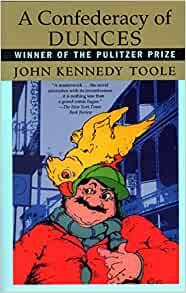
A CONFEDERACY OF DUNCES, John Kennedy Toole, Grove Press 1987
I feel as if I’ve been aware of this title for as long as I’ve been aware of adult literature, but only now have I read it. And boy, was the timing impeccable. At the risk of over sharing, sometimes you come to feel trapped within your relationships–with people you love, of course, the same way the cast of this novel is quite lovable.
But in Keene’s novel, more powerful than his New Orleans setting is the whole gamut, in nuanced detail, of the deranged mind games played by narcissistic people, whose detachment from reality is matched only by their abrasiveness. The novel covers a few weeks of time in perfect linear action, unfolding in reams upon reams of comic dialog. Keene, some kind of fiction Nostradamus, sketched to perfection whatever the 60s equivalent is of the modern phil bro. (“I recommend Batman especially, for he tends to transcend the abysmal society in which he’s found himself. His morality is rather rigid, also. I rather respect Batman.”) Ignatius Reilly has all the too-clever-by-half aspects of incel culture plus the brattiness and victim complex that can only be the product of a narcissistic mother, and the misanthropy of a master satirist like Swift, only misfired (but just as politically reactionary). Like other protagonists in classic satire he was “misbegotten.”
Suddenly Mrs. Reilly remembered the horrible night that she and Mr. Reilly had gone to the Prytania to see Clark Gable and Jean Harlow in Red Dust. In the heat and confusion that had followed their return home, nice Mr. Reilly had tried one of his indirect approaches, and Ignatius was conceived. Poor Mr. Reilly. He had never gone to another movie as long as he lived.
I believe I laughed out loud most often in the moments given over to Ignatius’s writings, scrawled on primary school notepads (I had to look up the “Big Chief” brand). Here he is describing the working conditions of the factory of Levy Pants, where he tries and fails to hold a job. (Every locale has its own mini-network of absurd characters.) The workers here are Black.
When I questioned them about wages, I discovered that their average weekly pay envelope contained less than thirty ($30) dollars. It is my considered opinion that someone deserves than that in the way of a wage for simply staying in a place like the factory for five days a week, especially when the factory is one like the Levy Pants factory in which the leaking roof threatens to collapse at any moment. And who knows? Those people might have much better things to do than to loiter about Levy Pants, such as composing jazz or creating new dances or doing whatever those things are that they do with such facility.
It’s hard to break off reading a passage anywhere in the text.
Why can’t Ignatius even sell hotdogs without fucking things up? “You must realize the fear and hatred which my weltanschauung instills in people.” His nervous system blocks him from working (similar to a one Howard Phillips), and he has a problem with his pyloric valve.
Basically, it lived up to the hype well. A comic masterpiece with a bit of class consciousness too, and not because of the Levy’s Pants factory passage, but because Keene has captured so perfectly invariant aspects of the urban petty-bourgeoisie–I’m thinking of the hilarious letters exchanged between Ignatius and his college ex Myrna.






 Second Slope